
French Revival Salon Chairs
French revival salon chairs bring theatrical nineteenth-century elegance into modern rooms through heavily carved frames and rich upholstery.
French Revival Salon Chairs
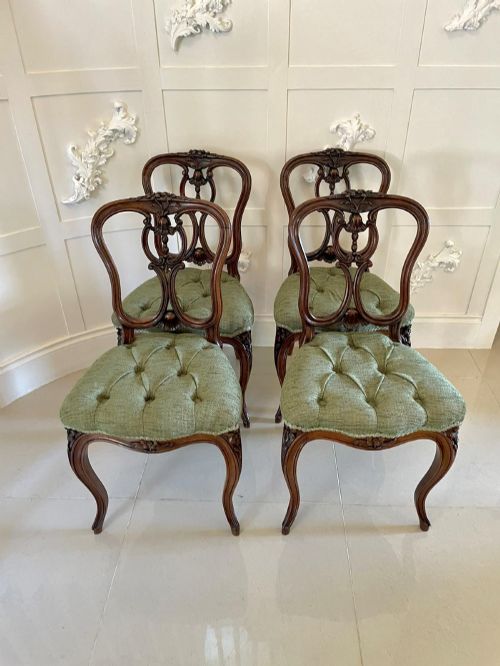
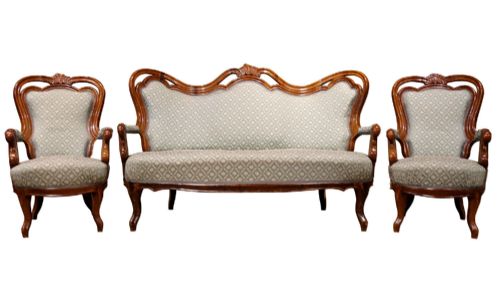
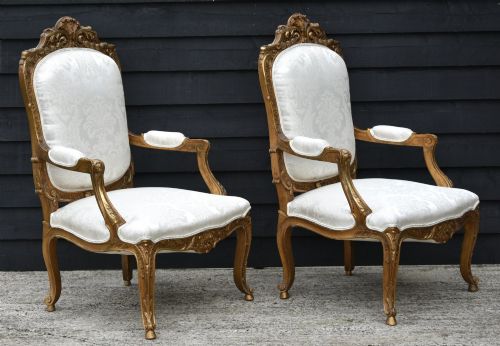
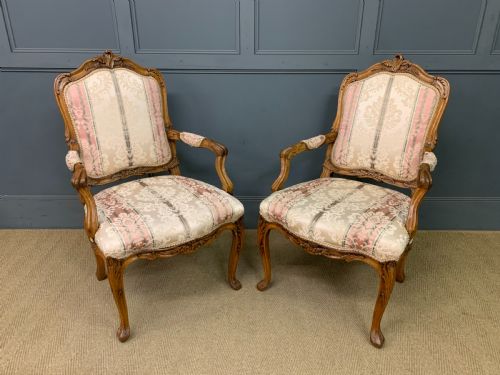
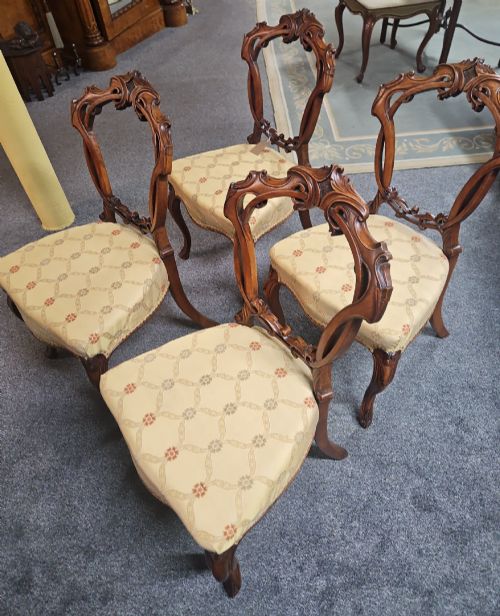
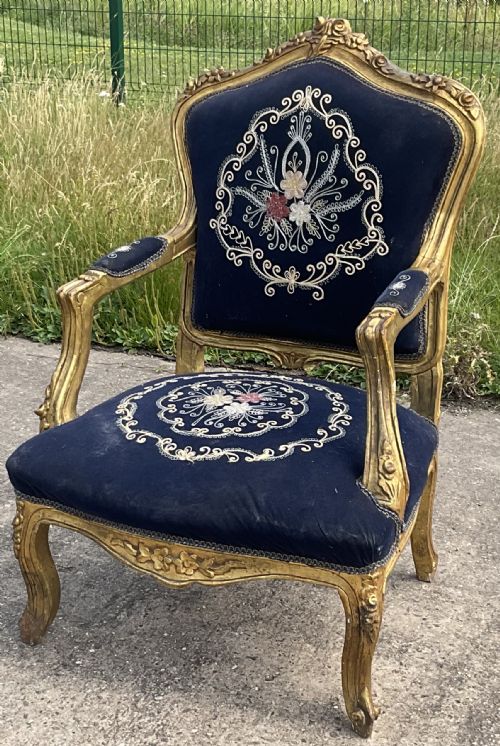
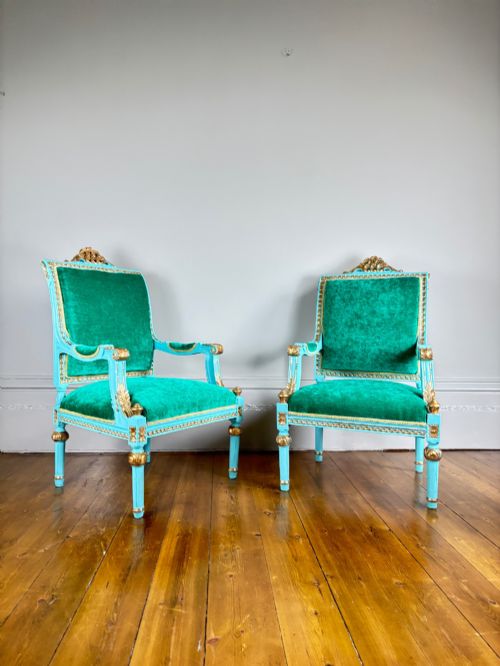
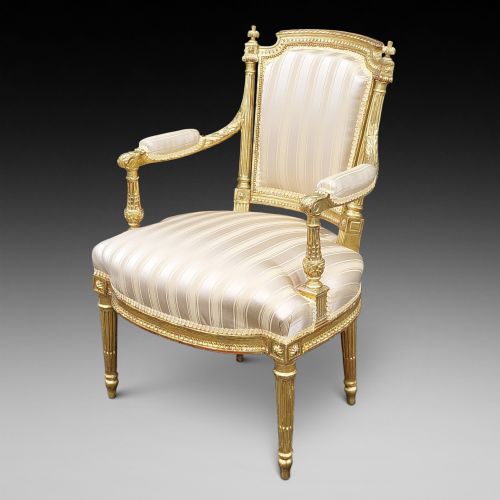
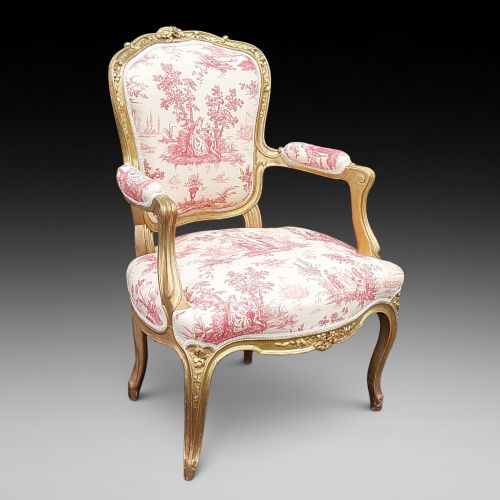
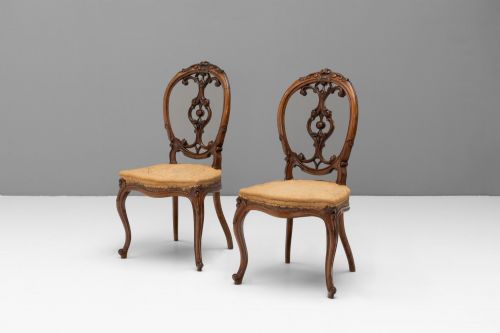
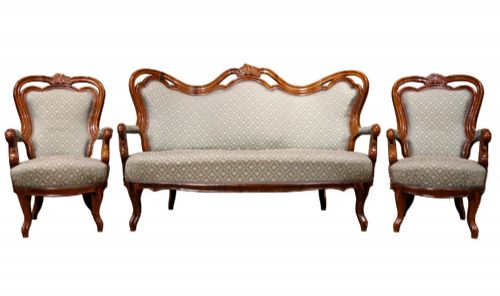
When you search for french revival salon chairs, you encounter seating designed to evoke historic European royal courts during the Victorian era and early twentieth century. The selection ranges from single walnut side chairs to large giltwood armchairs and multi-piece parlour suites.
Most examples date from the nineteenth century, spanning various revivals of Louis styles, Rococo, and Empire designs. You meet open armchairs, oval-back salon chairs, and boudoir seating originating from French workshops or British makers working in the continental manner.
How They Were Made
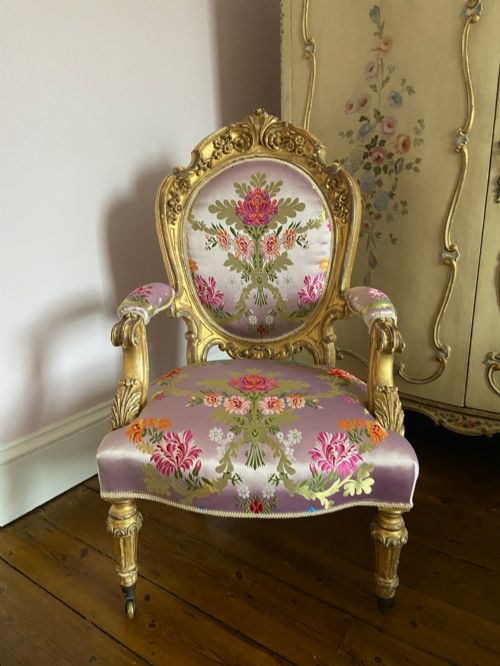
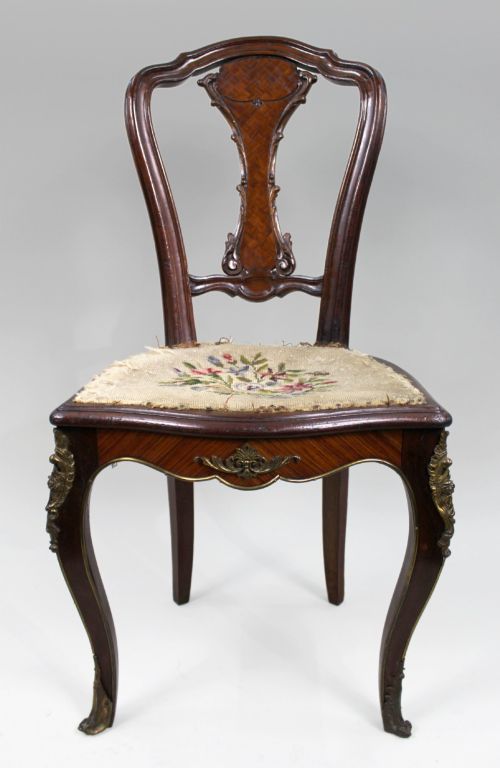
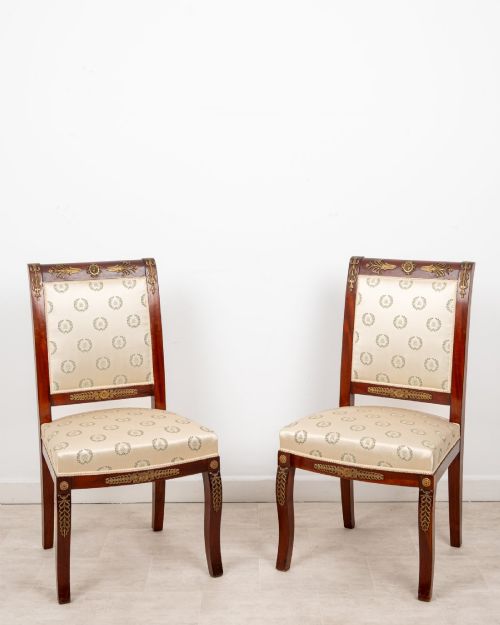
The underlying frames rely primarily on walnut, mahogany, beech, or oak, often shaped with elaborate hand-carving. Many pieces layer gold leaf onto giltwood surfaces or incorporate brass and ormolu mounts to emulate royal furniture.
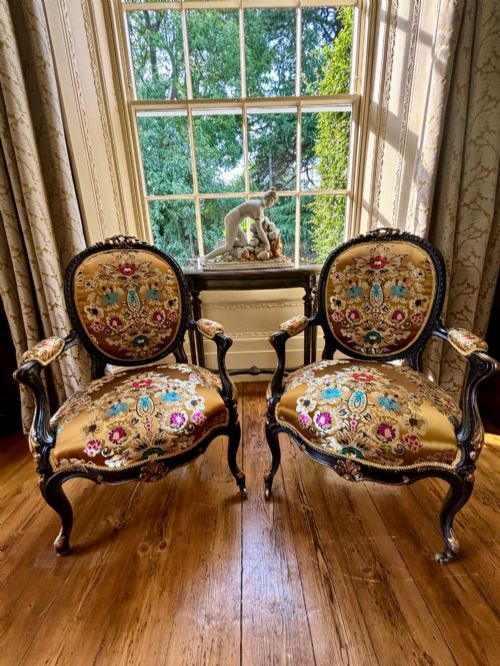
Upholstery defines the character of these seats, utilising silk fabric, velvet, damask, and occasional cane work. Frames are joined using traditional cabinet-making methods, supporting complex sprung or padded interiors.
Several armchairs boast delicate silk parrot designs, proving that nineteenth-century birds belonged indoors too.
What Varies in Quality
The distinction between ordinary and exceptional pieces lies in the crispness of the wood carving and the depth of the gilding. High-tier chairs display deeply undercut foliage and organic motifs rather than shallow mechanical shaping.
Material selection separates standard production from superior examples, particularly the choice of dense hardwoods and genuine ormolu mounts rather than plated substitutes. The integrity of the original frame construction and the authenticity of the period textiles dictate overall standing.
Holland And Sons·Morison And Co Of Edinburgh
The French Revival Salon Chairs Glossary
- Fauteuil
- An open-armed upholstered armchair with exposed wooden armrests and a padded back. This form originated in seventeenth-century France and remained popular during nineteenth-century revival periods.
- Ormolu
- Gilded bronze mounts applied to furniture corners, legs, and aprons for decorative accent. It provides a sharp metallic contrast against walnut, mahogany, or ebonised wood.
- Giltwood
- Timber coated with a thin layer of gold leaf over a prepared gesso base. It creates the brilliant reflective surfaces seen on formal nineteenth-century salon seating.
- Parquetry
- Geometric wood mosaic patterns inlaid onto flat surfaces such as chair backs or seats. It demonstrates advanced woodworking skill in high-end cabinet making.
- Louis XVI Revival
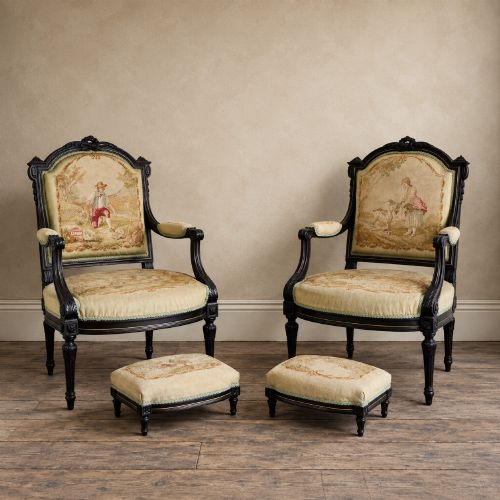
- A neoclassical style characterised by straight tapering fluted legs, rectangular backs, and symmetrical classical ornamentation. It reflects eighteenth-century French court tastes revived during the Victorian era.
French Revival Salon Chairs: Frequently Asked Questions
How do I identify French revival salon chairs?
Look for characteristic revival motifs such as cabriole legs, cartouche-shaped backs, and giltwood finishes that imitate earlier French court aesthetics. The combination of nineteenth-century construction techniques with eighteenth-century styling cues typically identifies these pieces.
Examine the timber beneath the gilding or paint and check the style of the carving. Most pieces belong to specific revival movements spanning the Victorian era up to the early twentieth century.
Were these chairs used in formal rooms?
These seats served primarily in drawing rooms, parlours, and salons for entertaining guests and conversing. Their decorative frames and delicate upholstery suited reception spaces rather than heavy daily use.
Due to their ornamental nature, they were arranged in conversation groups around firesides or against drawing-room walls. Complete suites often matched sofas with pairs of armchairs and side chairs for unified interior schemes.
Can I use these chairs every day?
Historic frames require thoughtful placement and gentle use to preserve their structural stability and fragile antique surfaces. Silk or velvet upholstery may also need protection depending on daily wear.
While robust enough for occasional sitting, antique salon seating benefits from being treated as both functional furniture and decorative art. Checking the internal webbing and joints ensures they remain comfortable and secure.
What is the difference between Louis XV and Louis XVI styles?
Louis XV revival pieces feature asymmetrical curves, flowing organic lines, and pronounced cabriole legs. The overall aesthetic leans towards ornate Rococo movement and natural leaf motifs.
Louis XVI revival pieces introduce straight lines, geometric symmetry, and neoclassical fluted columns or tapering legs. This later style appears more restrained and architectural in its proportions.