
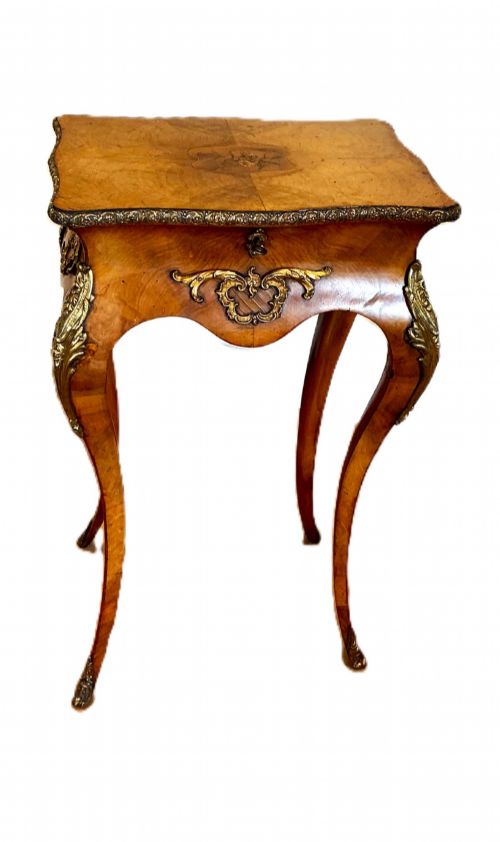
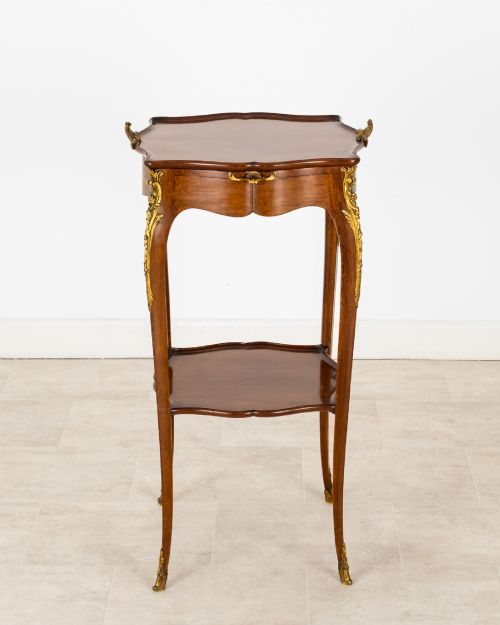


French Revival Nightstands
French revival nightstands bring continental elegance to the bedside through classical proportions and refined marquetry.
French Revival Nightstands
French revival nightstands comprise bedside tables, cabinets, and small chests designed in historical European idioms. These pieces frequently appear in revival styles such as Louis XVI, Louis XV, and Empire.
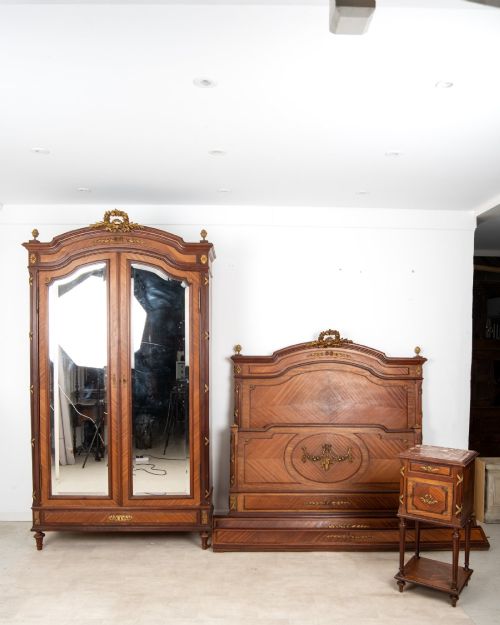
Makers utilised forms ranging from serpentine side tables to upright bedside cupboards. The selection spans the nineteenth century through the early twentieth century, including complete bedroom suites.
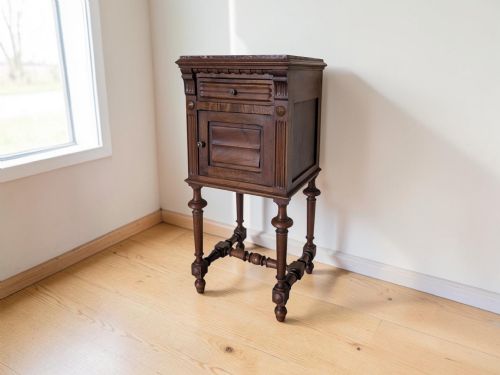
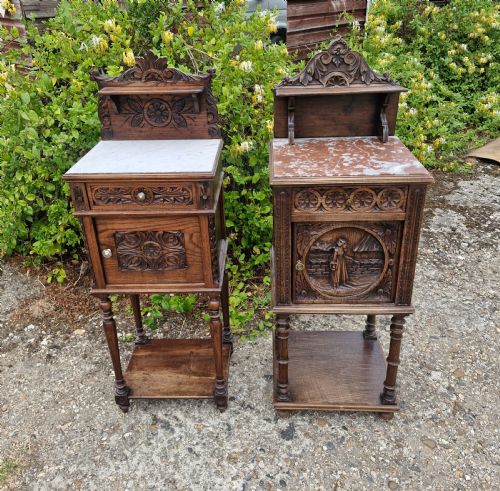
Buyers encounter freestanding marble top cabinets alongside mahogany and walnut side tables. Many examples incorporate specialised bedroom furniture forms like the petit commode.
How they were made
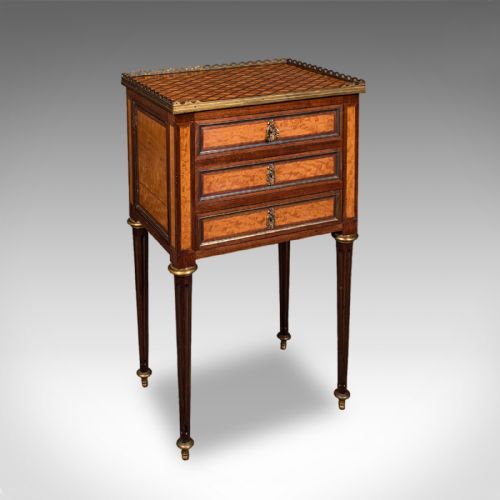
Carpenters constructed carcasses in timbers such as walnut, mahogany, rosewood, and kingwood. Marquetry inlays and figured veneers decorate the primary surfaces of many pieces.
Mounts in ormolu and brass accent the corners, legs, and drawer pulls. Fitted marble tops provide durable working surfaces on numerous bedside cabinets.
Current listings feature bedside cabinets and side tables spanning the Victorian era through the 1930s in walnut, mahogany, and rosewood.
What varies in quality
The refinement of the ormolu mounts and the precision of the marquetry distinguish exceptional pieces. Finer cabinets display carefully selected wood grains and integrated porcelain plaques.
Structural integrity depends on the joinery within the drawers and the quality of the marble fitted to the top. Maker attribution, such as work attributed to François Linke or Charles Topino, separates standard production from master craftsmanship.
François Linke·Charles Topino
The French Revival Nightstands Glossary
- Ormolu
- Gilded bronze used for decorative mounts and accents. It adorns corners, handles, and aprons on finer furniture.
- Marquetry
- Veneering technique arranging pieces of coloured wood to form decorative patterns. Craftsmen apply it across tabletops and drawer fronts.
- Petit commode
- Small chest of drawers designed for domestic use. These compact pieces serve as ornate bedside storage.
- Bombe
- Outwardly curving furniture shape swelling on the sides. This contour appears on select revival side cabinets.
French Revival Nightstands: Frequently Asked Questions
What is a french revival nightstand?
These pieces are bedside tables and cabinets built in historical French design idioms. They date from the nineteenth and early twentieth centuries.
Craftsmen produced them in forms ranging from simple side tables to marble-topped bedside chests with marquetry.
How were french revival nightstands used?
They served beside the bed to hold lighting, reading material, and personal items. Their enclosed cupboards and drawers kept private belongings neatly stored.
Many functioned as part of larger bedroom suites, matching the wardrobes and bed frames in grand residences.
How do I style a french revival nightstand?
Pair the classical woodwork with understated modern lighting to let the antique materials stand out. The marble tops and gilt mounts provide natural focal points in a bedroom.
Consider matching pairs for balanced bedside arrangements or use a single freestanding cabinet as an occasional table in a study.
How do I tell the periods apart?
Louis XVI revival pieces often display straighter lines, classical columns, and neoclassical proportions. Louis XV and Rococo revival styles favor asymmetrical curves and flowing ormolu mounts.
Empire revival designs show heavier classical influence, while later twentieth-century interpretations often simplify these historical motifs.