



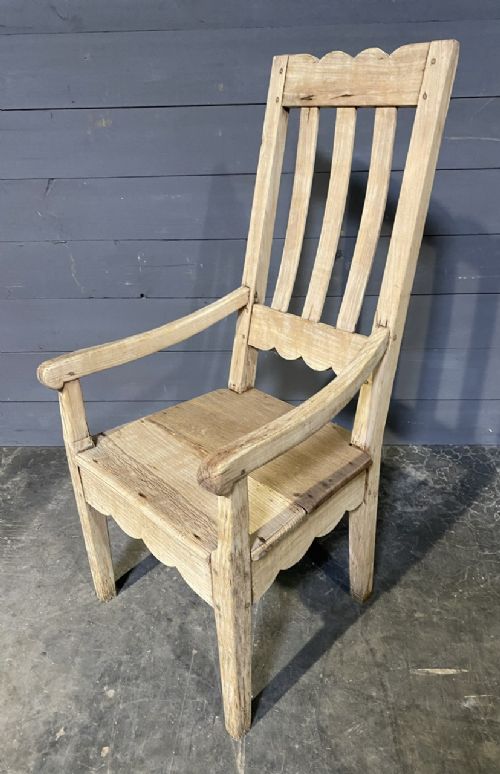

French Provincial Oak Chairs
French provincial oak chairs bring rustic warmth to a room, offering sturdy construction and enduring regional character.
French Provincial Oak Chairs
French provincial oak chairs encompass robust seating forms originating from regional France, built for daily domestic use rather than formal court life. These pieces include dining sets, ladder backs, wingbacks, and armchairs fashioned from solid timbers.
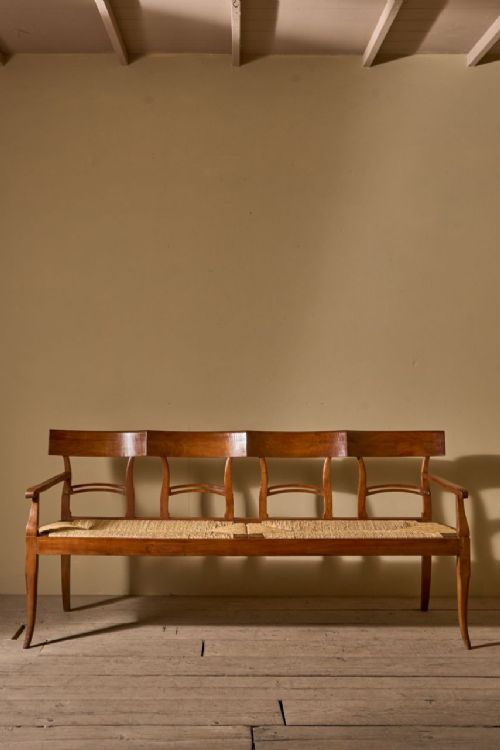
The versions most commonly met on this page span the eighteenth, nineteenth, and early twentieth centuries. They frequently feature rush seats, high backs, and carved frames reflecting traditional French country and chateau styles.
Materials and Construction
Makers relied primarily on solid oak, cherrywood, and other hardy hardwoods to build frames that endured generations of use. Joints were pegged or mortised by hand, ensuring structural stability without relying on modern fasteners.
Seats were woven from natural rush or upholstered in practical fabrics such as velvet and cotton. Metal elements like brass and iron occasionally appeared in structural reinforcement or decorative mounts.
Listings feature oak alongside cherrywood, rush, and velvet across the nineteenth and early twentieth centuries.
Evaluating Craftsmanship and Proportion
Quality separates pieces by the depth of hand carving and the integrity of the timber framing. Better examples display balanced proportions, clean joinery, and well-seasoned oak with rich natural grain.
The consistency of matched sets and the tightness of woven rush seats also distinguish finer specimens. Later reproductions lack the subtle irregularities and patination earned through genuine regional use.
The French Provincial Oak Chairs Glossary
- Bergère
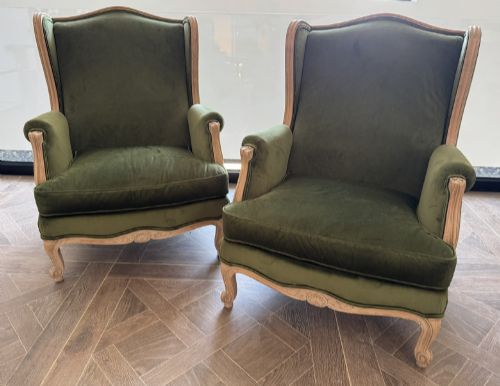
- An enclosed upholstered armchair with wooden framing exposed around the sides and back. This form often includes a loose seat cushion resting over a upholstered base.
- Ladder Back
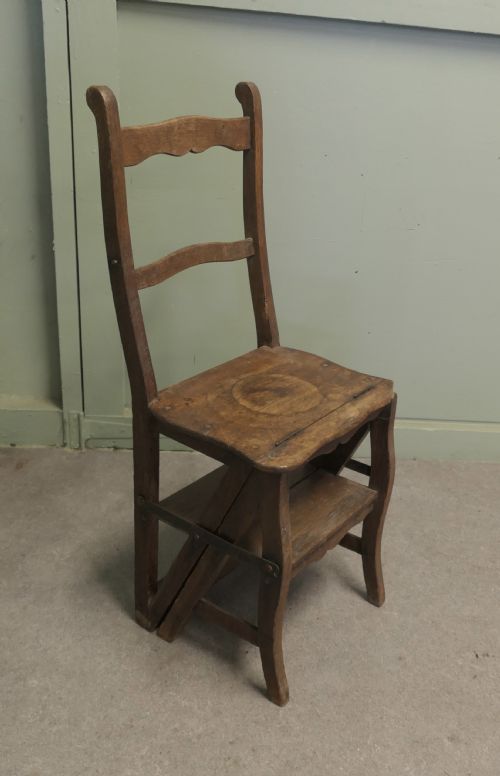
- A chair back constructed with multiple horizontal arched slats between the upright posts. This traditional design provided sturdy support in rural kitchens and dining rooms.
- Rush Seat
- A seating surface woven from dried marsh grasses twisted around a frame. It offers a resilient, flexible platform that adapts to the sitter over decades of use.
- Fauteuil
- An open-armed upholstered armchair originating in France. The arms typically feature padded elbow rests supported by curved wooden armings.
- Wingback
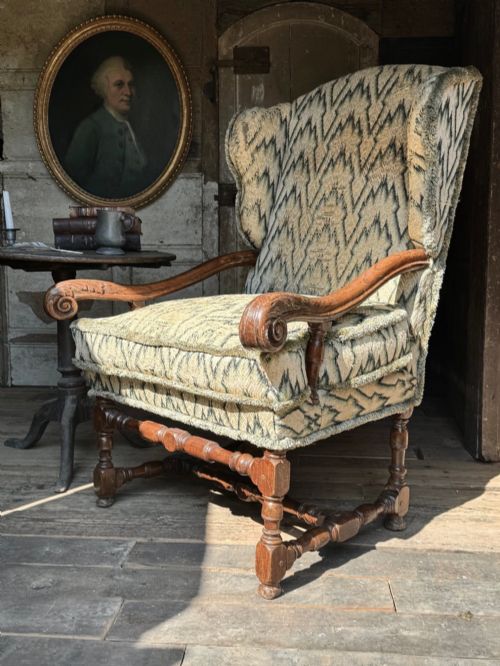
- An upholstered chair with high side panels designed to shield the sitter from draughts. Early provincial examples combine this form with exposed oak framing and cabriole legs.
French Provincial Oak Chairs: Frequently Asked Questions
How do I spot a true provincial chair?
Authentic provincial chairs show tool marks from hand working on the underside and inner frame. The timber displays natural shrinkage and a deep patina built up from decades of polishing.
Construction relies on traditional pegged joints rather than modern screws. The proportions remain utilitarian and honest rather than overly ornate.
Can I use these chairs for daily dining?
Most of these chairs were originally built for heavy kitchen or dining room use. Their sturdy oak frames and woven rush seats make them well suited for everyday seating around a modern table.
Upholstered versions may require professional cleaning or reinforcement depending on their age. Regular light maintenance keeps the joints secure and the timber nourished.
What is the difference between ladder backs and armchairs?
Ladder backs feature horizontal wooden slats across the backrest and typically use rush seats. They were produced in sets for communal dining.
Armchairs offer enclosed or open padded armrests for relaxed seating. They appear as singular accent pieces or pairs rather than large matched dining sets.
How do I care for antique oak?
Keep wooden frames away from direct heat sources and sudden humidity changes to prevent splitting. Apply a quality beeswax periodically to maintain the natural lustre of the oak.
Avoid commercial liquid polishes that build up a sticky residue over time. Gentle dusting with a dry cloth is sufficient for weekly upkeep.