






French Provincial Island
These french provincial island pieces are solid work tables and preparation blocks that bring genuine utility and rustic warmth to a modern kitchen.
French Provincial Island
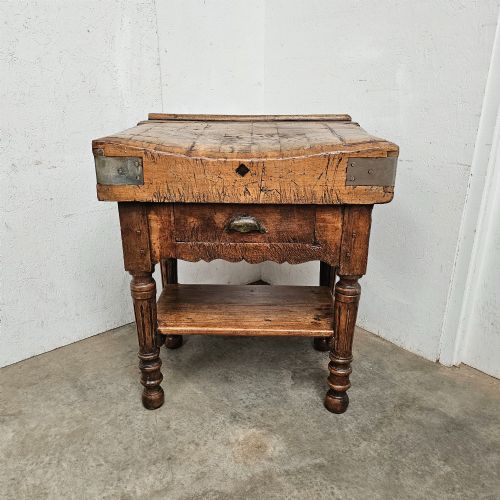
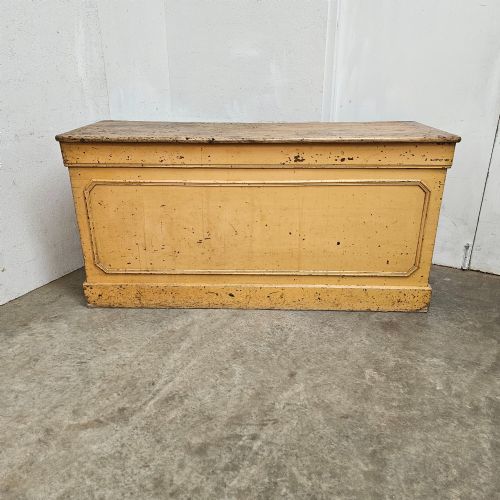
A french provincial island search brings up hardworking utility furniture originally built for practical tasks rather than formal dining. Buyers find sturdy work tables, shop counters, and butchers blocks designed for daily preparation work.
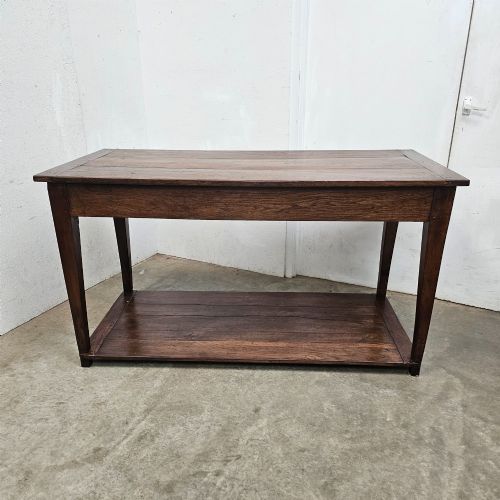
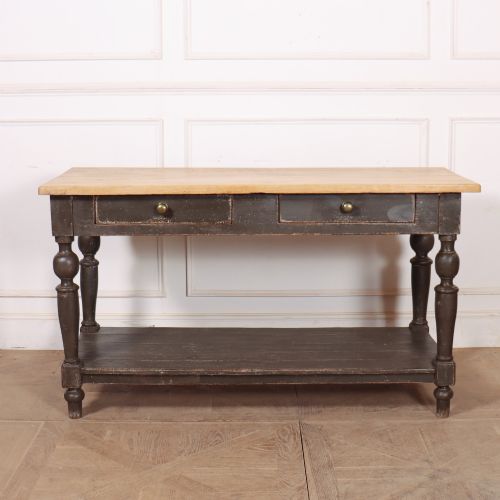
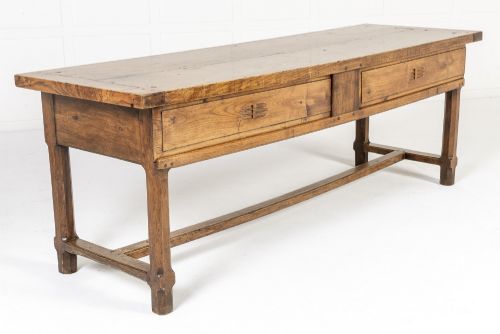
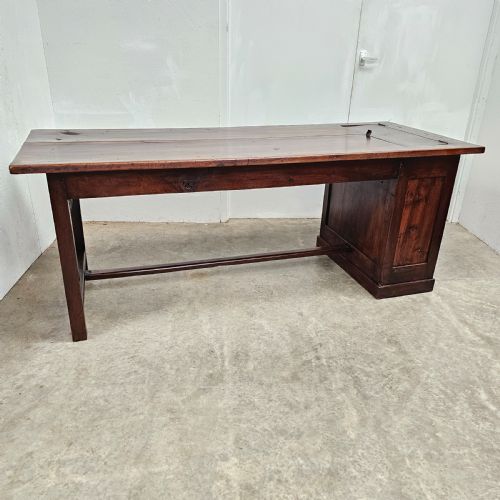
The most common forms on this page are drapers tables and work tables originating from nineteenth century France. These examples often feature long timber tops set on robust bases, sometimes with lower pot shelves or drawers.
Makers constructed these items in robust timbers intended to withstand heavy domestic and commercial use. They serve equally well today as freestanding kitchen islands or central workspace tables.
How they were made
Workshops relied on sturdy native hardwoods and softwoods such as oak, beech, pine, and elm for structural integrity. Carpenters joined thick timber boards to create heavy work surfaces capable of bearing significant weight.
Makers utilised iron and brass for functional hardware, brackets, and bracing. Many pieces retain traces of original paint or feature surfaces bleached by decades of use and scrubbing.
Some work tables still bear the quiet scars of fabric measured or meat chopped a century ago.
What varies in quality
Quality rests in the original purpose and the honesty of the timber's wear. Commercial shop counters and heavy butchers blocks often display deeper evidence of professional use than domestic kitchen tables.
The choice of primary wood affects the character and weight of the piece, with dense oaks and beeches offering greater solidity than softer pine variants. Original painted finishes and untouched patination elevate the visual interest of a piece.
Trussant & Cie
The French Provincial Island Glossary
- Drapers table
- A long narrow work table traditionally used in textile shops for measuring and folding cloth. These pieces translate well into modern kitchens as narrow islands.
- Butchers block
- A thick wooden chopping surface mounted on a stout base, engineered to absorb heavy cleaver blows. They offer supreme durability for food preparation.
- Shop counter
- A heavy commercial table fitted with drawers or shelving on the attendant side for retail use. Their deep proportions provide generous storage and workspace.
- Pot-shelf serving table
- A utilitarian table featuring a lower slatted shelf designed to hold heavy pots and pans. This secondary tier adds valuable storage space beneath the main surface.
- Patina
- The surface sheen and colour developed over decades of handling, cleaning, and exposure to light. It serves as a visual record of the object's age and history.
French Provincial Island: Frequently Asked Questions
How are french provincial island tables used today?
These tables function as central kitchen islands providing ample surface area for food preparation and serving. Their sturdy construction handles daily domestic tasks with ease.
Lower shelves and drawers offer practical storage for cookware and kitchen utensils, keeping workspaces clear.
What woods were used for french provincial island pieces?
Joiners built these items using robust timbers including oak, beech, pine, elm, and walnut. Hardwoods provided the necessary strength for heavy chopping blocks and work benches.
Softwoods like pine appeared frequently in painted drapers tables and shop counters.
How do I care for a wooden work table top?
Regular cleaning with mild soap and water keeps the timber surface hygienic and prevents grease buildup. Periodic treatment with food safe oils nourishes the wood and preserves its character.
Avoid harsh chemical cleaners that strip the natural patina accumulated over the decades.
Can I tell the age of a french provincial island?
Age is determined by construction methods, timber choice, and the nature of the wear upon the surfaces. Nineteenth century pieces often show hand planed boards and traditional joinery.
Original paint finishes and iron hardware also provide reliable clues to the period of manufacture.