
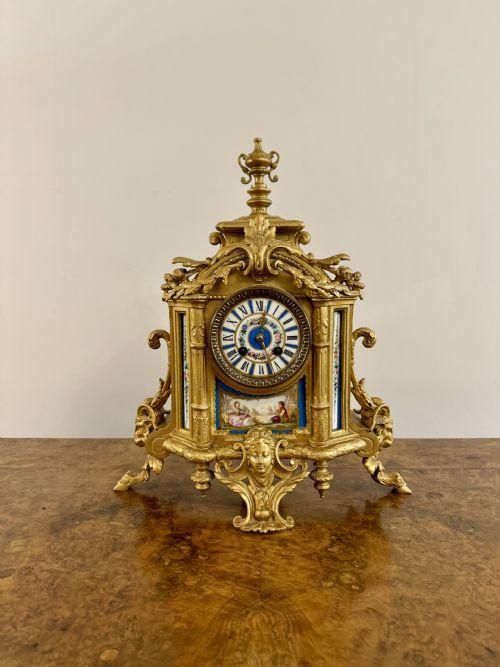


French Porcelain Shelf Clock
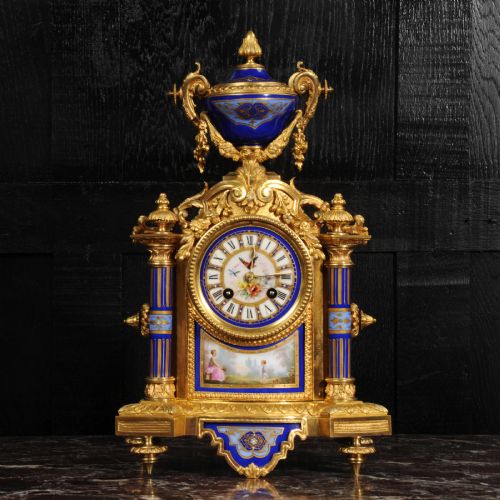
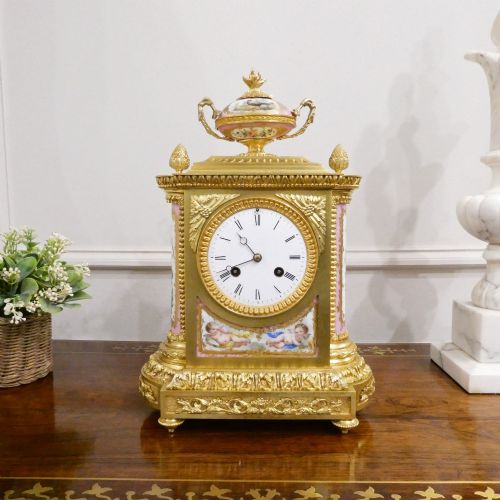
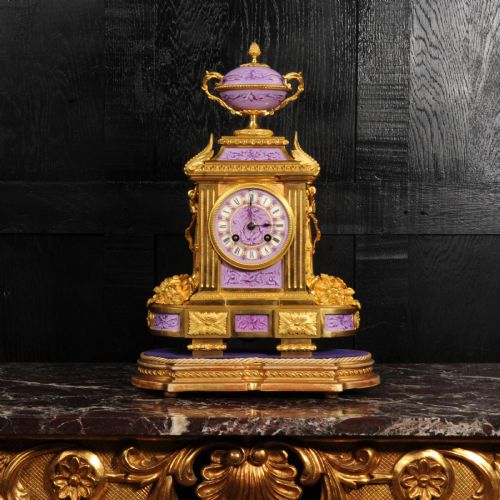
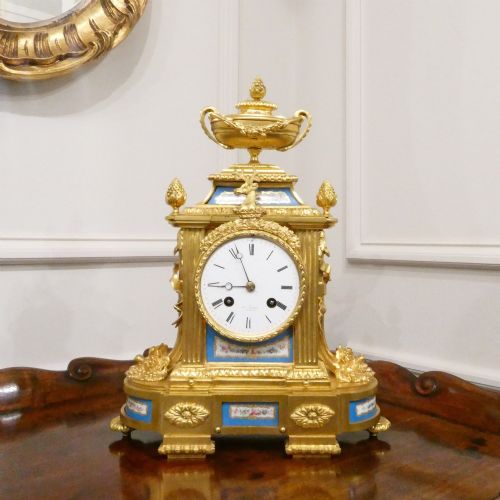
A french porcelain shelf clock combines painted ceramic panels with cast metal mounts to anchor a Victorian interior with weight and polish.
French Porcelain Shelf Clock
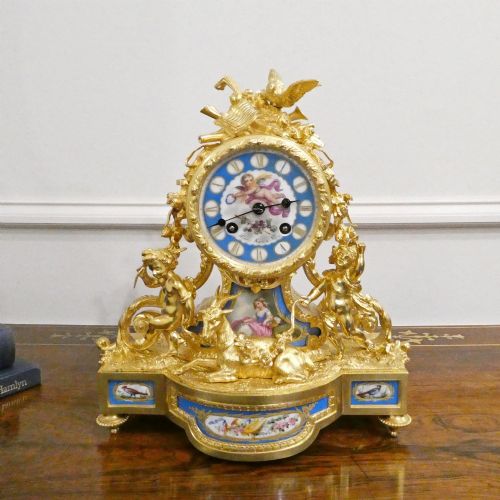
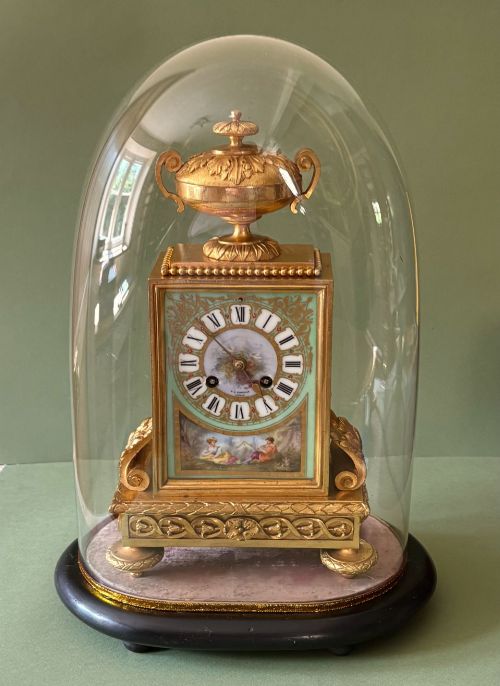
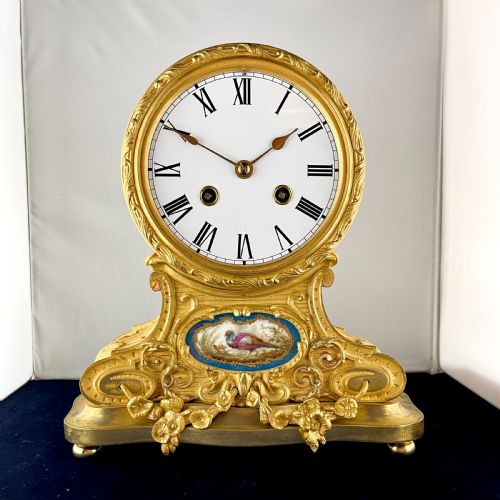
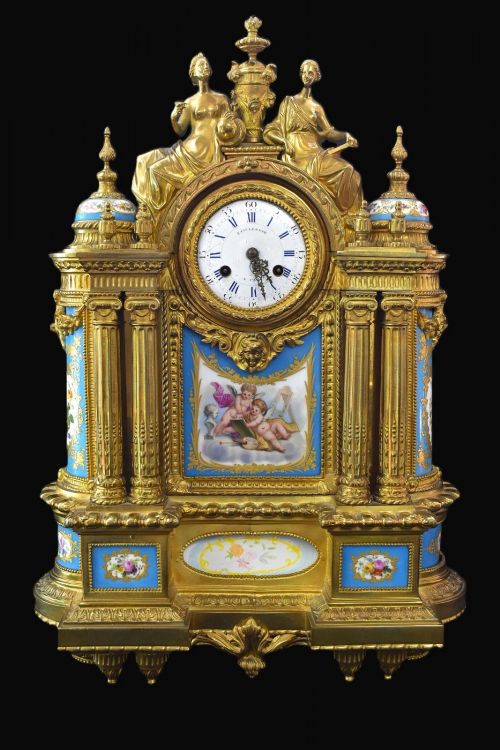
A french porcelain shelf clock sits on mantelpieces and cabinets, uniting timekeeping with decorative ceramic and metal craftsmanship. The pieces seen here span the nineteenth century, from eighteen-forty to nineteen-hundred, incorporating Victorian and Edwardian periods.
Most examples combine painted porcelain panels or urns with cast metal housings. Styles draw heavily on French Rococo Revival, Louis XVI, and Napoleon III aesthetics, often displaying elaborate classical motifs or romantic figural scenes.
Makers and retailers such as Japy Freres, Jean-Baptiste Delettrez, Achille Brocot, Henry Marc, Etienne Lenoir, Philippe H. Mourey, and Palais Royal dominate the output. These workshops produced mantel clocks designed to command attention in principal rooms.
Materials and Construction
Makers relied on porcelain, often associated with Sevres, combined with gilt bronze, ormolu, or gilt metal frames. Glass covers protect delicate enamel dials, while marble occasionally provides a heavy, contrasting base for the metalwork.
Foundries cast brass and bronze components using intricate moulds before applying fire gilding or surface finishing. Hand-painted ceramic plaques or urns feature floral and figural subjects, integrated directly into the clock architecture.
Materials recur across porcelain, gilt bronze, ormolu, white marble, and glass.
Distinctions in Quality
The precision and depth of the gilt bronze or ormolu casting dictate the visual weight of the object. Sharp, well-chased metal mounts separate superior pieces from simpler cast metal housings.
The artistry of the porcelain painting, particularly hand-painted enamel details on dials and plaques, marks the division between standard production and workshop masterworks. Signed movements by notable makers further elevate the standing of a piece.
Japy Freres·Jean-Baptiste Delettrez·Achille Brocot·Henry Marc·Etienne Lenoir
The French Porcelain Shelf Clock Glossary
- Ormolu
- Gilt bronze produced by applying a mercury and gold amalgam to cast brass or bronze, then heating to drive off the mercury. This technique creates a rich, durable golden surface.
- Sevres
- Porcelain originating from the historic French royal factory, known for fine paste bodies and meticulous hand-painted decoration. These plaques frequently feature in luxury nineteenth-century mantel clocks.
- Drumhead clock
- A clock design featuring a circular dial housing mounted atop a sculptural or architectural base. It takes its name from the resemblance to a drum.
- Putti
- Depictions of chubby male infants, often winged, used as decorative figures in Rococo and neoclassical design. They frequently appear flanking the dial on decorative shelf clocks.
French Porcelain Shelf Clock: Frequently Asked Questions
How do I wind a french porcelain shelf clock?
Most of these clocks utilise an eight day movement requiring a key to tension the springs through winding holes on the dial. Care must be taken not to overwind the mechanism.
Moving the hands requires gentle adjustment following the chime sequence to avoid damaging the internal escapement and gear train.
Where were these clocks displayed?
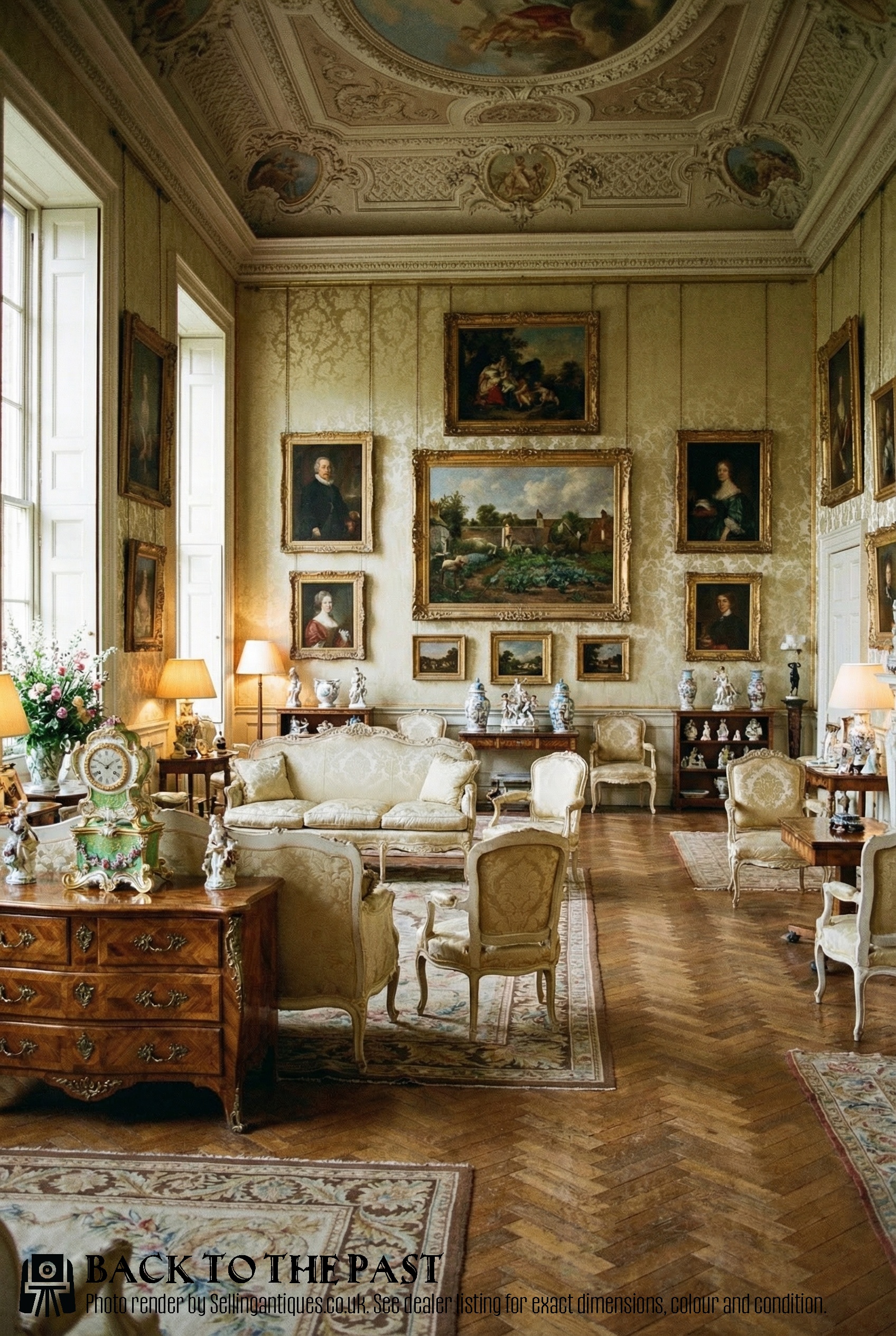
Nineteenth-century households placed these timepieces centrally on drawing room mantelpieces above fireplaces, where they served both to tell time and display status.
They also appeared on console tables, cabinets, and specially designated shelf brackets within formal reception spaces.
How do I identify a Louis XVI style clock?
Louis XVI style pieces rely on classical symmetry, straight architectural lines, urn motifs, and restrained vegetal scrolls rather than asymmetrical Rococo curves.
Ormolu mounts on these clocks often feature ribbon bows, laurel wreaths, and fluted columns characteristic of neoclassical design.
What maintenance do antique clock movements need?
Mechanical movements require periodic cleaning and lubrication by a professional clockmaker to prevent wear on the brass pivots and gears.
Keeping the clock level on a stable shelf ensures the pendulum beats evenly and the strike train operates without stalling.