




French Porcelain Enamel Clock
A french porcelain enamel clock brings together rich painted panels and heavy gilt metalwork to anchor a grand nineteenth-century interior.
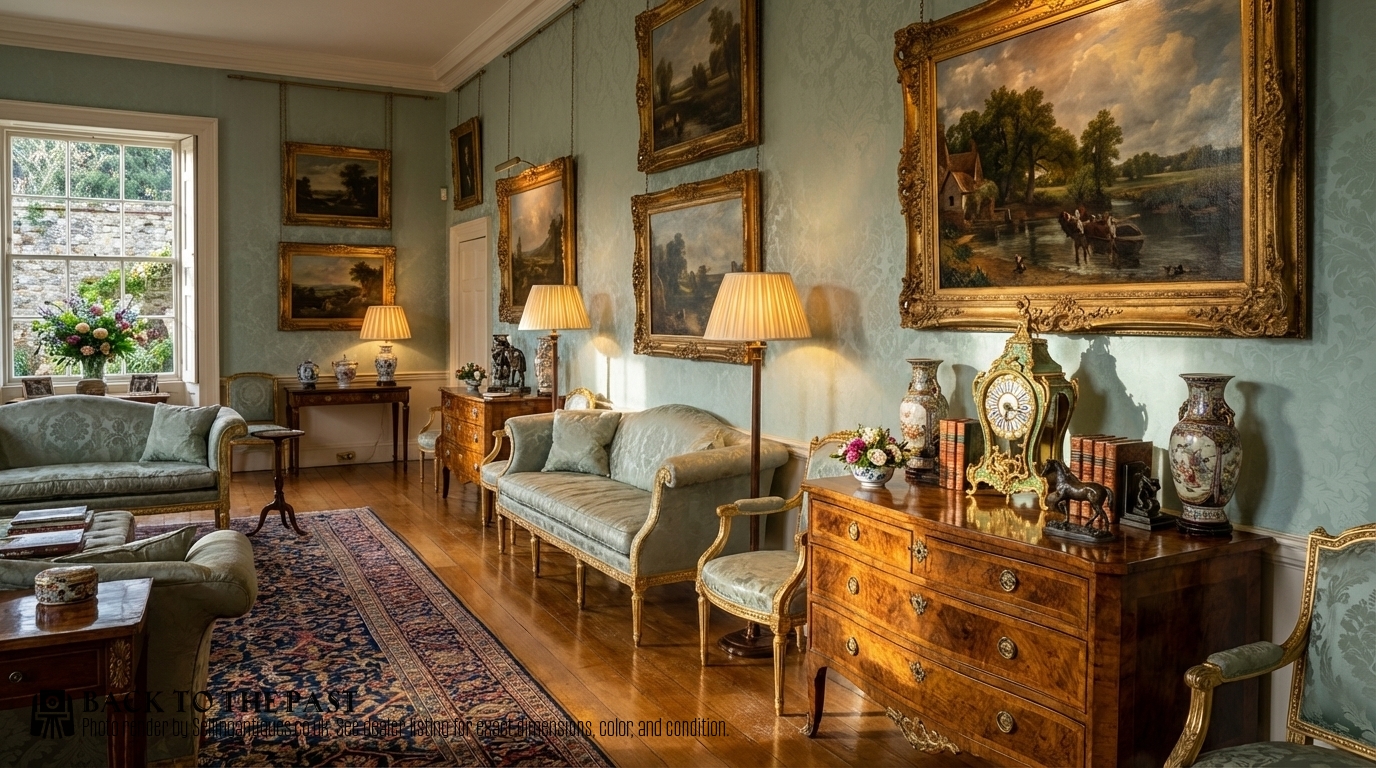
French Porcelain Enamel Clock
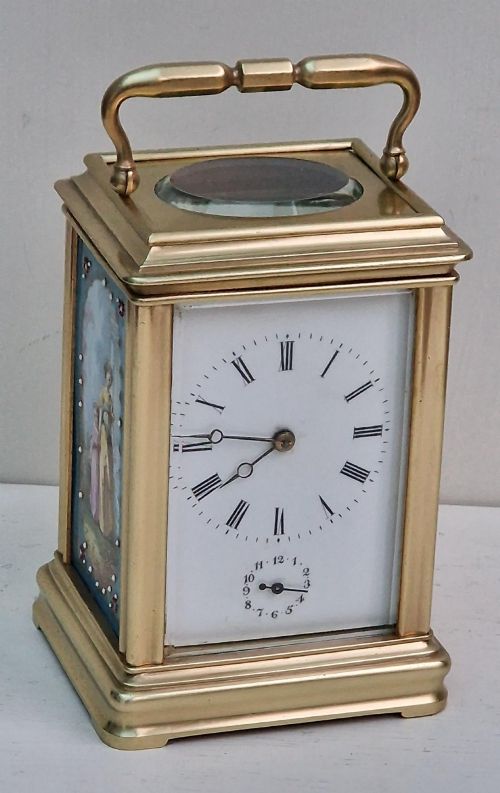
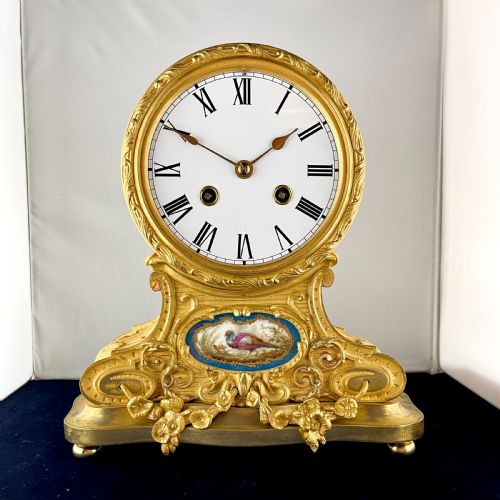
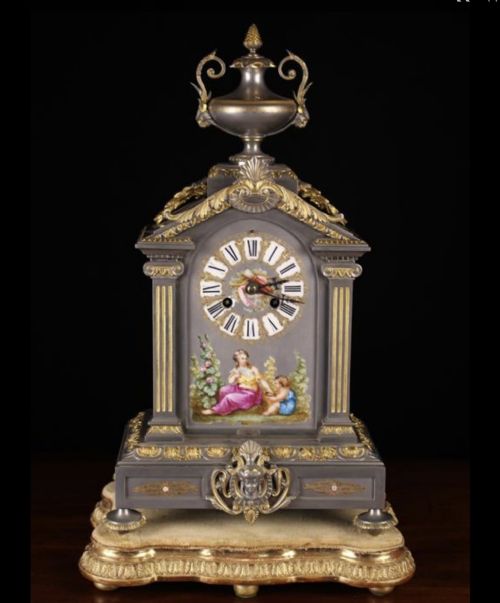
When searching for a french porcelain enamel clock, buyers encounter nineteenth-century decorative timepieces spanning mantel clocks, carriage clocks, and glass regulators. These pieces combine ceramic dials or painted panels with decorative metal housings, originating from periods such as the Victorian era, Second Empire, and Belle Epoque. The most common examples on this page are mantel clocks and crystal regulators produced during the 1870s and 1880s.
The aesthetic draws heavily on revived historical idioms, notably French Rococo Revival and Louis XVI Revival styles. Many items feature matching garniture sets or incorporate signed portrait miniatures alongside intricate cloisonne and dial painting. Regional variations include pieces retailed through British houses like London and Manchester firms alongside direct French imports.
Materials and construction
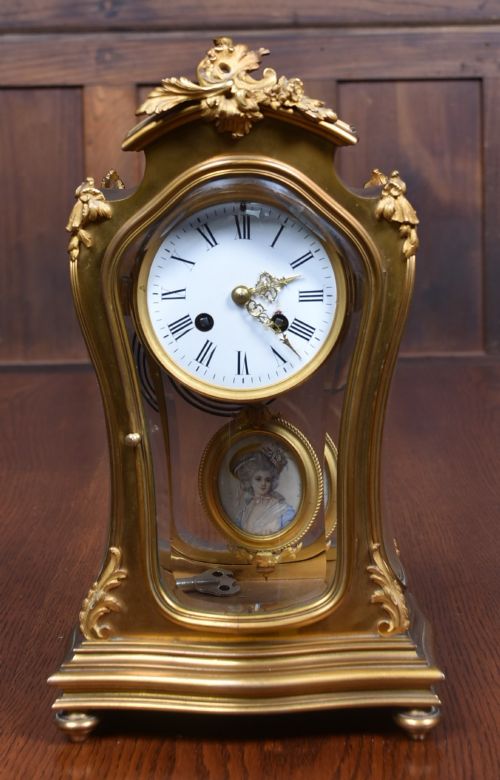
Makers built the primary housing of a french porcelain enamel clock from cast brass, bronze, or ormolu, applying mercury gilding or modern electrogilding to achieve a bright metallic finish. Structural glass panels feature heavily in crystal and four-glass regulators, allowing light to pass through the movement. White marble occasionally forms the heavy sub-bases for architectural mantel designs.
Porcelain and enamel components form the visual centrepieces, utilised for chapter rings, dial faces, and inset decorative panels. Artisans painted these ceramic surfaces with floral motifs, pastoral scenes, or historical portraits before firing. Movements typically rely on eight-day mechanical gear trains, sometimes incorporating repeater mechanisms or striking functions.
Listings feature nineteen-century dates predominantly, with specific years recorded from 1860 through 1910.
Indicators of quality
The refinement of the cast bronze or ormolu mounts determines the primary tier of craftsmanship, where deeply chased ornamentation surpasses flat, plain metal castings. Superior items feature hand-painted porcelain panels with precise detail and unblemished enamel surfaces free from hairline cracks or chips. Signed movements by recognised makers or retailers elevate the stature of a piece significantly above anonymous factory output.
The integration of the clock mechanism within complex glass regulator cases or garniture sets also marks distinction in the grade of manufacture. Heavier gauge glass, well-fitted bevelled edges, and crisp escapement components distinguish higher-grade specimens from standard production models.
LE ROY & FILS LONDON & PARIS·Finnigan Manchester·Rodier
The French Porcelain Enamel Clock Glossary
- Ormolu
- A technique of applying finely ground high-carat gold to a bronze base using a mercury amalgam, creating a rich golden lustre.
- Crystal regulator
- A mantel clock housed in a brass and glass case that reveals the swinging pendulum and mechanical movement from all sides.
- Garniture set
- A decorative ensemble consisting of a central clock flanked by matching ornamental pieces such as urns or vases.
- Repeater
- A mechanical complication that chimes the hours and quarters on demand when a lever or button is pressed.
- Cloisonne
- An enamelling method where thin metal wires form compartments on a metallic surface to hold coloured glass paste before firing.
French Porcelain Enamel Clock: Frequently Asked Questions
How do I wind my clock?
Most mechanical models utilise an eight-day movement requiring a key inserted into the dial face once a week. Turn the key gently until you feel resistance, taking care not to overwind the mainspring.
Ensure you keep the winding key in a consistent safe place near the clock so you do not misplace it between weekly sessions.
Why does the clock run fast?
A fast movement usually indicates that the pendulum bob sits slightly too high on its suspension spring. Lowering the bob by turning the regulation nut will slow the beat.
Allow the clock twenty-four hours to settle after making any small adjustment before attempting further calibration.
Where should I place my clock?
Position the piece on a sturdy, level mantelpiece or shelf away from direct sunlight and sources of heat such as radiators. Wood panels that expand or contract with temperature changes can affect the rhythm of the mechanical movement.
A stable surface ensures the pendulum swings evenly without catching against the interior case walls.
How do I clean the enamel panels?
Dust the exterior glass and metal housing gently using a soft, dry microfibre cloth. Avoid applying water or chemical cleaners directly onto painted porcelain surfaces or exposed enamel.
Professional conservators should handle any deep cleaning or restoration work involving fragile ceramic plaques.