




French Porcelain Bowl
A french porcelain bowl brings continental elegance to a room, combining painted ceramic with metal mounts from the nineteenth and early twentieth centuries.
French Porcelain Bowl
A french porcelain bowl spans decorative vessels, centrepieces, and lidded powder boxes originating from Parisian workshops and regional factories.
The nineteenth century yields most examples, particularly nineteenth-century pieces decorated in the Sevres style alongside rococo revival and armorial designs.
Art deco powder boxes and ceramic bowls from nineteen thirty represent the later twentieth-century output found in this group.
How they were made
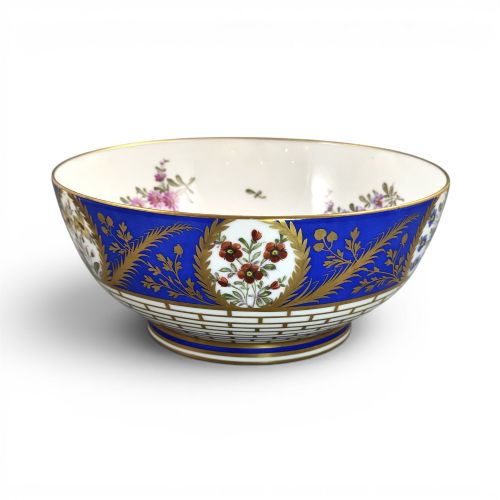
Ceramic bodies receive hand-painted glazes, often incorporating blue grounds, armorial motifs, or pictorial scenes beneath protective surface finishes.
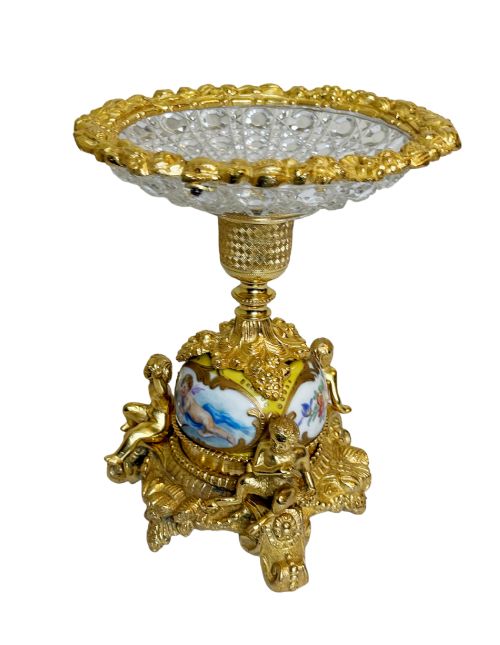
Metalwork mounts utilise gilt bronze, ormolu, and gold leaf, framing the porcelain with cast handles, feet, and decorative borders.
Champlevé enamel and cut crystal integrate into the mounts and bodies of the more elaborate centrepieces and comports.
Listings feature porcelain, gilt bronze, enamel, ormolu, gold leaf, and glaze across nineteenth-century and art deco periods.
What varies in quality
Painting execution separates standard factory output from master work, visible in the precision of floral subjects, figures, and gilt detailing.
Mount quality depends on the weight and crispness of the gilt bronze or ormolu, where deep chasing and secure physical integration elevate the vessel.
Samson Paris·Ahrenfeldt And Asalvary·Louis Pierre Malpass·Haviland
The French Porcelain Bowl Glossary
- Ormolu
- Gilt bronze applied as a decorative mount to porcelain vessels. This technique was widely utilised by French makers to add structural support and ornamentation.
- Comport
- A decorative footed bowl or dish raised on a pedestal. These pieces typically served fruit or sweetmeats on formal dining tables.
- Champlevé
- An enamelling technique where troughs are carved into metal and filled with vitreous enamel paste before firing. It appears frequently on nineteenth-century mounts.
- Bisque
- Unglazed fired porcelain that presents a matte, white marble-like texture. Makers used this material for figures and decorative centre bowls.
French Porcelain Bowl: Frequently Asked Questions
How do I identify a Sevres style bowl?
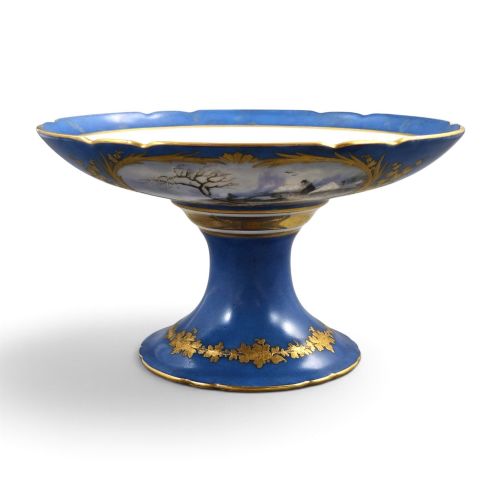
Sevres style pieces usually display rich blue grounds, gilt highlights, and painted panels depicting figures or landscapes. They often take the form of comports or pedestal bowls.
Many nineteenth-century French makers adopted these distinctive royal aesthetics, producing decorative wares that emulated the famous royal factory's output.
Were these bowls used for food?
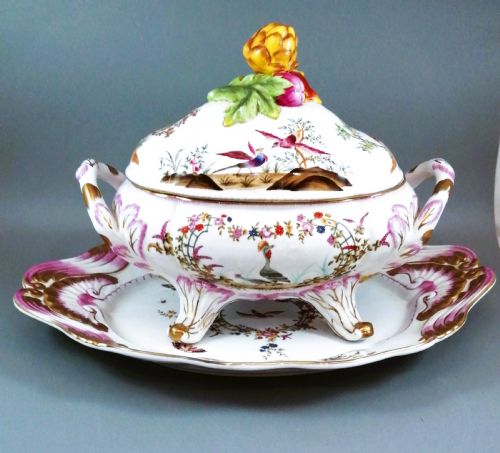
While some larger pieces served as fruit bowls, soup tureens, or comports during dining, many smaller vessels had entirely decorative purposes.
Powder boxes, trinket dishes, and lidded bowls were designed for dressing tables and drawing rooms rather than the dining table.
What metal is used for the mounts?
Mounts are typically made from gilt bronze or ormolu, providing a bright golden contrast to the porcelain body. Some pieces incorporate champlevé enamel within the metalwork.
These mounts were cast separately and fitted securely to the ceramic base, rim, or handles.
How should I date an antique porcelain bowl?
Dating relies on stylistic clues such as rococo revival curves, art deco geometric lines, or Victorian-era motifs recorded in the piece's design.
Maker marks, signature styles, and the specific composition of the glaze and mounts also help determine the period of origin.