




French Period Settee Sofa
A french period settee sofa brings classical seating into a room, offering carved frames and upholstered comfort from past centuries.
French Period Settee Sofa
When you search for a french period settee sofa, you are looking at seating forms that range from two-seat settees to larger daybeds and canapés. These pieces originate from various eras, including the nineteenth century and early twentieth century, reflecting enduring continental designs.
You are most likely to meet pieces shaped by traditional stylistic revivals, particularly Louis XV and Louis XVI aesthetics. These items appear in formats such as salon suites, love seats, and grand gilt frames.
The inventory covers a spectrum of historical influence, from Regency French Empire-style creations to painted fruitwood Directoire models. Each object carries the distinct proportion and carved detail characteristic of its manufacturing period.
Materials and construction
Makers shaped these frames from solid timbers including walnut, fruitwood, and mahogany, often applying layers of paint or gold leaf to the carved surfaces. Giltwood and painted wood finishes provide the luminous outer appearance typical of formal continental seating.
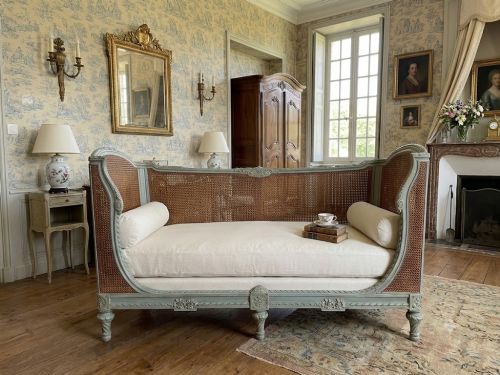
Upholstery techniques rely on traditional textiles such as velvet, linen, and woven fabric stretched across sprung or stuffed foundations. Caning also appears frequently on backrests and side panels, woven from natural materials to create a lighter, breathable surface.
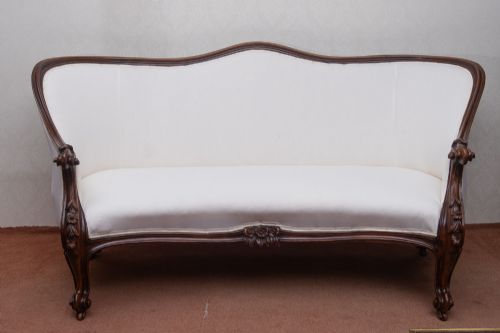
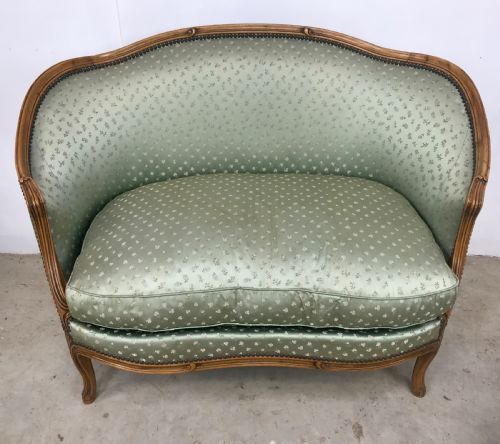
Carved wooden details define the structural ornamentation, featuring floral motifs, scrolls, and fluted legs executed by hand. Joinery methods connect the arms, backs, and rails to support daily sitting while maintaining decorative harmony.
Some nineteenth-century makers concealed love seats inside everyday architectural layouts, waiting quietly for someone to whisper French poetry.
Evaluating construction and finish
The crispness and depth of the hand-carved wood ornamentation separate simpler frames from finely worked examples. Artisans who achieved subtle relief work and balanced proportions produced pieces with greater visual presence.
The integrity of the original gilt or painted surface layer dictates much of the visual character. Surviving finishes that retain their original patination without heavy modern intervention hold distinct qualities.
Structural robustness depends on the joinery connecting the legs and seat rails. Solid timber frames that remain rigid without movement demonstrate superior foundational integrity.
The French Period Settee Sofa Glossary
- Canapé
- An upholstered French sofa or settee, typically featuring an exposed wooden frame and carved details.
- Giltwood
- Timber coated with a thin layer of gold leaf or powder, widely used on formal nineteenth-century frames.
- Directoire
- A transitional French style bridging Louis XVI and Empire periods, characterised by simpler, neoclassical lines.
- Caning
- Woven plant material forming openwork panels on the back or sides of a seat frame.
- Salon suite
- A matched set of seating furniture designed for a formal drawing room or reception space.
French Period Settee Sofa: Frequently Asked Questions
Where should I place a settee?
These pieces suit formal living rooms, large hallways, or bedrooms where their decorative frames can be viewed from multiple angles. They also function well as seating in a study or library.
Ensure there is enough clear floor space around the piece so the carved wooden details and proportions remain visible.
How do I clean the fabric?
Gently brush upholstered velvet or linen surfaces with a soft-bristled brush to remove dust. Avoid harsh chemical cleaners that might damage antique textiles.
Consult a professional textile cleaner experienced in handling historical fabrics if deeper cleaning becomes necessary.
Can I sit on it daily?
Most antique settees tolerate normal sitting, but they require more gentle treatment than modern mass-produced furniture. Avoid heavy impacts or leaning excessively on the arms.
Checking the stability of the frame and joints periodically helps prevent structural strain over time.
How do I date a piece?
Examine the timber species, carving style, and construction methods to establish a chronological window. Louis XV and Louis XVI revival pieces often echo eighteenth-century forms while employing nineteenth-century joinery.
Compare the turned or fluted leg shapes and surface finishes against documented examples from specific decades.