

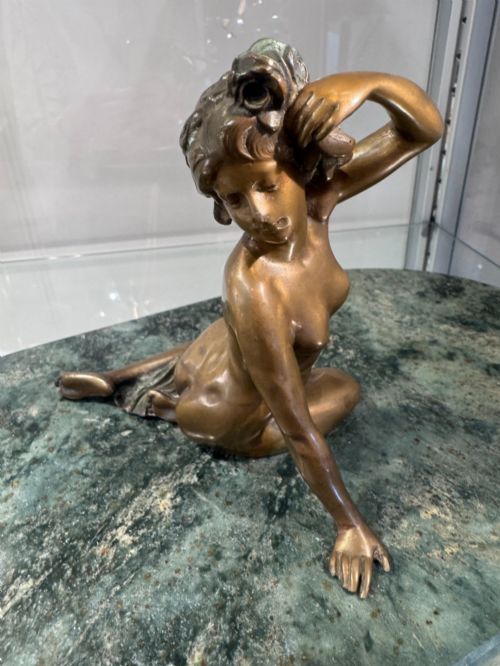

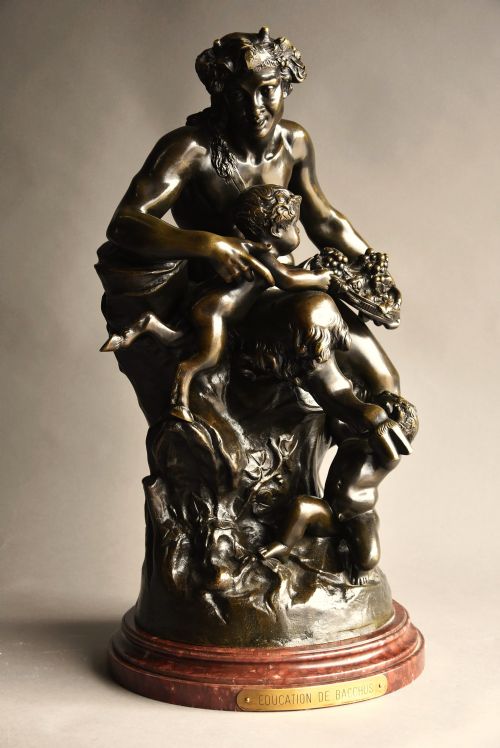
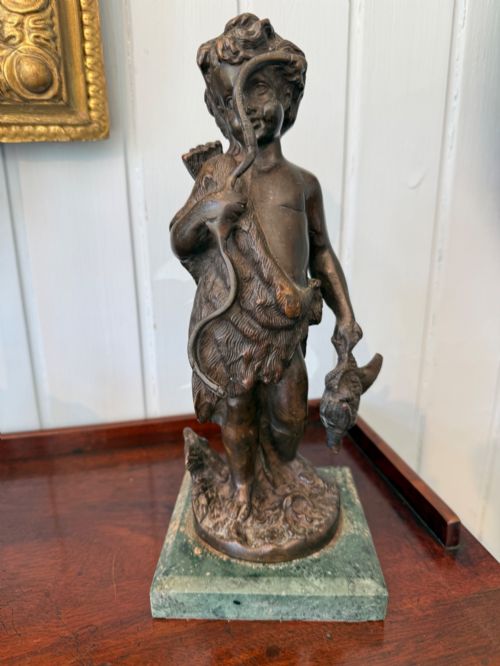
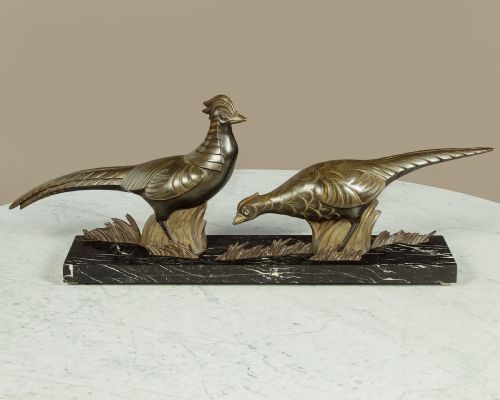
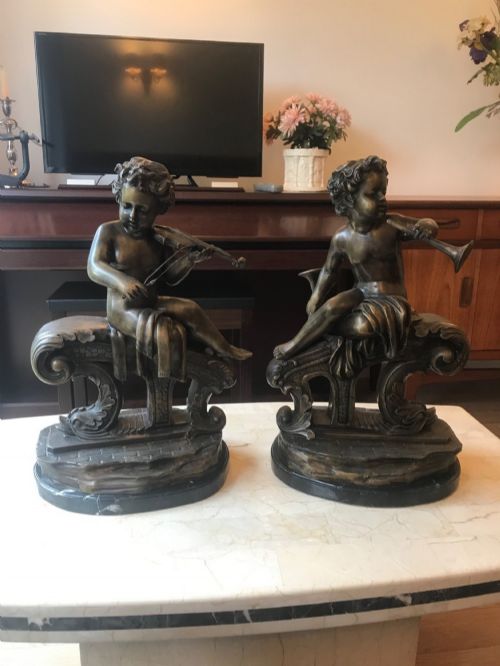

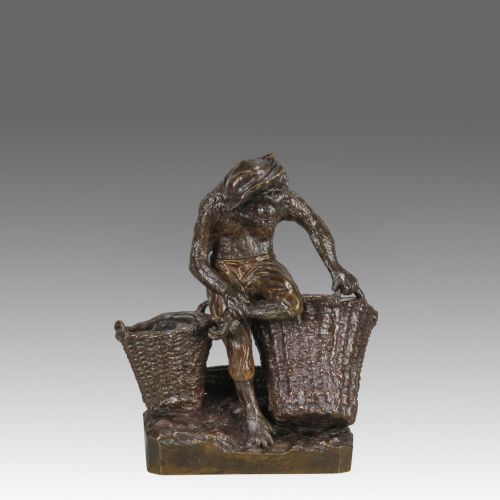
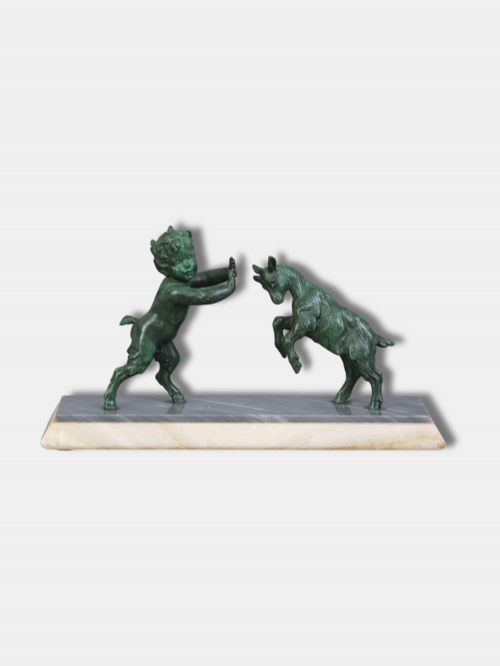
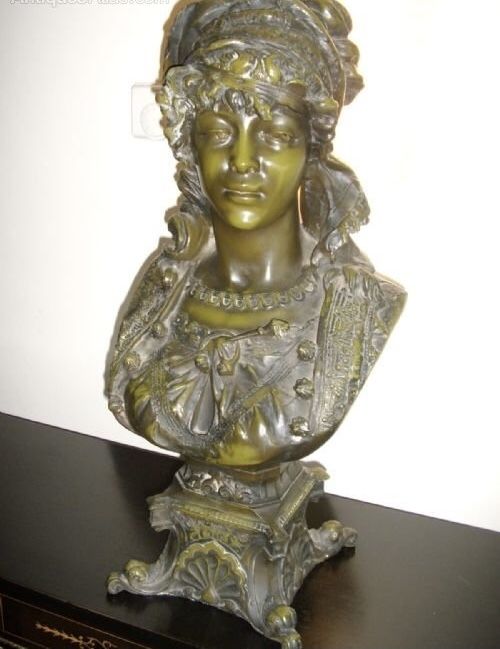
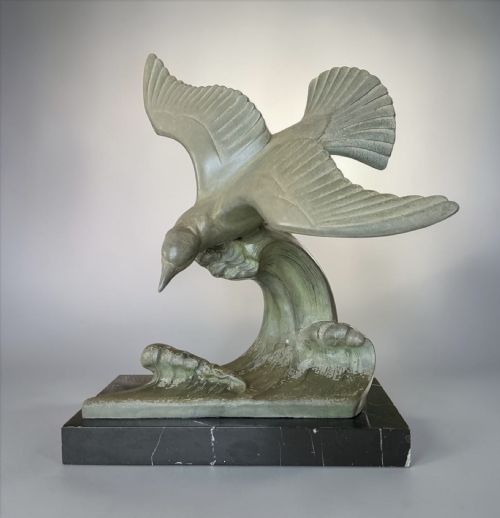


French Patinated Metal Statue
These french patinated metal statue pieces range from classical figures to decorative bookends, shaped by nineteenth-century foundry traditions and twentieth-century modernism.
French Patinated Metal Statue
A french patinated metal statue combines figurative casting with chemical surface treatments, appearing primarily as standalone sculptures, bookends, and candlesticks. Buyers searching this phrase encounter nineteenth-century classical subjects alongside twentieth-century animal and human forms.
The objects span Victorian, Art Nouveau, and Art Deco aesthetics, reflecting the shifting tastes of French workshops. Figures seated on marble bases and paired mantel ornaments dominate the physical formats available here.
Makers and sculptors often signed these metalworks, connecting individual pieces to known Parisian studios and foundries. The selection includes works cast in bronze and spelter, carrying patinations from dark brown to polychrome finishes.
Materials and casting methods
Foundries utilised bronze and spelter as primary base metals, pouring molten material into moulds derived from original clay or plaster models. Spelter served as a more economical alternative to bronze, especially for decorative figures and candlesticks.
Surface patination was applied through chemical treatments or cold painting to simulate aged metal or add polychrome colour. Marble and onyx plinths frequently provided stable weighted bases for upright figures and bookends.
Materials recorded across the inventory include bronze, spelter, marble, onyx, and metal.
Assessing quality
Quality rests upon the crispness of the chased detail after casting, separating sharp definition in hair and drapery from soft, blurred surfaces. Superior patination shows depth and even coverage rather than flat, uniform paint.
The integrity of the base material and the weight of the casting distinguish robust metalwork from fragile alloys. Signed pieces by established sculptors demonstrate higher standards in both artistic modelling and foundry execution.
Lemoyne·Claude Michel Clodian·E Villanis·Christophe Fratin·Emile Carlier·Henry Wissen Senior·Jean Jules Salmson·P Sega·Lucien Madrassi·J Camus·Adolphe Jean Lavergne·H Bal·Arthur Waagen·Charles Cumberworth·Jean Jacques Pradier·Georges Van Der Straeten·Louis Riche
The French Patinated Metal Statue Glossary
- Patinated metal
- Metal treated with chemicals to produce a specific surface colour or aged finish. This process protects the underlying material while enhancing visual depth.
- Spelter
- A zinc alloy utilised as a cheaper alternative to bronze for decorative figures. It accepts patination well but possesses a softer structure than bronze.
- Animalier
- A nineteenth-century artistic genre focusing on the realistic depiction of animals. Sculptors in this style studied anatomy closely to portray wildlife and domestic dogs accurately.
- Cold painted
- A technique where paint is applied to metal without subsequent high-temperature firing. This method allows for delicate polychrome details on figures and animals.
- Chasing
- The manual finishing of a metal casting using small punches and hammers. Artisans refine surface textures and remove casting seams during this stage.
French Patinated Metal Statue: Frequently Asked Questions
How do I clean my statue?
Dust gently with a dry, soft cloth to prevent dirt accumulation on the patinated surface. Avoid abrasive cleaners or moisture that can damage chemical finishes.
Apply a microcrystalline wax sparingly if the metal requires protection, buffing it off completely with a clean brush.
Is spelter the same as bronze?
Spelter is a zinc-based alloy, whereas bronze is an alloy of copper and tin. Bronze offers superior strength and a heavier feel.
Spelter was widely used for decorative items and is generally lighter and more brittle than solid bronze.
What does patinated mean?
Patination refers to the surface coloration resulting from age or chemical treatment. It gives the metal its characteristic brown, green, or dark tones.
This finish protects the metal underneath and adds visual depth to the sculptural details.
How can I date my piece?
Dating relies on stylistic markers such as Victorian ornamentation, Art Nouveau curves, or Art Deco geometric lines. Signatures and foundry marks also help establish the production era.
Examine the base materials and mounting styles, as marble types and fastening screws changed over the decades.