




French Parlor Sofa
A french parlor sofa brings continental elegance to a room, offering grand seating shaped by centuries of stylistic revival.
French Parlor Sofa
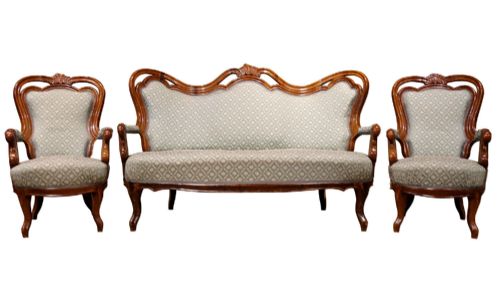
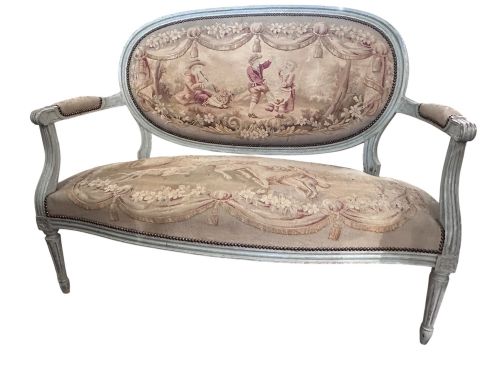
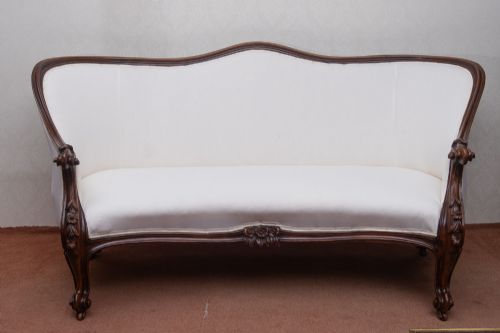
A french parlor sofa encompasses nineteenth-century and early twentieth-century seating forms designed for formal reception rooms. These pieces appear in distinct revivals such as Louis XVI, Rococo, and Empire styles, reflecting historical European design aesthetics.
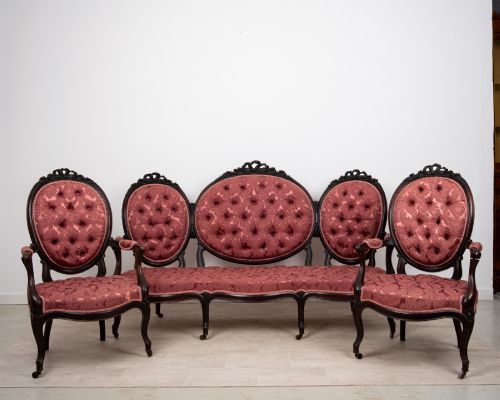
The inventory on this page ranges from single two-seat settees and canapés to complete multi-piece salon suites. Buyers encounter carved walnut, giltwood, and painted wooden frames paired with textile, fabric, or deep-buttoned upholstery.
Materials and construction
Frames rely upon hardwoods such as walnut, mahogany, beech, and giltwood, selected for their structural stability and capacity for intricate carving. Craftsmen shaped these timbers into curved cabriole legs, fluted columns, and ornamented crest rails.
Upholstery techniques involve traditional stuffing secured with fabric or textile coverings, sometimes complemented by caning panels. Gilt and paint finishes applied to the wood surfaces complete the decorative presentation.
Deep-buttoned upholstery offers an unexpectedly comfortable perch for afternoon reading sessions.
Judging quality in seating
Quality rests upon the crispness of the wood carving and the integrity of the frame construction. Superior examples display deeply sculpted floral or classical motifs executed by skilled hands rather than mechanical tooling.
The cohesion of a suite and the preservation of original gilding, paint, or cane work distinguish finer pieces. Consistent proportion and harmonious upholstery choices elevate the presence of a settee within a room.
The French Parlor Sofa Glossary
- Canapé
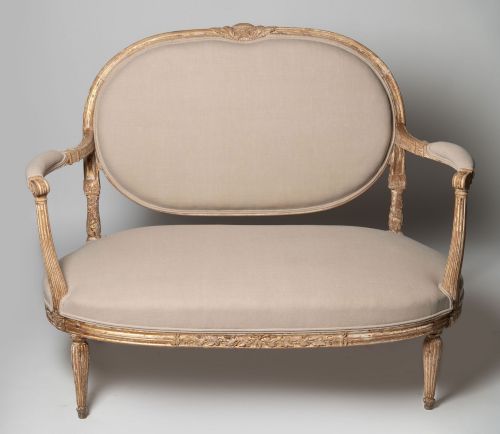
- An ornamental settee with an exposed wooden frame, typically featuring an upholstered seat and back. This form is central to traditional French salon seating.
- Giltwood
- Timber coated with a thin layer of gold leaf or gilt paint. This finish creates a luminous decorative surface on nineteenth-century frames.
- Salon suite
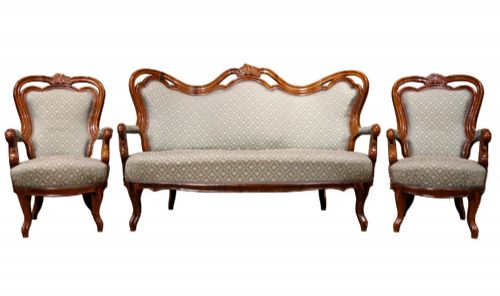
- A matching set of seating furniture, often comprising a sofa and matching armchairs. These suites furnished formal nineteenth-century reception rooms.
- Rococo revival
- A nineteenth-century design style drawing on eighteenth-century French motifs. It is characterised by asymmetrical scrolls, C-scrolls, and naturalistic floral carvings.
- Louis XVI style
- A neoclassical aesthetic defined by straight lines, fluted legs, and classical symmetry. Pieces in this style often incorporate oval backs and geometric ornamentation.
French Parlor Sofa: Frequently Asked Questions
How do I clean the upholstered fabric?
Gentle surface brushing removes loose dust from delicate textiles and buttoned upholstery without damaging the underlying stuffing. Professional cleaning is advisable for deeper maintenance.
Harsh chemical detergents or excessive moisture should be avoided to protect antique fabrics and wooden frames from deterioration.
Can these sofas fit modern rooms?
Compact settee variants and light painted finishes integrate smoothly into contemporary sitting rooms and bedrooms. Their slender frames occupy less visual weight than bulky modern seating.
Larger multi-piece salon suites require substantial floor space to balance their decorative impact within a room layout.
What defines a Louis XVI style frame?
Straight fluted legs, ribbon carvings, and rectangular or medallion-shaped backs identify the neoclassical Louis XVI aesthetic. These elements contrast with the curved lines of earlier rococo designs.
Finishes typically include cream paint, giltwood, or polished walnut highlighting the restrained geometric ornamentation.
Where were these parlor suites used?
Nineteenth-century households placed these suites in formal parlours and reception rooms designated for entertaining guests. They served as primary seating arrangements during social gatherings.
Today, they function as statement pieces in living areas, entrance halls, or drawing rooms.