

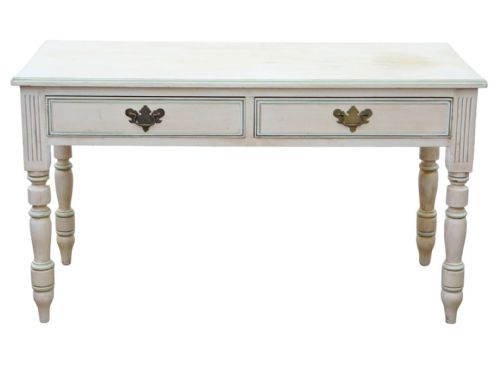


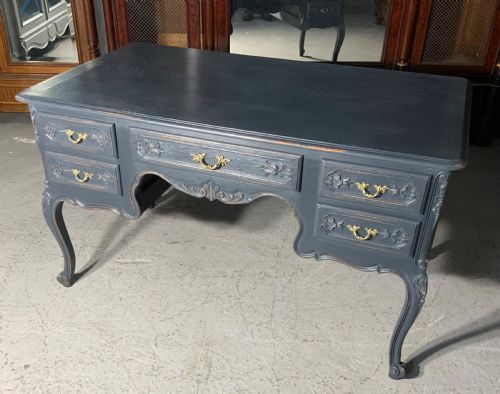


French Painted Writing Desk
A french painted writing desk brings colour and continental elegance to a room, offering a surface designed for correspondence and paperwork.
French Painted Writing Desk
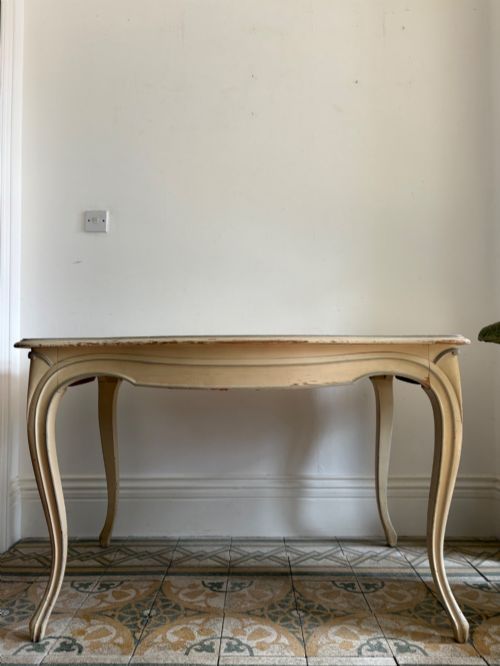
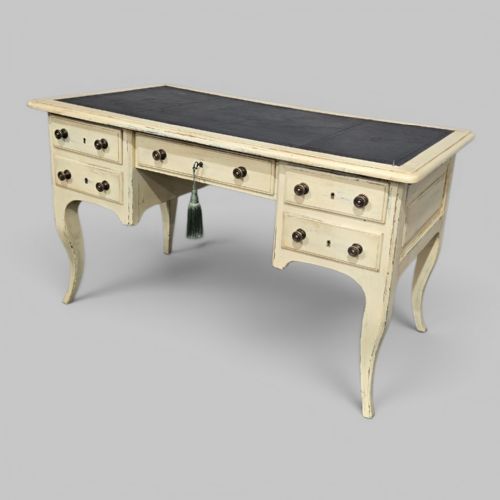
A french painted writing desk combines practical workspace with decorative painted finishes, appearing across various styles from provincial designs to more ornate revival periods. These pieces include kneehole desks, writing tables, and secretaires featuring painted surfaces alongside timber construction.
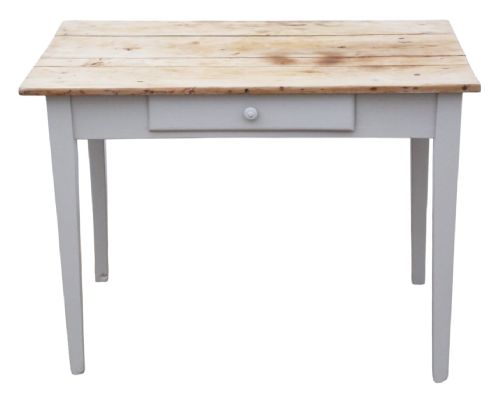
Most examples found here date from the nineteenth century up to the nineteen-twenties, showing influences from Louis styles through to country interpretations. Forms range from simple side tables adapted for writing to elaborate secretaires with fitted drawers and marble tops.
Materials and construction
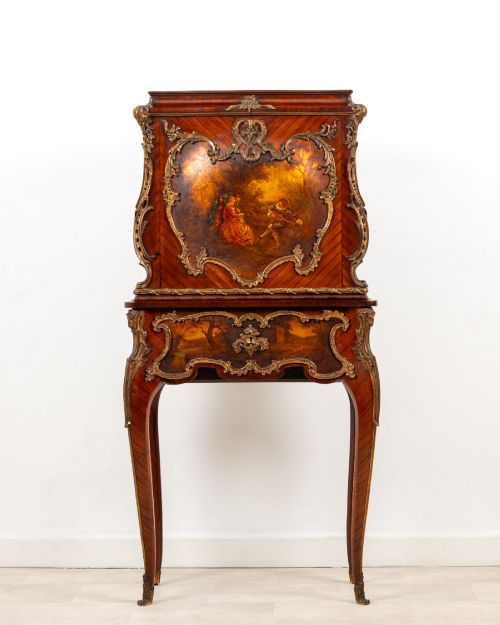
Pieces are constructed from timber such as walnut, oak, and kingwood, frequently finished with paint or vernis martin panels. Brass and ormolu mounts provide decorative accents to corners, handles, and legs.
Surface decoration often involves hand-painted details or porcelain plaques set into the wood, paired with inset leather or suede writing surfaces. Cabinetwork utilises traditional joinery suited to supporting drop-front writing flaps and pull-out drawers.
Several pieces conceal hidden compartments and secret drawers, designed long ago for keeping private letters and valuables out of sight.
Markers of quality
Quality shows in the execution of the painted finish and the detail present in any applied brass or ormolu mounts. Superior examples display carefully fitted interiors, secret drawers, and substantial timber beneath the paint.
The sophistication of the overall style, whether a restrained provincial form or an intricate rococo revival piece, influences the character of the desk. Integrated details like marble tops and inset writing surfaces separate standard utility items from decorative cabinetwork.
The French Painted Writing Desk Glossary
- Vernis Martin
- A type of simulated Japanese varnish finish popular on eighteenth- and nineteenth-century French furniture. It creates glossy, decorative painted panels often depicting pastoral scenes.
- Secrétaire à abattant
- A tall writing cabinet featuring a drop-front flap that opens to reveal a desk surface and small pigeonholes. This form keeps correspondence concealed when not in use.
- Ormolu
- Gilded bronze mounts applied to furniture for decorative effect. These cast metal details highlight corners and drawer fronts on revival pieces.
- Cabriole leg
- A furniture leg that curves outward and then tapers inward, finishing in a small foot. It forms a characteristic feature of provincial and Louis-inspired designs.
- Bonheur du jour
- A small, light ladies' writing desk featuring a tiered superstructure with shelves and small drawers above the main writing surface.
French Painted Writing Desk: Frequently Asked Questions
What is a secretaire à abattant?
A secretaire à abattant is a tall cabinet with a hinged drop-front flap that folds down to create a writing surface. Inside, it typically houses a series of small drawers and pigeonholes for correspondence.
This form allows paperwork to be neatly enclosed and concealed when the flap is closed, keeping rooms tidy.
How do I care for a painted wood desk?
Care for a painted wood surface by dusting regularly with a soft, dry cloth and avoiding harsh chemical cleaners. Keep the piece away from direct sunlight and strong heat sources to protect the paint and timber.
If the desk has an inset leather or suede writing panel, clean it gently according to its specific material requirements.
What distinguishes Louis XV style furniture?
Louis XV style furniture is characterised by asymmetric curves, natural motifs, and an absence of straight lines. Pieces often feature cabriole legs, serpentine fronts, and elaborate ormolu mounts.
This style draws on rococo influences to create flowing, decorative forms that prioritise elegance and movement.
Where were these desks used?
These desks were originally placed in private studies, drawing rooms, and bedrooms for reading, writing letters, and managing household accounts. Their decorative painted finishes ensured they suited domestic reception rooms rather than purely utilitarian offices.
Today, they function well in home studies, living spaces, or bedrooms as both workspace and decorative furniture.