






French Oval Centre Table
A french oval centre table brings undeniable presence to a room, offering grand proportions and sophisticated lines that anchor a principal living space.
French Oval Centre Table
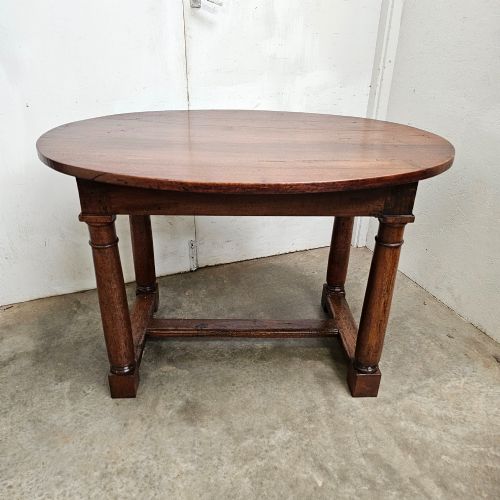
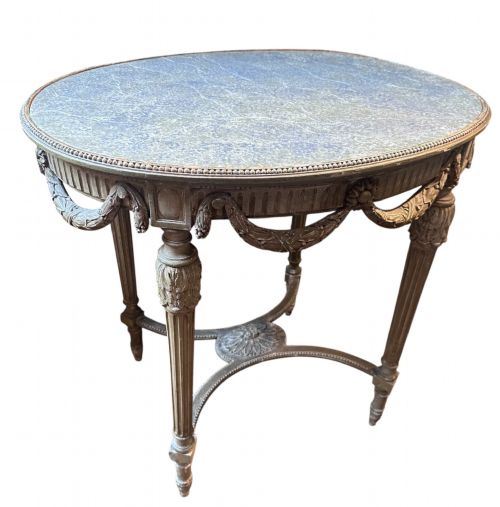
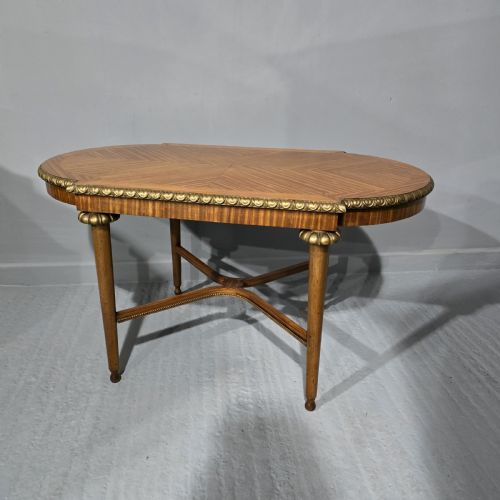
When searching for a french oval centre table, collectors look for distinctive freestanding tables designed to sit proudly in the middle of a room rather than against a wall. The pieces appearing here span from the 18th century through the Victorian era up to the early 20th century, displaying forms such as occasional tables, coffee tables, and traditional centre tables.
The most common examples encountered on this page showcase classic continental revival aesthetics, including Louis XVI and Louis XV styles, alongside French Provincial and Empire influences. These tables serve practical functions while delivering strong decorative impact through their graceful curved outlines and polished top surfaces.
How they were made
Cabinetmakers utilised rich timber foundations such as mahogany, walnut, burr walnut, satinwood, and amboyna, often enhanced by intricate marquetry inlay. Tops frequently feature shaped marble inserts that add weight and a cool, smooth tactile contrast to the warm timber frames below.
Metal ornament played a defining role in construction, with cast brass, gilt bronze, and ormolu mounts highlighting corners, aprons, and hoof feet. Skilled joiners constructed these frames to withstand freestanding placement, ensuring stability from every viewing angle.
French Oval Centre Table Retail Price Guide 2026
Typical asking prices for french oval centre table among the pieces listed under this phrase on Sellingantiques today, from the lower quarter to the upper quarter. They describe what is for sale here now, not the wider market.
The listings on this site combine walnut, mahogany, and satinwood with luxurious marble tops and cast ormolu mounts.
What varies in quality
Quality reveals itself in the crispness of the cast bronze or ormolu mounts and the precision of the timber inlay work. Superior examples demonstrate seamless integration between the decorative metalwork and the underlying wood structure.
The choice and handling of materials dictate the upper tier of the range, where figured timbers like burr walnut meet heavy, flawless marble tops. Lower tiers rely on simpler painted finishes or plain mahogany without the nuanced detailing found on the finest revival pieces.
A. Beurdeley·Gillows
The French Oval Centre Table Glossary
- Ormolu
- Gilt bronze applied as a decorative mount to furniture. This technique involved mercury gilding on bronze to create a bright, lasting golden finish.
- Marquetry
- The art of applying pieces of veneer to a structure to form decorative designs and pictorial patterns. Cabinetmakers used contrasting woods to achieve striking tonal variations.
- Gueridon
- A small decorative stand or table, typically round or oval. Originating in France, these pieces often feature slender legs and distinct surface inlays.
French Oval Centre Table: Frequently Asked Questions
Where should I place a french oval centre table?
These tables are designed to stand in the middle of a room, allowing them to be admired from all sides without obstructing natural pathways.
They work particularly well as focal points beneath central ceiling lighting or anchor pieces in large entrance halls and drawing rooms.
How do I identify a Louis XV style table?
Louis XV style pieces are characterised by sweeping curves, cabriole legs, and asymmetrical ornamentation inspired by natural plant forms. You will often spot floral marquetry and delicate ormolu mounts following the undulating edges of the frame.
Later revival pieces maintain these fluid silhouettes while adapting the proportions for domestic interior use during the nineteenth century.
Are marble top tables difficult to maintain?
Marble tops require simple cleaning with a damp cloth and mild soap, avoiding acidic substances that can etch the polished stone surface. Their heavy weight keeps them secure on the wooden base without requiring permanent fixings.
Over time, the stone develops a soft patina that complements the aged timber and metal mounts of the table.
What is the difference between a gueridon and an occasional table?
A gueridon traditionally refers to a specific French freestanding pedestal table design, often featuring an elevated decorative quality and an oval or round top. Occasional tables encompass a broader category of smaller movable pieces built for specific transient uses around a room.
Both forms share the characteristic versatility that allows them to function independently of wall arrangements.