
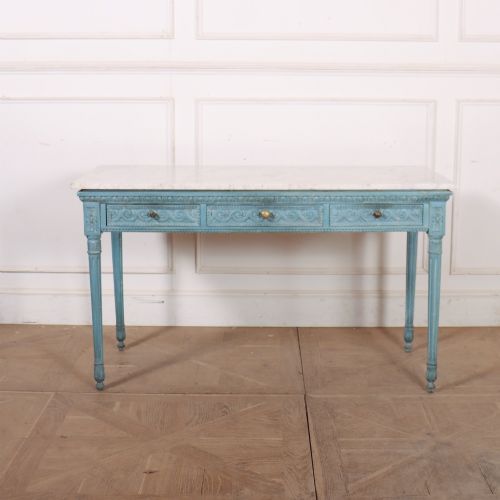
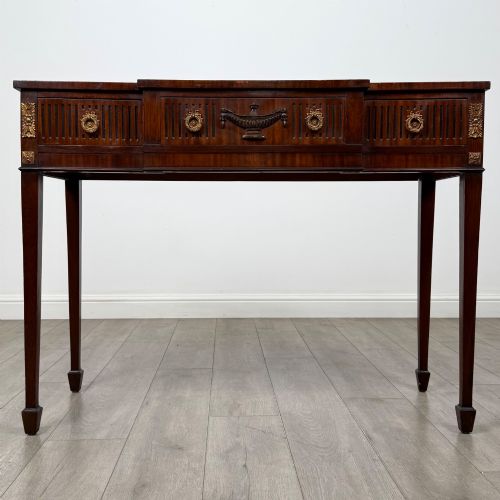
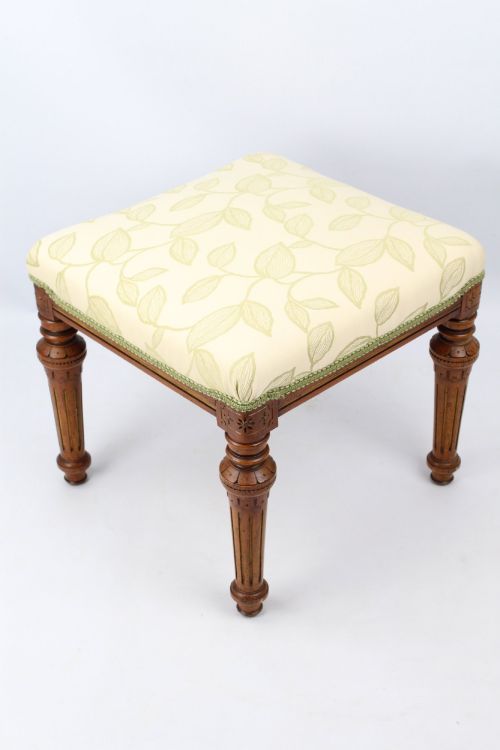
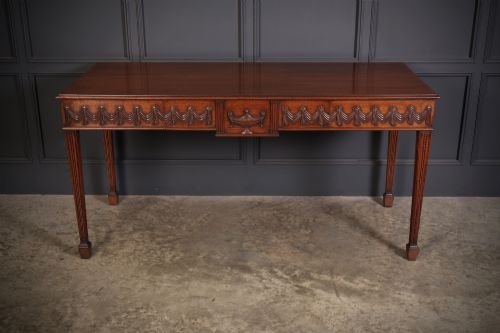

Carved Fluted Leg Table
A carved fluted leg table brings architectural restraint and classical proportion into a room, offering a surface grounded in centuries of cabinet-making tradition.
Carved Fluted Leg Table
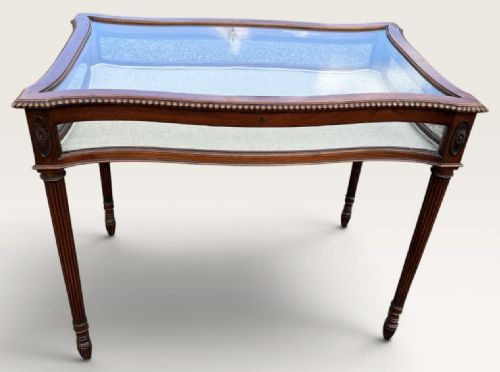
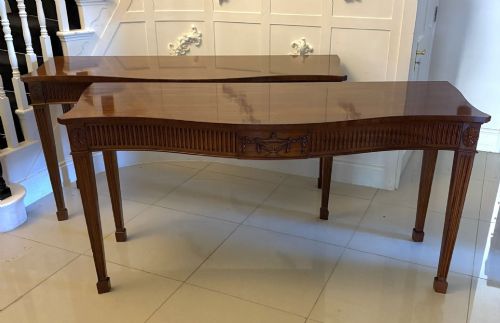
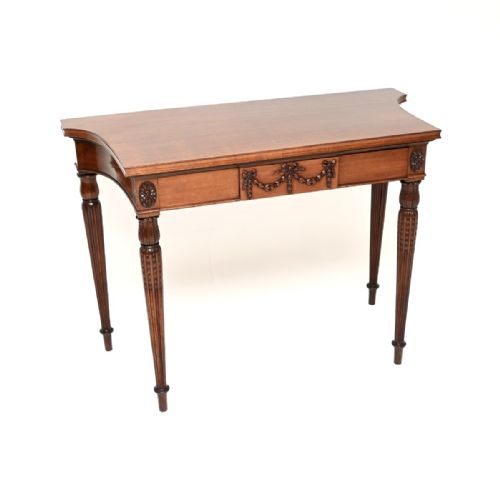
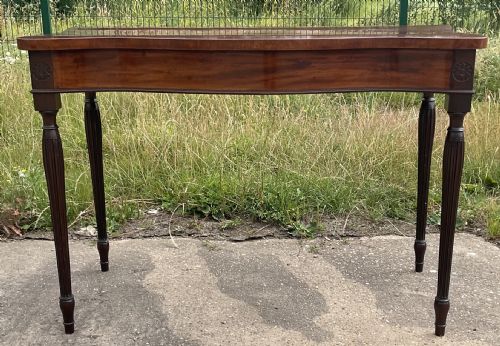
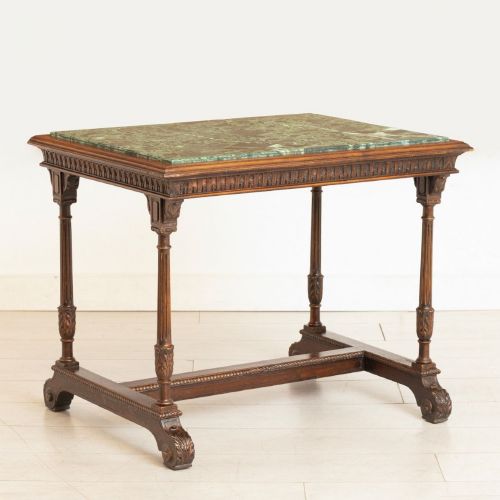
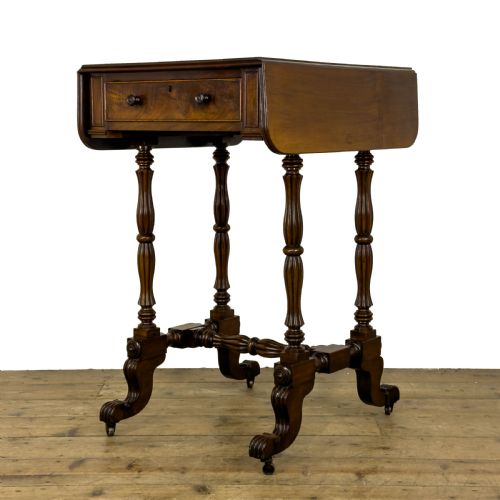
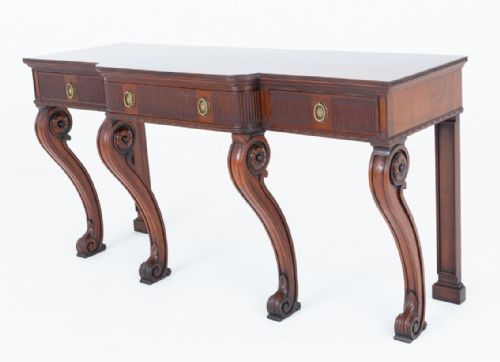
A carved fluted leg table is a piece of furniture defined by vertical channels carved into its supports, appearing predominantly in forms such as console tables, side tables, and serving tables. These pieces emerge across periods from the eighteenth century through to the early twentieth century, drawing on Georgian, Victorian, Edwardian, and continental design vocabularies. The version most commonly met on this page is the mahogany console or side table, often retaining classical revival detailing inspired by Adam or Louis XVI styles.
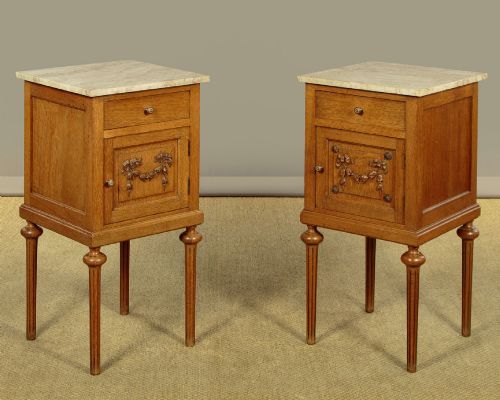
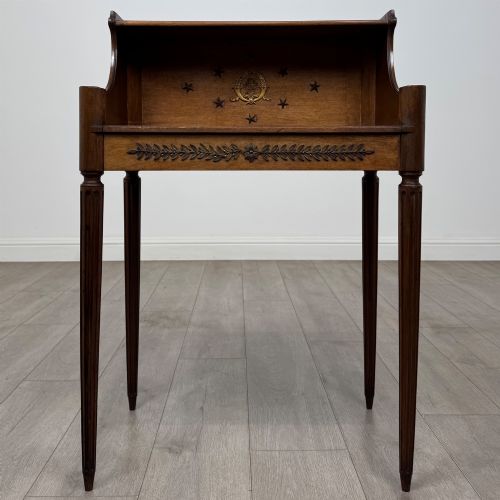
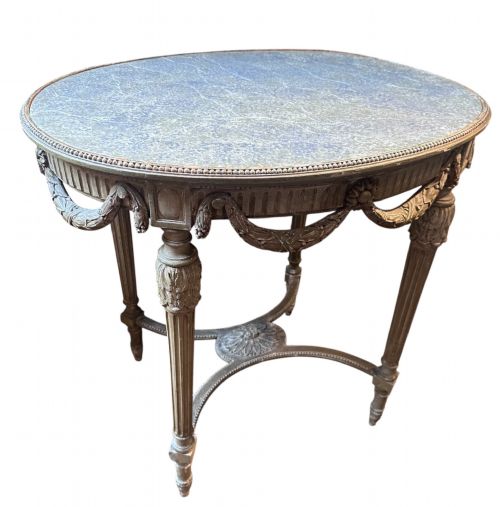
Makers and designers working in these idioms often paired the fluted support with serpentine fronts, demi-lune shapes, or inset marble tops of Italian or rouge varieties. Alongside mahogany and oak, walnut and painted woods appear frequently, occasionally accented with brass or giltwood. The architectural lineage of the leg links these diverse serving tables, desks, and occasional pieces into a coherent tradition of formal domestic furnishing.
Materials and Construction
Cabinet-makers relied heavily on dense hardwoods like mahogany and oak, turning the wood on a lathe before hand-carving the vertical flutes into the column or tapering leg. In more elaborate examples from the nineteenth and twentieth centuries, workshops incorporated decorative elements such as giltwood, brass inlay, or carved Corinthian capitals at the summit of the leg.
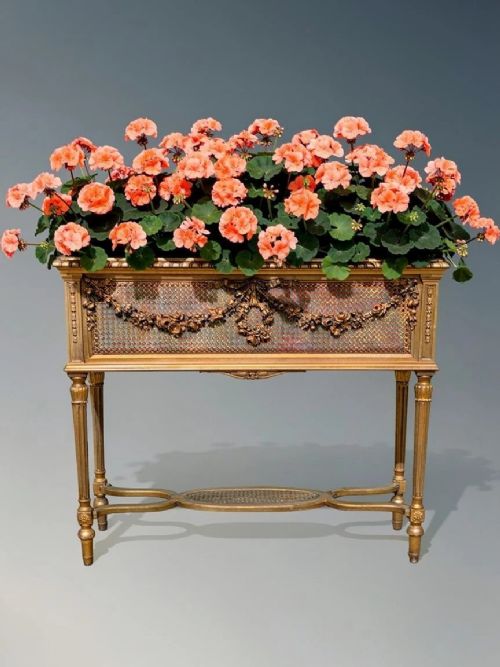
Surface treatments varied from polished French polish on mahogany to painted finishes and gilt accents on Italian and French console tables. Heavy stone elements, including Italian and rouge marble slabs, were frequently fitted to the tops of serving and console tables to provide a durable and contrasting surface.
One exceptional nineteenth-century writing table carried a brass trade plaque from Kensington High Street, ensuring the upholsterer's exact address survived into the modern era.
Standards of Execution
The distinction between ordinary and exceptional pieces rests upon the crispness of the hand-carved fluting and the integration of the leg into the wider frame. Superior examples demonstrate deep, clean incisions in the timber rather than shallow mechanical scoring, with secondary woods and joinery executed with equal rigour.
Proportion and material selection further elevate a table, as seen in the choice of well-figured mahogany, finely matched veneers, or substantial marble tops bedded securely into the wooden frame. Where classical details like capitals or carved friezes are rendered with depth and anatomical correctness, the piece achieves a higher grade of craftsmanship.
A. Beurdeley·Frank Giles
The Carved Fluted Leg Table Glossary
- Fluting
- A series of shallow, parallel concave grooves carved vertically into the shaft of a column or leg. This classical motif derives from ancient Greek and Roman architecture.
- Console table
- A table designed to be fixed against a wall, frequently supported by two front legs and secured at the rear by brackets. These tables often feature elaborate carving along the frieze.
- Demi-lune
- A half-moon shape used for the tops and frames of smaller side and console tables. This form allows the furniture to sit flush against a wall while projecting into the room.
- Serpentine
- A curved line that is convex in the middle and concave at the ends, creating an undulating edge. It appears frequently on the front rails of eighteenth and nineteenth-century serving tables.
- Giltwood
- Timber that has been coated with a thin layer of gold leaf or gilt powder. It is commonly found on decorative frames and neoclassical console tables.
Carved Fluted Leg Table: Frequently Asked Questions
What rooms suit a console table?
Console tables find a natural home in hallways, reception rooms, and dining spaces where a shallow footprint is required. Their flat backs allow them to stand securely against walls without obstructing thoroughfares.
In living areas, they function effectively as display surfaces for lamps, ceramics, or books, while dining versions serve well for serving food and drink during gatherings.
How do I care for a marble top?
Marble surfaces require gentle cleaning with a soft cloth and warm water, avoiding acidic substances like vinegar or citrus juice that can etch the polish. Using coasters and mats protects the stone from stains.
Occasional waxing with a neutral stone wax helps maintain the sheen of older Italian and rouge marble tops found on nineteenth-century tables.
How do I distinguish revival styles?
Georgian and Adam revival pieces from the Edwardian period often employ lighter internal construction methods and standardised machine-assisted carving alongside hand finishing. Nineteenth-century interpretations tend to use heavier timbers and display more pronounced regional variations in joinery.
Examining the secondary woods inside drawers and beneath table tops helps determine whether a piece belongs to the eighteenth century or a later nineteenth-century revival.
Can these tables be used as desks?
Certain forms, particularly writing tables and specific console designs with adequate knee clearance, accommodate everyday desk use. However, many antique console and side tables are built lower or feature decorative crossbars that limit legroom.
Reviewing the height and under-table clearance ensures the piece matches standard seating arrangements if intended for regular writing work.