
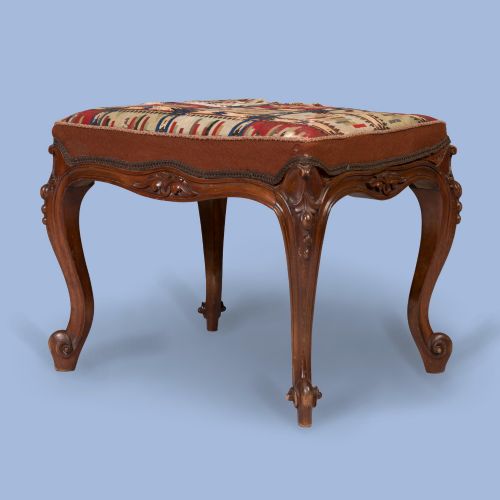


French Ottoman Stool
A French ottoman stool brings continental elegance and practical comfort to a room, offering versatile seating or a soft surface for the feet.
French Ottoman Stool
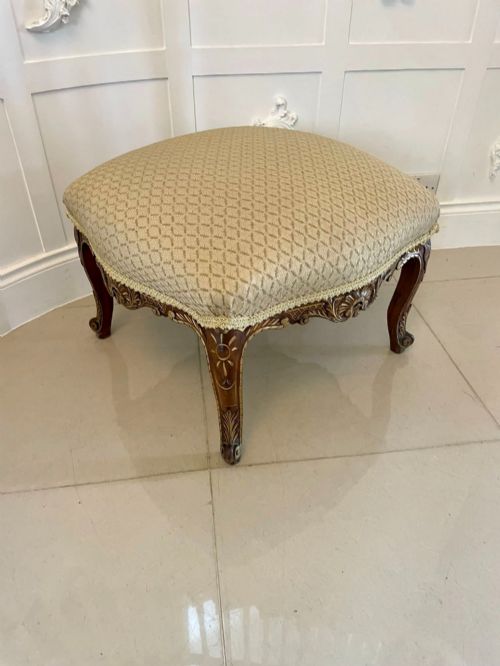
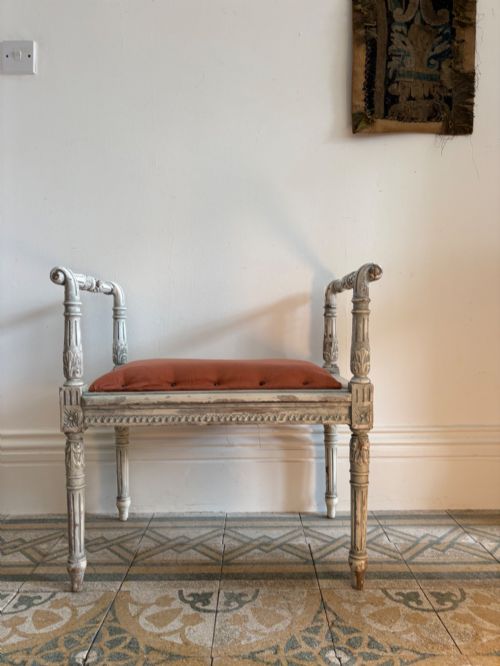
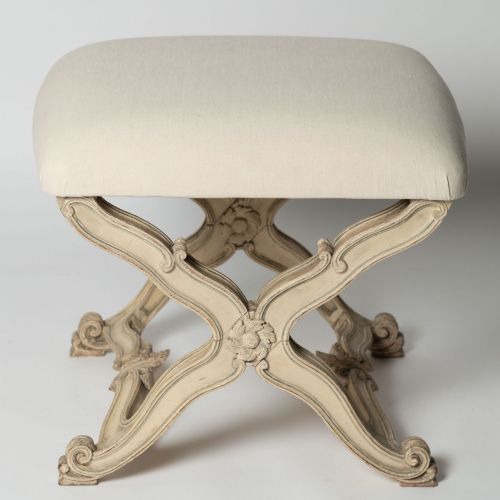
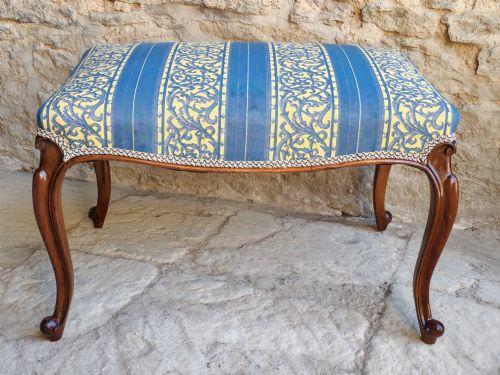
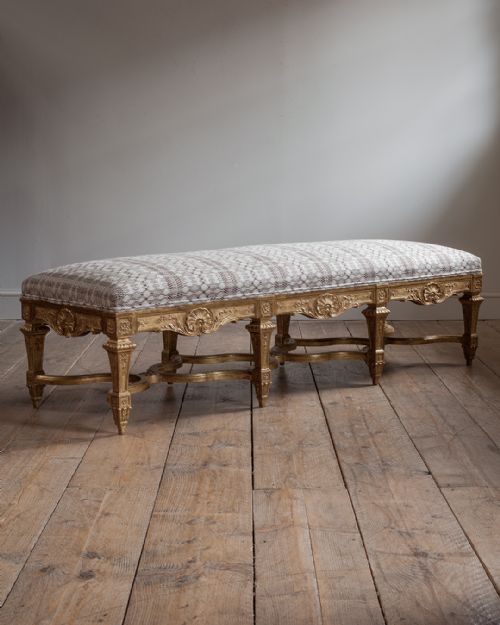
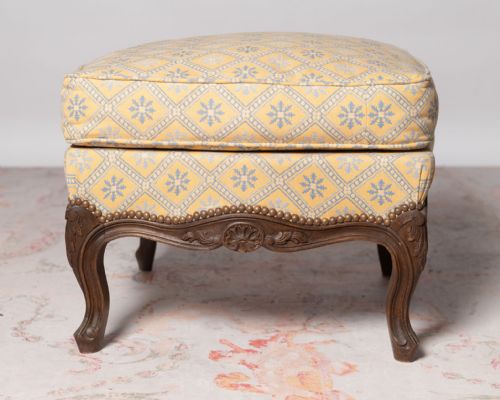
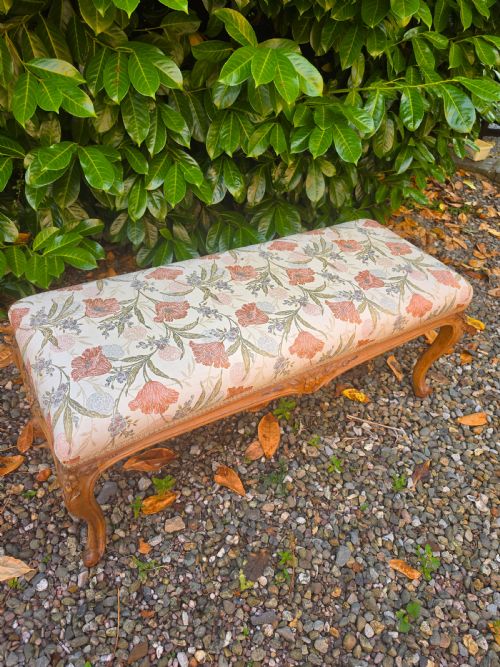
A french ottoman stool combines low-profile seating with decorative upholstery, taking forms such as window seats, footstools, and long dressing benches. These pieces often appear alongside armchairs or function independently as centre stools in a salon.
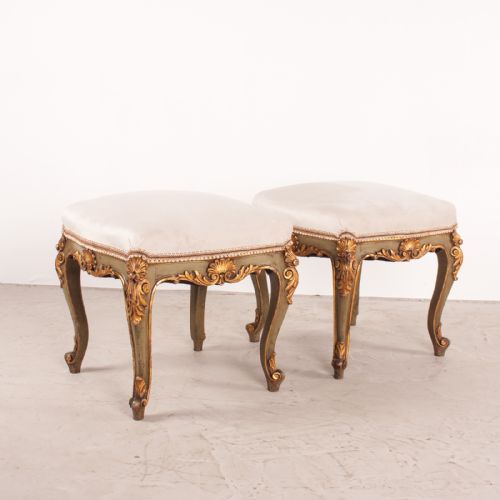
The selections span the nineteenth century and the early twentieth century, drawing on periods like the Victorian era alongside revival aesthetics. Walnut, giltwood, and painted wood provide the structural framework for these diverse designs.
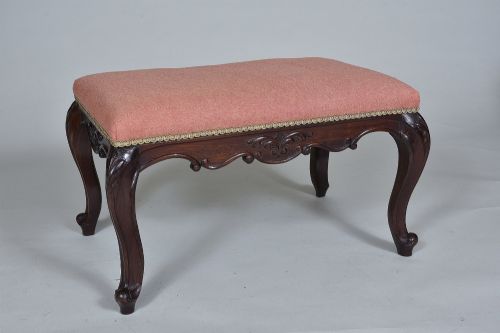
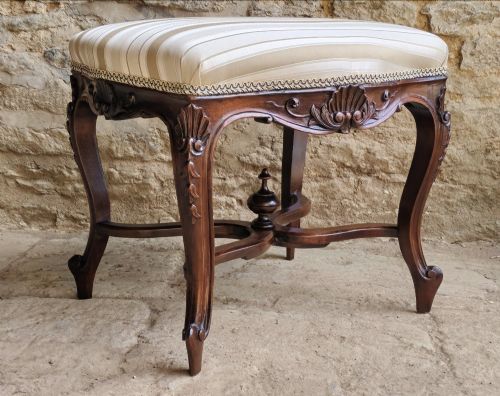
Makers and workshops produced everything from small footrests to large duet stools intended for music rooms or bedrooms. Continental influences shape much of the stock, particularly through Louis revival styles and carved cabriole legs.
How They Were Made
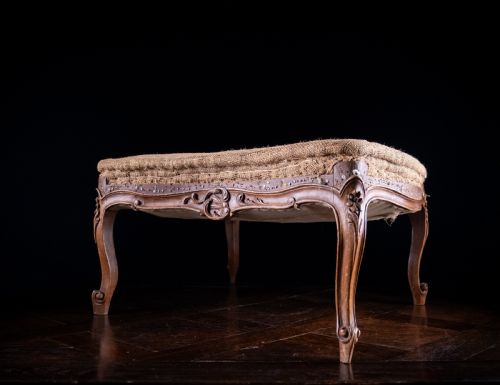
Carpenters shaped frames from dense hardwoods like walnut, mahogany, and beech, often applying elaborate carving, gilding, or paint finishes. Giltwood and ebonised surfaces required skilled gilders and polishers to achieve their decorative sheen.
Upholstery formed a central part of the construction, utilising textiles such as silk, velvet, needlework, and toile de jouy. Traditional stuffing and webbing supported the seat, sometimes complemented by buttoning or elaborate trimming.
Some nineteenth-century examples included a rocking mechanism, proving that Victorians wanted to move even while sitting still.
What Varies in Quality
The refinement of the wood carving dictates much of the visual merit, distinguishing simple turned supports from deeply sculpted cabriole legs and floral motifs. Crisp detailing in giltwood or painted finishes points to workshop proficiency.
The integrity and choice of the upholstery materials also separate examples, from standard fabric replacements to surviving period needlework and original textiles. Substantial frames built from solid walnut or mahogany hold up better than lighter constructions.
LOIDRAULT FRERES PARIS
The French Ottoman Stool Glossary
- Cabriole leg
- A furniture leg that curves outward and then tapers inward, ending in a pad or foot. This form draws heavily on eighteenth-century design principles revived during the nineteenth century.
- Giltwood
- Wood that has been coated with gold leaf or a gold-coloured metallic finish. It provides a bright, reflective surface popular in formal French seating.
- Toile de jouy
- A cotton or linen fabric featuring repeated pastoral or floral scenes printed in a single colour. It frequently appears on French revival upholstery.
- Duet stool
- An elongated seat designed for two people, often placed at the end of a bed or before a piano. These longer frames provide additional stability through extra legs.
- Window seat
- A bench-style stool intended to sit beneath a window, typically featuring upholstered seating and decorative end supports.
French Ottoman Stool: Frequently Asked Questions
Where should I place a french ottoman stool?
These stools work well at the foot of a bed, beneath a window, or as a flexible seating option in a living room. They also function alongside matching armchairs as a coordinated footrest.
Because of their compact size, they move easily between rooms to provide extra seating when hosting guests.
How do I care for the antique upholstery?
Protect the fabric from direct sunlight to prevent fading and keep textiles clean with gentle vacuuming using a soft brush attachment. Avoid harsh chemical cleaners on delicate surfaces like silk or needlework.
Wooden frames benefit from occasional dusting with a dry cloth to maintain the finish without damaging the patina.
Can I use these stools for daily seating?
Solid hardwood frames built from walnut or mahogany offer sturdy support for everyday use. Checking the internal webbing and padding ensures the seat remains comfortable and secure.
Some pieces designed primarily as decorative footstools or window seats may have lighter frames best suited for occasional sitting.
What styles are most common?
Victorian and Louis revival designs dominate the selection, featuring curved cabriole legs, carved wooden frames, and elaborate gilding. Painted finishes in white or neutral tones also reflect Gustavian and French provincial influences.
Upholstery ranges from plain velvet and silk to patterned needlework and classic toile de jouy prints.