

French Ormolu Table Centre
A french ormolu table centre brings lavish gilt bronze ornamentation and rich timbers into a room, serving as a striking freestanding focal point.
French Ormolu Table Centre
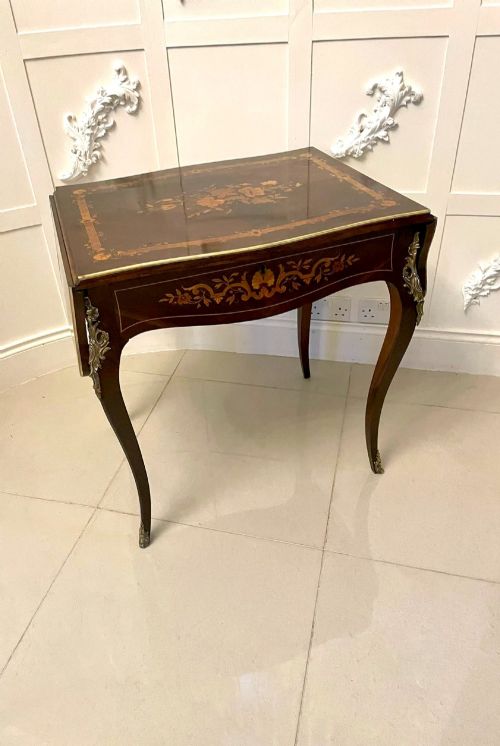
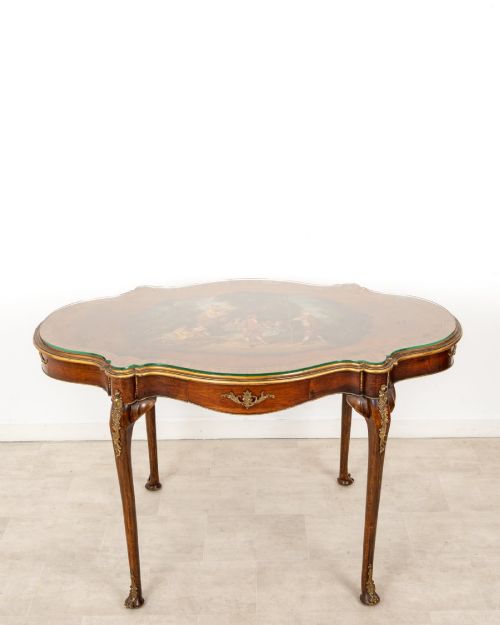
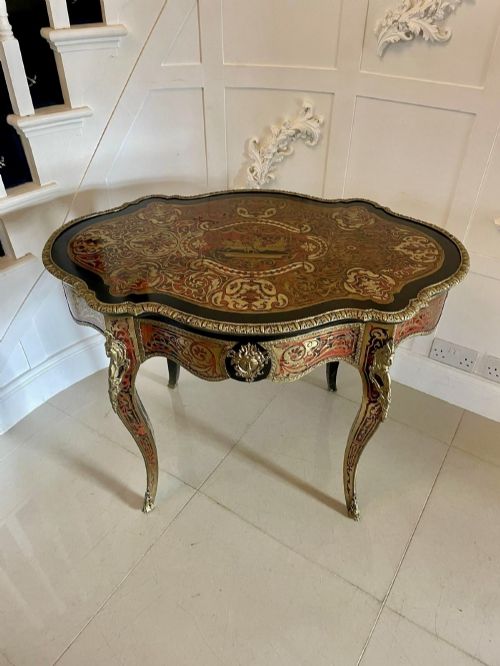
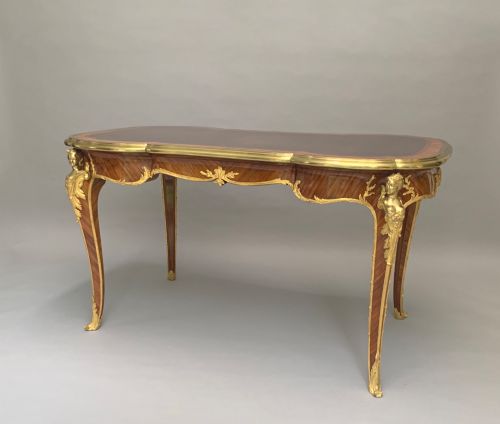
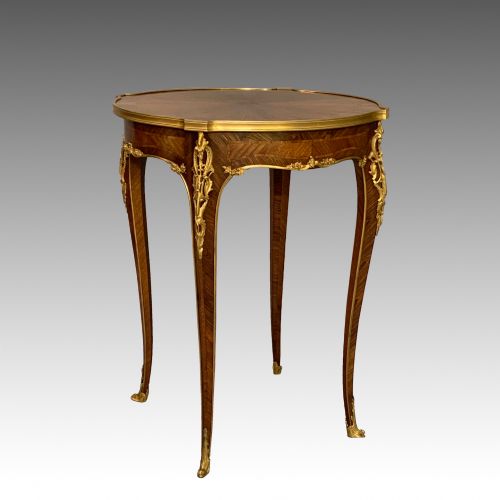
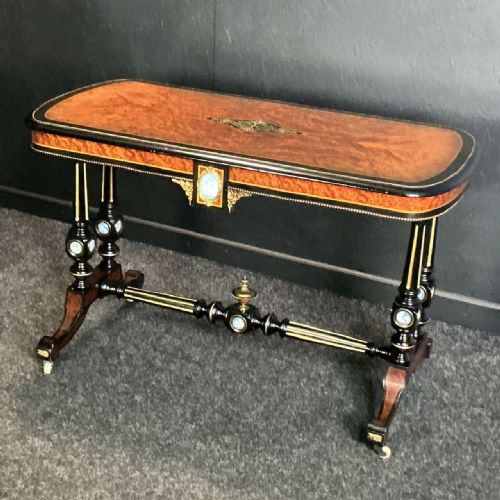
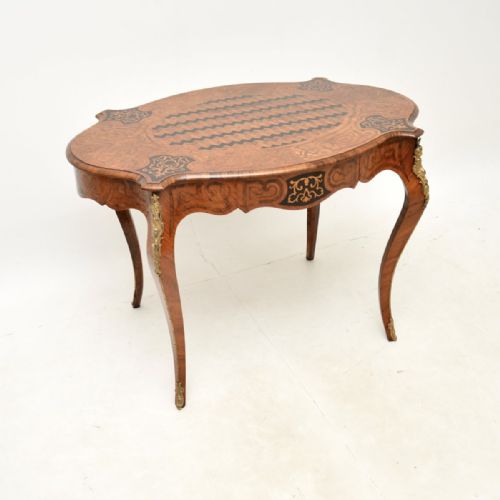
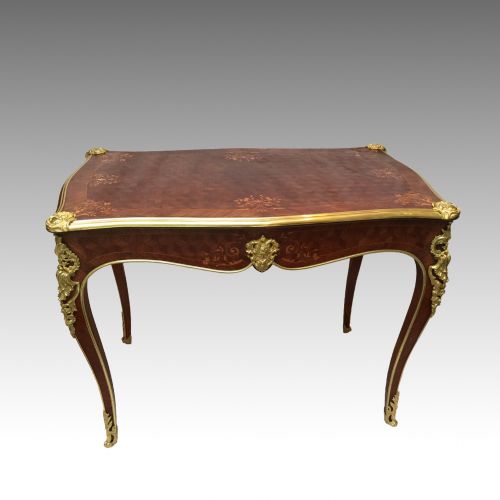
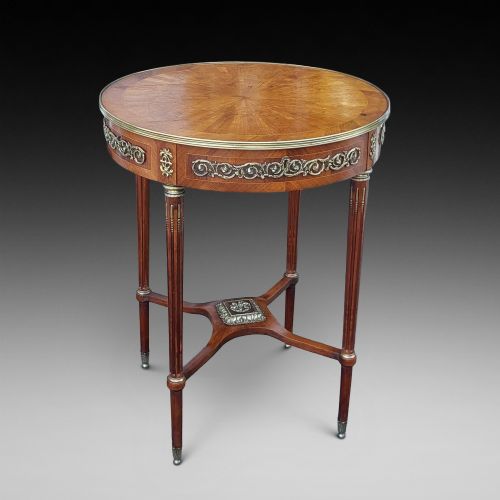
A french ormolu table centre is a freestanding table designed to be viewed from all sides, commonly taking the form of a centre table, gueridon, or bureau plat. These pieces frequently date from the nineteenth century, spanning Victorian, Napoleon III, and Edwardian periods.
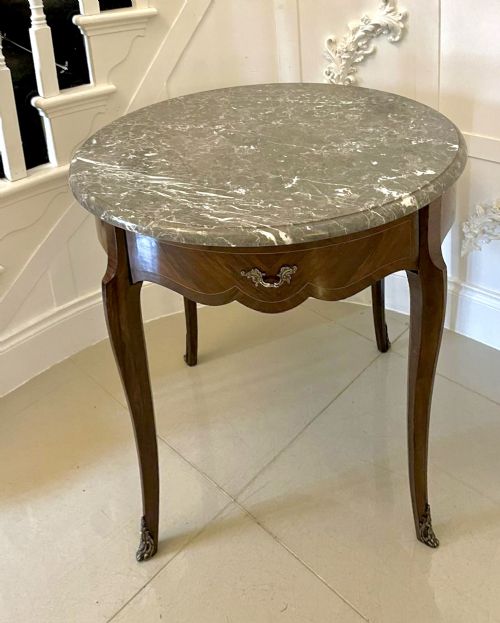
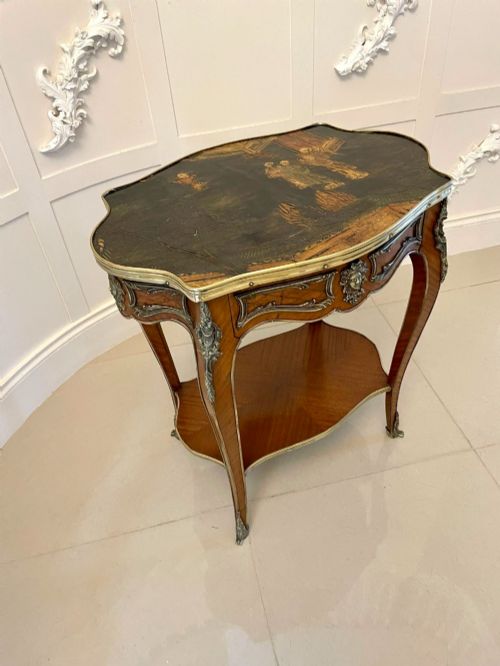
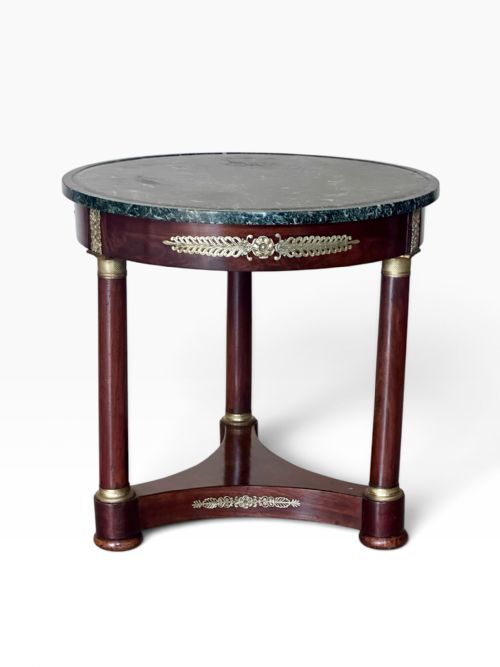
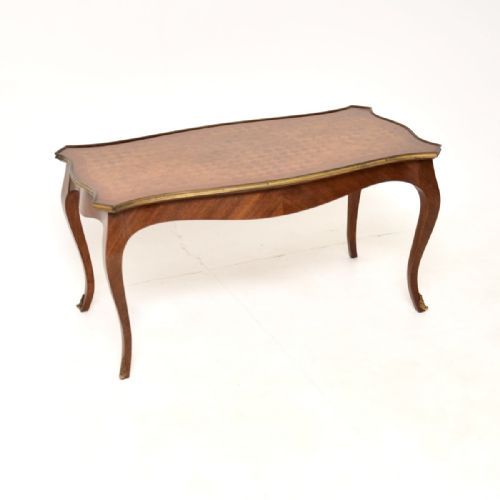
The selection on this page leans heavily towards revivalist aesthetics, with Louis XV, Louis XVI, and French Empire styles appearing regularly. Makers applied ornate mounts to varied forms including writing tables, coffee tables, and two-tier étagères.
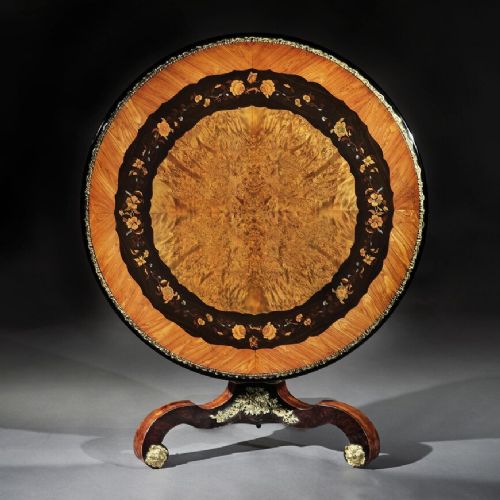
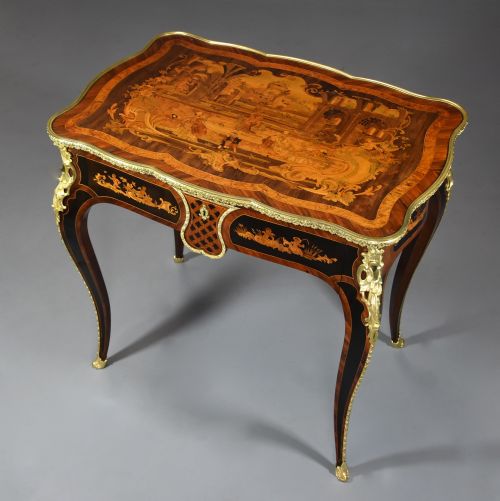
Buyers encounter surfaces finished in kingwood, rosewood, walnut, and mahogany, often enhanced with intricate marquetry and parquetry. Marble tops also feature prominently across these decorative tables.
Materials and construction
Cabinetmakers constructed these tables using a hardwood carcase, applying veneers of kingwood, rosewood, satinwood, or walnut in geometric parquetry and pictorial marquetry patterns. Some examples incorporate exotic woods like plum pudding mahogany or utilise brass and tortoiseshell boulle work.
Ormolu, or gilt bronze, mounts were cast, chased, and gilded before being secured to angles, friezes, and legs. Marble tops were cut and polished to fit precise recessed wooden frames atop the tables.
Some tables combine plum pudding mahogany with marble tops, offering an unusually spotted texture.
Assessing quality
Quality reveals itself in the crispness and depth of the ormolu chasing, where finer examples display sharp definition and meticulous hand-finishing. The complexity of the timber veneers, from precise parquetry to elaborate floral marquetry, separates standard production from exceptional pieces.
Structural integrity and the retention of original mounts dictate the standing of a table. Heavier use of solid brass accents and substantial marble tops indicate higher tier craftsmanship.
Edward Holmes Baldock·Francois Linke·Joseph Emmanuel Zwiener·Maison Millet
The French Ormolu Table Centre Glossary
- Ormolu
- Gilt bronze ornamentation applied to furniture. The technique involves applying a gold amalgam to bronze before firing.
- Marquetry
- Decorative veneer work forming pictorial designs. Artisans cut different coloured woods to create intricate patterns.
- Parquetry
- Geometric wood veneer patterns. Squares, triangles, and diamonds are arranged to form repeating motifs.
- Gueridon
- A small circular French table. These typically stand on a central pillar or three legs.
- Bureau plat
- A freestanding flat-topped writing desk. They often feature leather writing surfaces and multiple drawers.
French Ormolu Table Centre: Frequently Asked Questions
Where should I place a french ormolu table centre?
These pieces are designed to be freestanding and look best positioned in the middle of a principal room where they can be appreciated from all angles.
They function well as decorative display surfaces or library tables rather than against walls.
How do I identify Louis XV style from Louis XVI style?
Louis XV style pieces favor asymmetrical curves, flowing rococo lines, and cabriole legs.
Louis XVI style shifts toward neoclassical symmetry, straight tapered legs, and geometric or classical motifs.
What is the difference between ormolu and brass?
Ormolu is specifically gilt bronze, possessing a deeper, richer golden hue achieved through mercury gilding or fire gilding historical techniques.
Brass is a copper and zinc alloy that is generally brighter and less costly, though both materials appear on these tables.
How do I care for the marble top?
Wipe marble surfaces clean with a damp cloth and mild soap, avoiding acidic cleaners that etch the polished stone.
Use coasters to prevent rings and protect the historical finish from moisture damage.