
French Ormolu Mounted Lamps
French ormolu mounted lamps combine gilded bronze mounts with marble, porcelain, or glass bodies across nineteenth-century revival styles.
French Ormolu Mounted Lamps
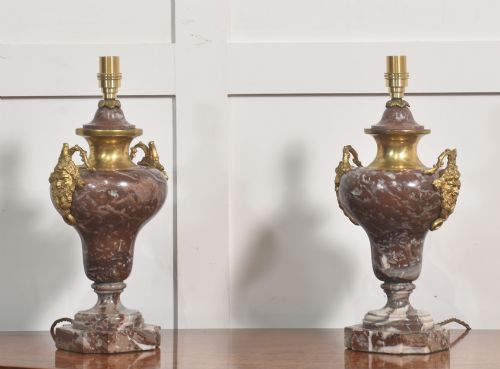
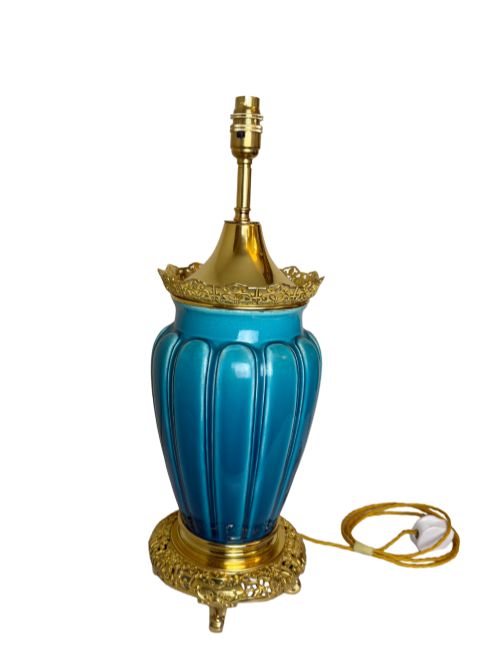
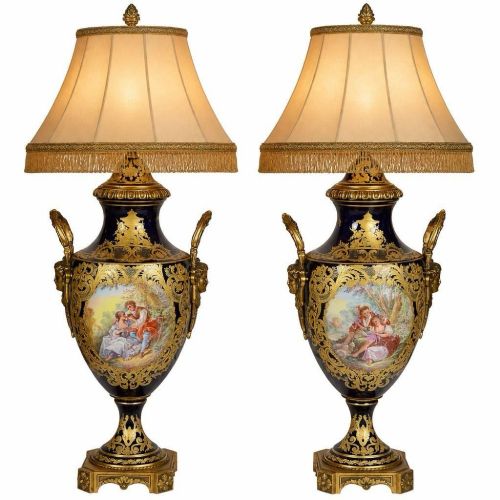
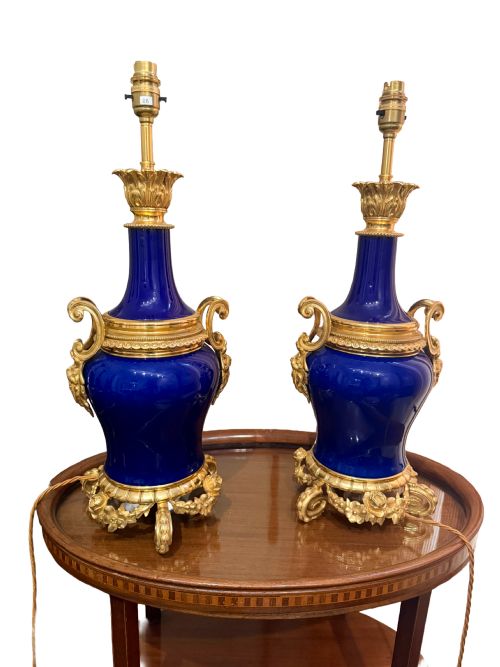
French ormolu mounted lamps comprise lighting fixtures and converted vases fitted with gilt bronze or brass mounts, originating mainly from the nineteenth century. Buyers frequently encounter pairs of table lamps incorporating rouge marble, turquoise porcelain, or Chinese vessels set upon ormolu bases.
The selection includes Louis XV and Louis XVI style creations alongside pieces reflecting the French Empire period. Many examples combine table lamp functionality with the decorative presence of nineteenth-century cassolettes and urns.
How they were made
Makers cast bronze components into ornate mounts before applying fire gilding or chemical treatments to achieve the characteristic ormolu surface. These metal elements were combined with turned or carved marble bodies, including white and rouge varieties, and fitted with porcelain or glass reservoirs.
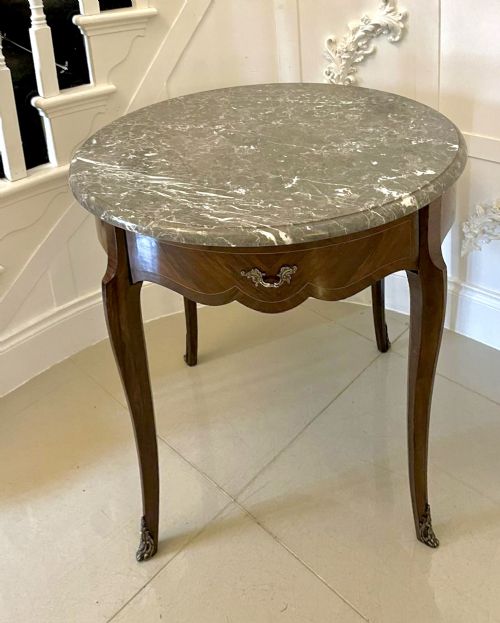
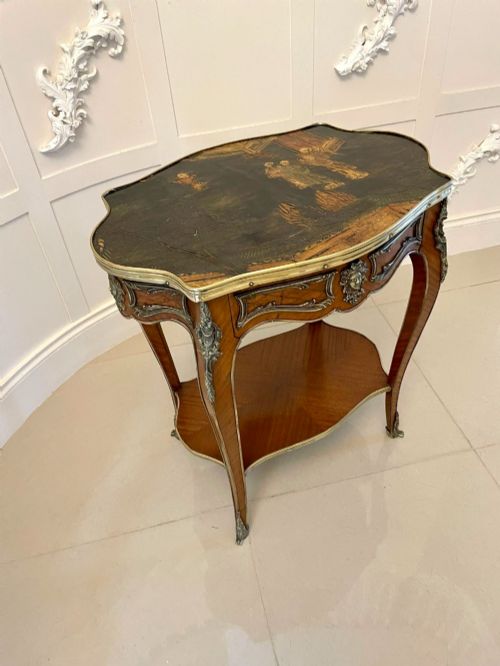
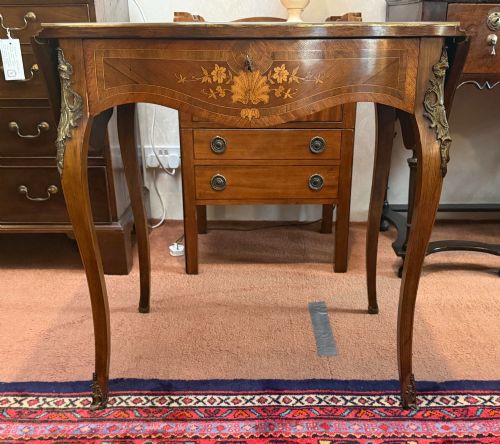
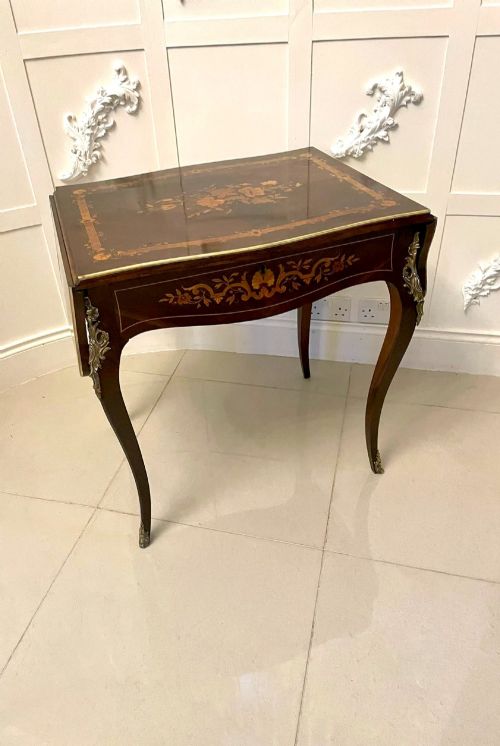
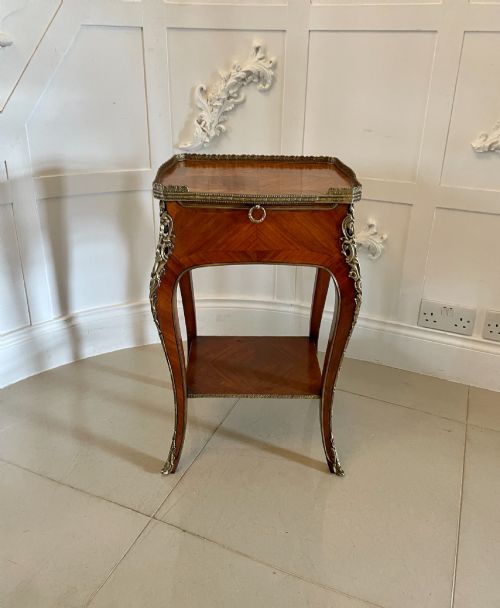
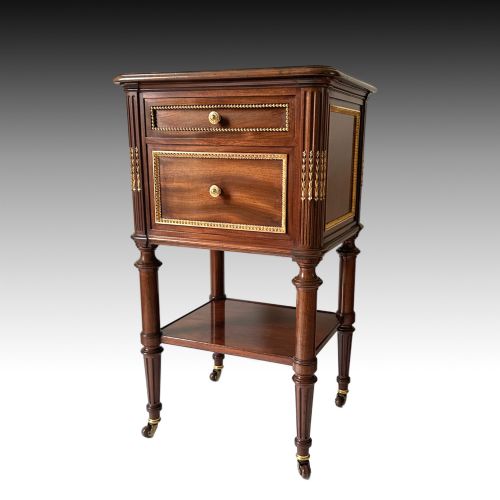
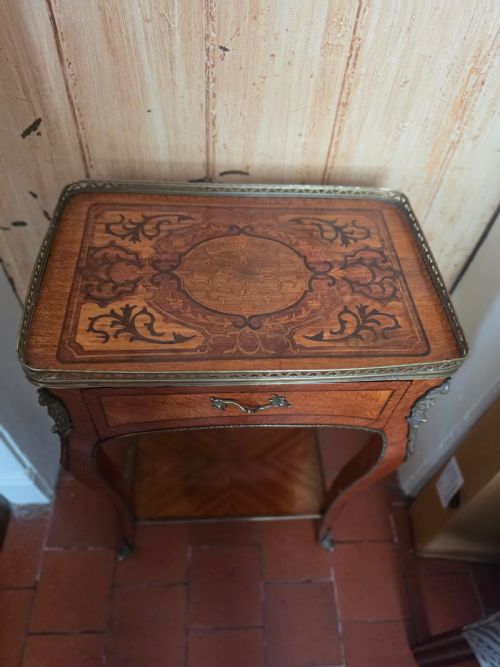
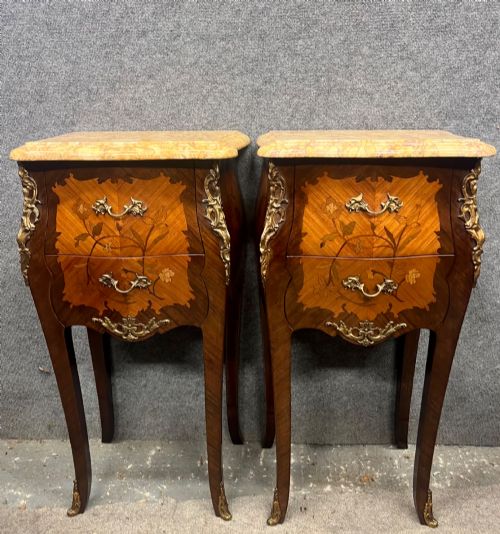
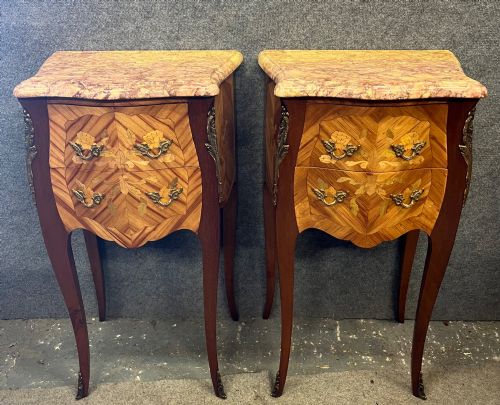
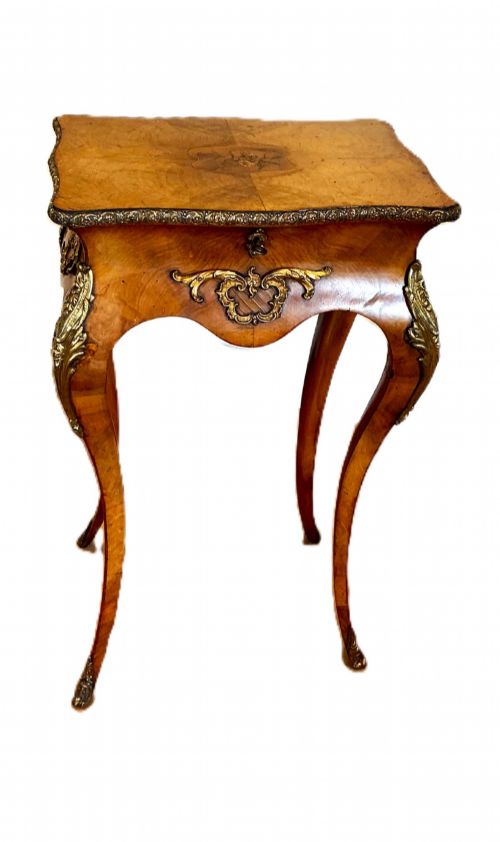
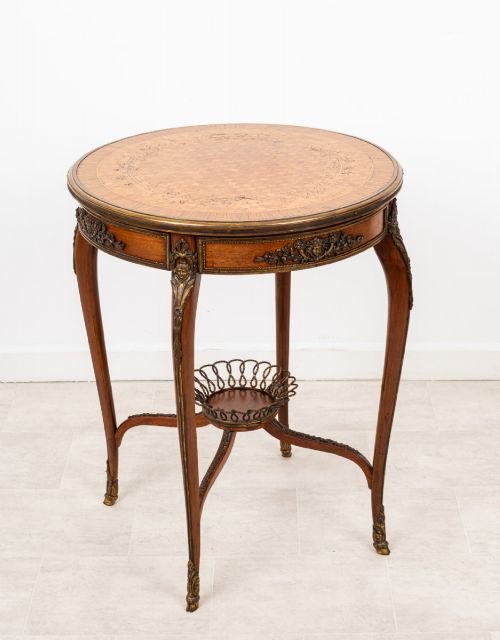
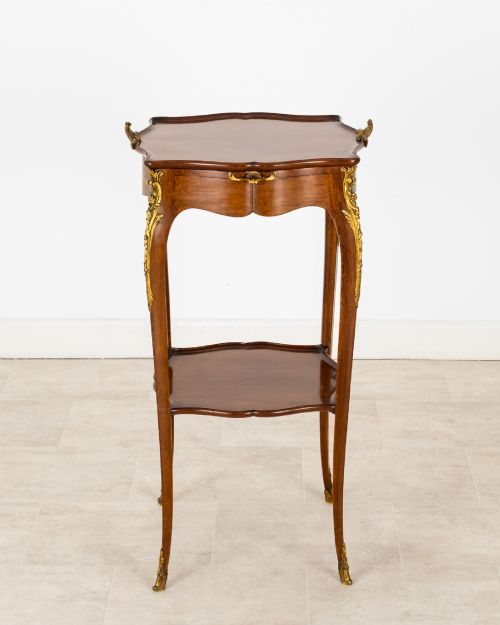
Cabinetmakers constructed supporting furniture and lamp tables using hardwood timbers such as kingwood, rosewood, walnut, and mahogany, frequently incorporating marquetry inlay and parquetry patterns.
Even a modest bedside table can unexpectedly harbour secret marquetry birds under the reading lamp.
What varies in quality
The standard of chasing upon the bronze mounts dictates much of the visual depth, distinguishing sharp, hand-finished foliage and scrollwork from softer, uniform castings. The choice of body materials also separates individual items, with dense variegated marble and fine Sevres style porcelain sitting at the upper end.
Attribution to documented makers such as François Linke marks certain nineteenth-century pieces out, reflecting superior joinery in associated lamp tables and exact precision in the placement of gilt bronze mounts.
François Linke
The French Ormolu Mounted Lamps Glossary
- Ormolu
- Gilded bronze, where a layer of gold amalgam is applied to cast bronze and heated until the mercury vapours dissipate, leaving a rich golden surface.
- Cassolette
- A decorative vessel shaped like a vase or urn, often reversible with a lid that reveals a burner or opening, frequently adapted into lighting.
- Marquetry
- The art of applying decorative pieces of veneer to a structure to form intricate pictorial patterns or geometric designs on tabletops and cabinets.
- Parquetry
- Geometric mosaic woodwork used for floors and furniture surfaces, creating repeating patterns from contrasting timber veneers like kingwood and satinwood.
- Louis XVI Style
- A neoclassical design movement characterised by straight lines, symmetry, classical motifs, and restraint following the curves of the preceding rococo era.
French Ormolu Mounted Lamps: Frequently Asked Questions
What periods do these lamps date from?
The available pieces originate predominantly from the nineteenth century, spanning periods from the eighteen-fifties through to the nineteen-thirties. Makers drew heavily upon earlier eighteenth-century aesthetics, notably Louis XV and Louis XVI designs.
Later Victorian and early twentieth-century interpretations continue these revivalist themes, blending period forms with contemporary nineteenth-century lighting conversions.
How do I identify Louis XVI style lamps?
Louis XVI style lamps rely upon neoclassical symmetry, rectilinear forms, and classical architectural details rather than flowing rococo asymmetry. You will often observe urn or column shapes paired with structured ormolu mounts.
These pieces contrast with earlier Louis XV revival examples, which favour organic curves, scrolling acanthus leaves, and asymmetric cartouches.
What materials are paired with ormolu?
Ormolu mounts appear alongside a variety of contrasting materials, most notably rouge and variegated marble, porcelain, and cut glass. Asian ceramics, including Chinese vases, also serve as bodies for converted lamp fittings.
Supporting lamp tables utilise timber foundations of kingwood, rosewood, walnut, and mahogany, frequently enhanced with marquetry or brass stringing.
Were these lamps originally made for lighting?
Many nineteenth-century items began as decorative objects, such as porcelain vases, cassolettes, or decorative urns, before being adapted into electric table lamps. Ormolu mounts were originally designed to elevate the decorative status of these imported or domestic vessels.
Subsequent wiring conversions allowed these ornamental bronzes and ceramics to function as practical domestic lighting while retaining their sculptural form.