
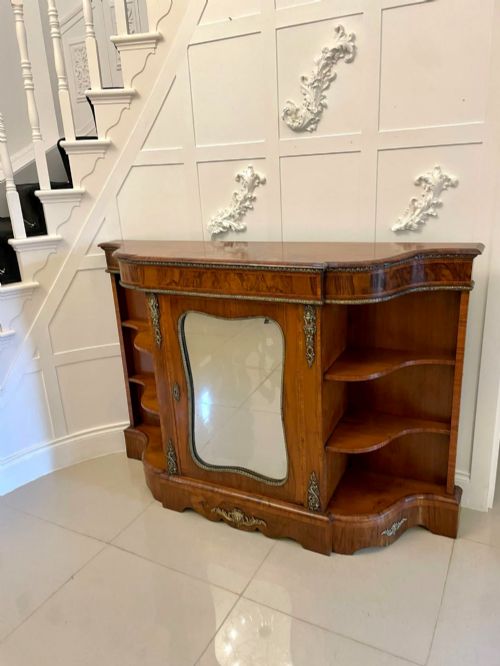
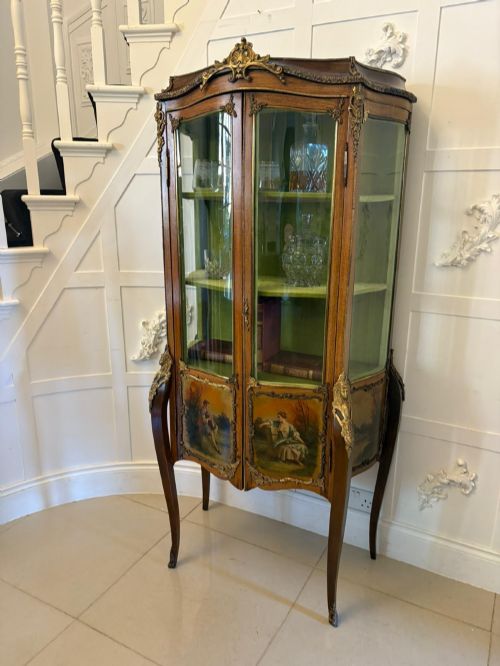
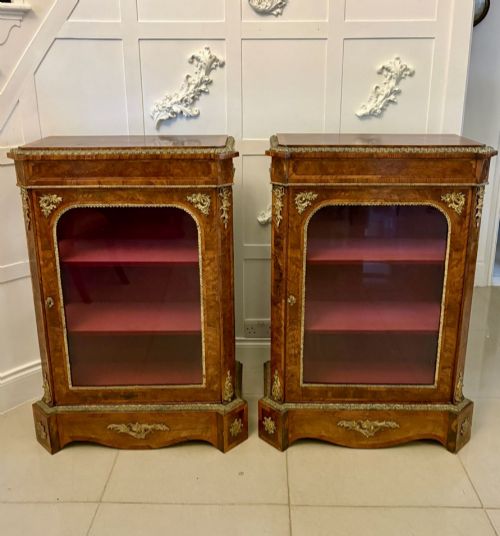
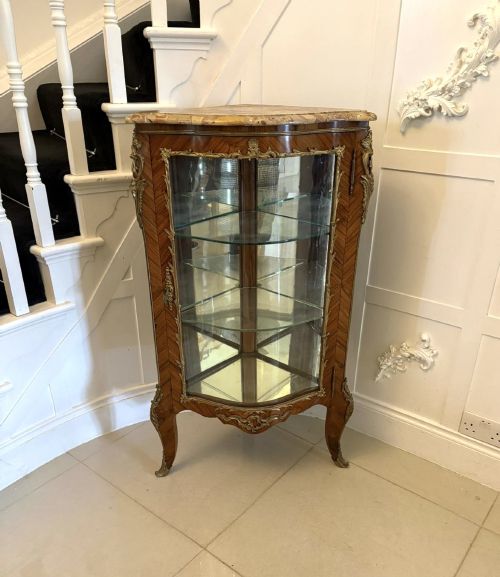


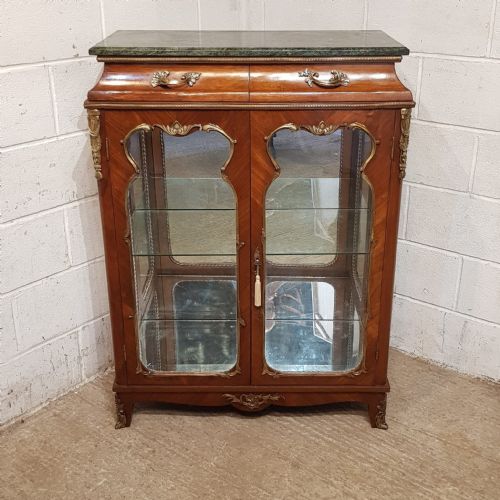
French Ormolu Glazed Cabinet
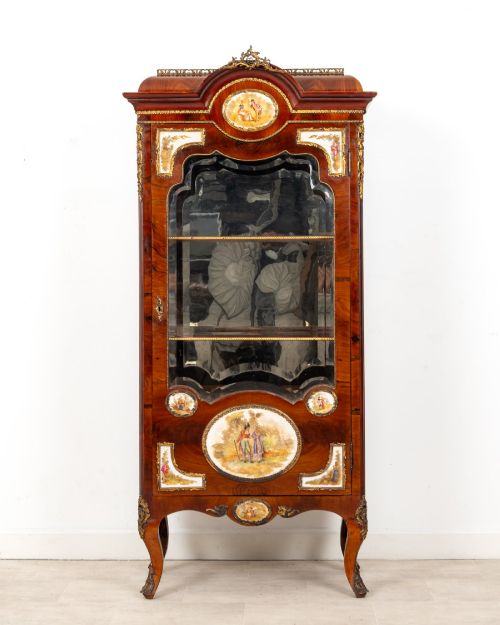
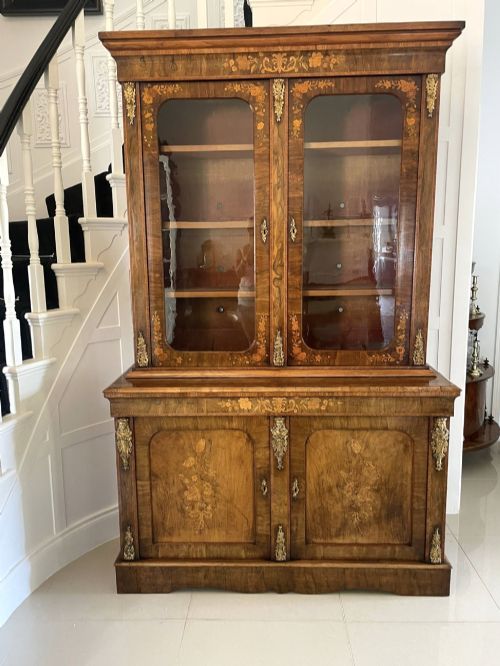
A french ormolu glazed cabinet brings gilt bronze mounts and glass together to display prized porcelain and curiosities within a room.
French Ormolu Glazed Cabinet
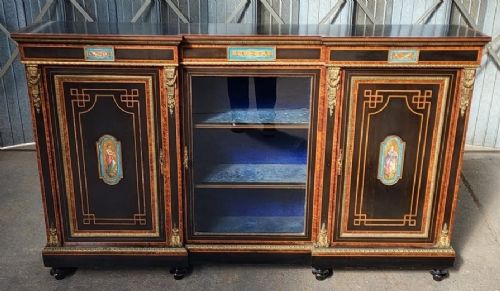
A french ormolu glazed cabinet appears across nineteenth century periods, incorporating Victorian and Edwardian iterations alongside revival styles. These pieces function primarily as vitrines, display cabinets, bookcases, and credenzas designed to showcase collections behind glass.
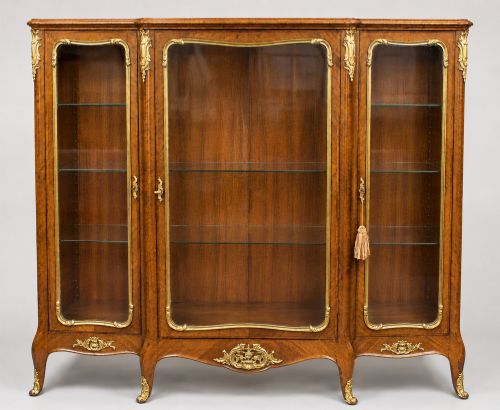
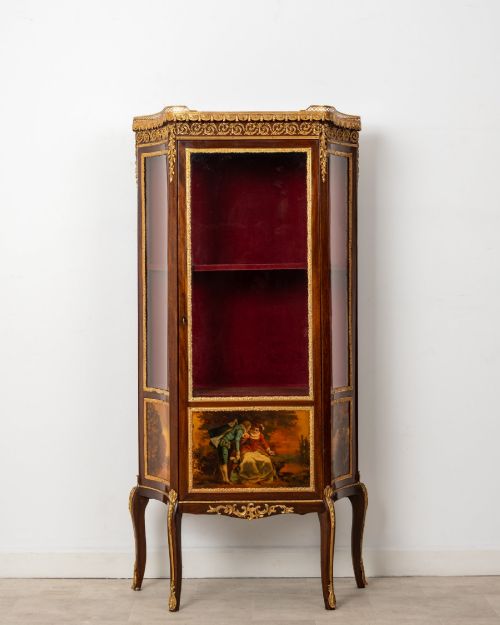
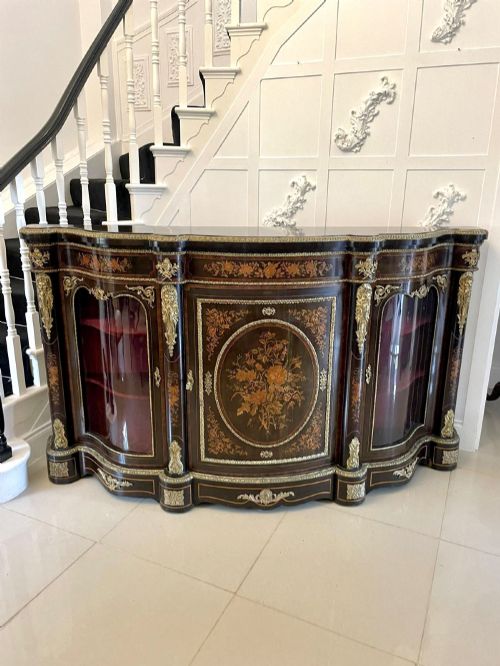
The form frequently adopts serpentine or corner shapes, resting on substantial timber carcases adorned with gilt metal mounts. Buyers encounter numerous examples drawing upon Louis XV and Louis XVI aesthetics, often housing mirrored backs and tiered shelving.
Makers and workshops of the nineteenth century produced these cabinets to anchor formal reception rooms and drawing rooms. The presence of glazed doors distinguishes them from closed sideboards, placing the interior contents on full view.
Materials and construction
Construction relies upon dense cabinet timbers including kingwood, burr walnut, mahogany, and rosewood, frequently laid as veneers over firmer secondary woods. Marquetry and parquetry patterns provide geometric or floral ornamentation across the surfaces.
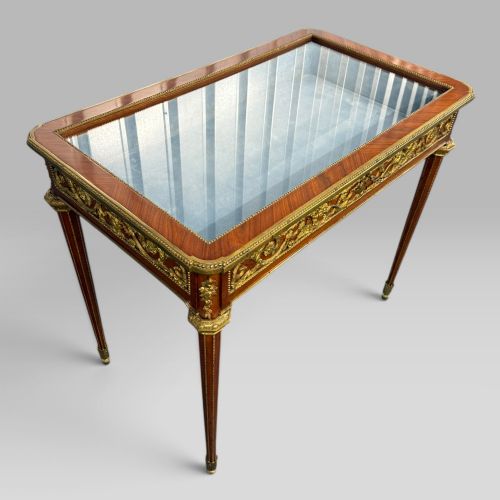
Cast ormolu and gilt bronze mounts define the decorative vocabulary, screwed or pinned to corners, borders, and feet. Marble tops in white or coloured varieties cap many of the lower credenzas and corner cabinets, adding weight and polish.
Table top sedan vitrines offer miniature display spaces for tiny curiosities, condensing grand cabinet architecture into portable proportions.
Judging the work
Quality rests upon the crispness of the ormolu chasing and the depth of the timber figuring, particularly in burr walnut and kingwood veneers. Finer cabinets display harmonious marquetry work and meticulously fitted glass panes within robust door frames.
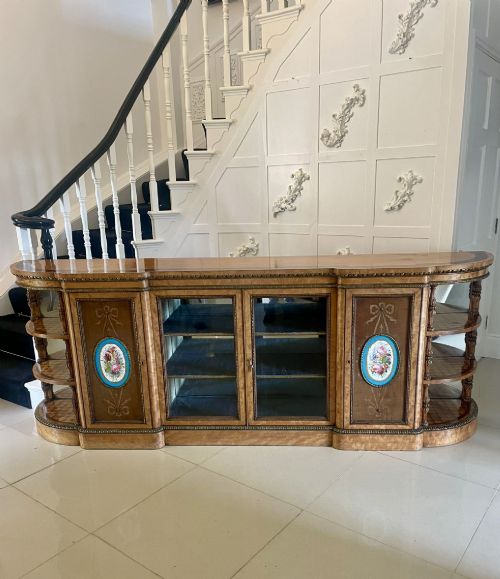
The architectural balance of the carcase and the integration of porcelain plaques or Vernis Martin panels separate standard production from exceptional exhibition pieces. Structural integrity in serpentine shapes and heavy marble tops dictates enduring merit.
François Linke
The French Ormolu Glazed Cabinet Glossary
- Ormolu
- Gilt bronze mounts applied to furniture for decorative effect. This technique involves mercury gilding on copper alloys to produce a durable golden surface.
- Vitrine
- A glass-fronted display cabinet used for showing porcelain, silver, and small curiosities. The sides and doors incorporate glazing to maximise interior light.
- Vernis Martin
- A simulated Japanese lacquer technique developed in France. It produces translucent painted panels depicting figures and landscapes on furniture.
- Credenza
- A low cabinet piece often featuring doors and central display sections. Originating as a side table, it evolved into an elaborate reception room furnishing.
- Marquetry
- Inlaid wood veneers forming decorative pictures or patterns. Craftsmen piece together contrasting timbers like satinwood and walnut within the primary surface.
French Ormolu Glazed Cabinet: Frequently Asked Questions
What fits inside a display cabinet?
These cabinets house porcelain services, glassware, small bronzes, and collection pieces behind their glass doors. The interior shelving provides tiered surfaces for arranging items securely.
Larger credenzas and bookcases accommodate heavier volumes and display trays, while corner units utilise awkward architectural angles to present smaller collections.
How do I care for marble tops?
Marble surfaces require gentle cleaning with mild soap and water to preserve the polished finish. Acidic liquids must be wiped away immediately to prevent surface etching.
Placing felt pads beneath heavy objects protects the stone from scratches and preserves the natural lustre of the material over time.
Are these cabinets purely French?
Many pieces reflect French design idioms and revival styles including Louis XV and Napoleon III. British Victorian makers also adopted these aesthetic movements extensively.
Consequently, buyers find both imported French items and domestic British interpretations sharing identical decorative vocabularies and timber choices.
How do I identify a revival style?
Revival pieces appropriate decorative motifs from earlier monarchical periods, particularly the reigns of Louis XV and Louis XVI. They combine curved cabriole lines or straight neoclassical framing with ormolu mounts.
Construction techniques and timber treatments usually point to nineteenth century manufacturing methods despite the historical styling.