



Vintage French Display Cupboard
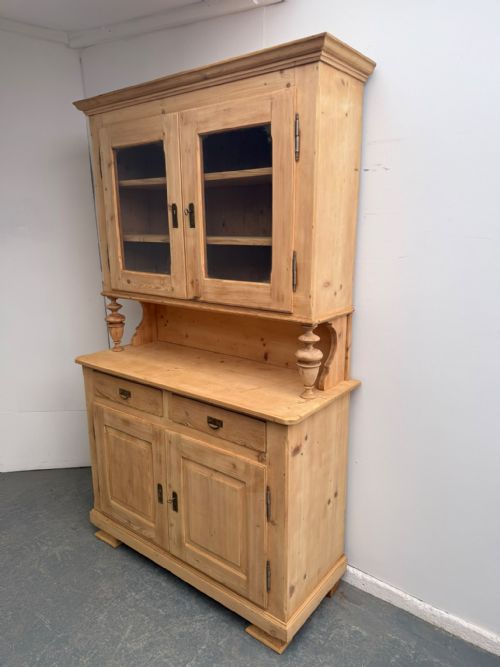
A vintage french display cupboard brings warmth and refinement to a room, showcasing glassware and porcelain behind glass panels.
Vintage French Display Cupboard
A vintage french display cupboard serves as a functional storage piece and a showcase for cherished objects. These items appear across several distinct iterations, ranging from provincial oak forms to sophisticated serpentine vitrines.
The selections on this page span from the eighteenth century through to the Edwardian period. Buyers encounter walnut and kingwood alongside painted pine and mahogany varieties.
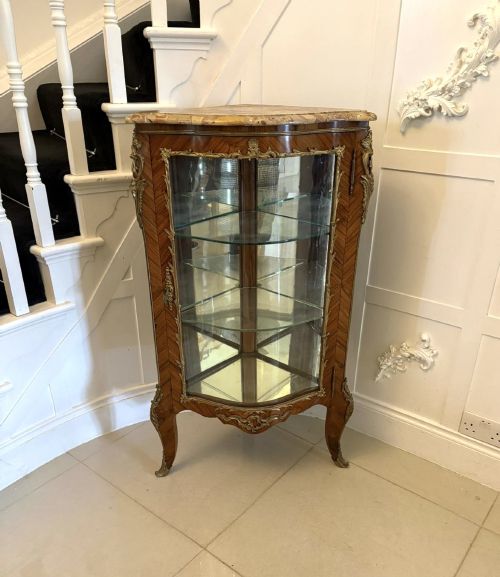
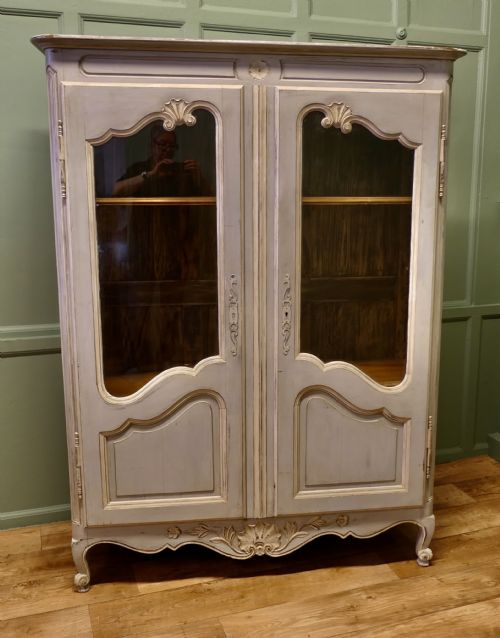
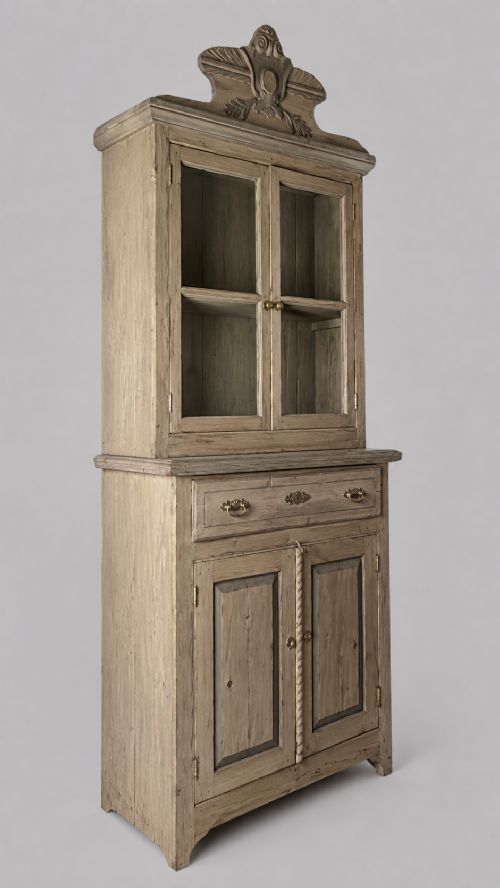
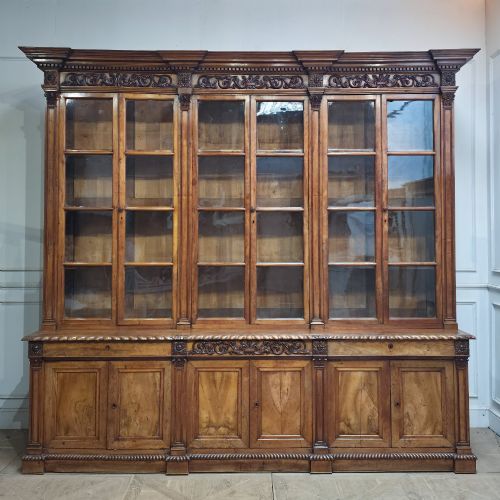
Forms include corner cabinets, double-door vitrines, and tall bookcases with glazed upper sections. Provincial pieces offer simpler lines, while revival styles introduce elaborate curves and mounts.
Materials and construction methods
Cabinet makers utilised dense hardwoods such as walnut, mahogany, and kingwood for formal pieces, often pairing them with contrasting marquetry inlay. Provincial workshops relied on regional oak and pine, frequently finished with paint or simple wax.
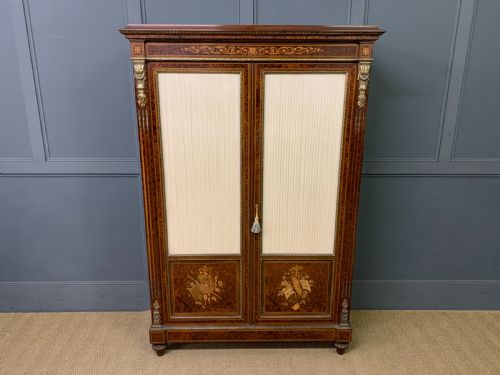
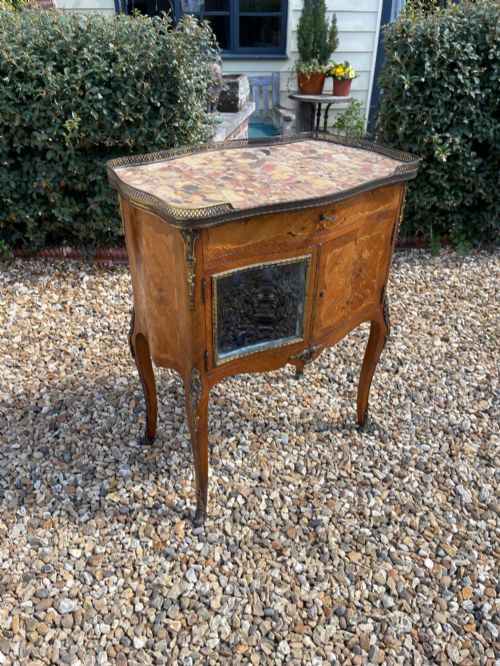
Ornate cabinets incorporate cast brass and ormolu mounts to highlight structural contours and corners. Glazed doors use individual glass panes set within wooden framing, complemented by marble tops on select tables and cabinets.
One towering mahogany bookcase arrives with a plum pudding grain pattern so active it practically ripples across the room.
Distinguishing quality in construction and finish
Quality rests upon the selection of timber and the precision of the joinery. Finer cabinets display carefully matched veneers and tightly fitted doors that maintain their alignment over time.
Decorative elements reveal the standard of craftsmanship. Hand-chiselled ormolu mounts and delicate marquetry separate standard production pieces from workshop highlights.
The Vintage French Display Cupboard Glossary
- Vitrine
- A glass-fronted cabinet designed specifically for the display of porcelain and objets d'art. These pieces often feature glazed sides to maximise light penetration.
- Ormolu
- Gilded bronze mounts applied to furniture for decorative effect. This technique was widely utilised in nineteenth-century French cabinet making.
- Marquetry
- Inlaid wood veneers arranged to form pictorial or geometric patterns on the surface of a cabinet. Craftsmen used contrasting timber species to create tonal depth.
- Serpentine
- A curved furniture front characterised by a convex centre flanked by concave ends. This contour requires skilled woodworking to execute cleanly.
- Breakfront
- A large cabinet design where the central section projects forward from the flanking wings. This architectural arrangement adds visual weight and presence.
Vintage French Display Cupboard: Frequently Asked Questions
What is a vitrine?
A vitrine is a glazed display cabinet built to showcase porcelain, glassware, and decorative items. The glass panels on the front and often the sides allow light to illuminate the contents from multiple angles.
These pieces range from tall freestanding bookcases to smaller wall-hanging cabinets. They protect delicate collections from dust while serving as a focal point in a room.
How do I date a french cabinet?
Dating relies on examining the timber species, construction techniques, and stylistic influences. Eighteenth-century pieces often feature solid provincial oak with hand-cut joinery, while nineteenth-century examples frequently employ exotic veneers like kingwood and elaborate ormolu mounts.
Revival styles from the Victorian and Edwardian eras borrow heavily from earlier Louis periods. Hardware, drawer linings, and the type of glass offer further clues to the decade of manufacture.
Where should I place a display cupboard?
These cupboards suit living rooms, dining spaces, and hallways where they can anchor a wall scheme. Placing them away from direct sunlight protects both the wooden finish and the objects inside.
Ensure the floor is level so the doors swing freely and latch correctly. Taller breakfronts and bookcases require adequate wall clearance to balance their proportions.
Are painted finishes original?
Painted finishes on older French furniture vary between original patinated coats, later decorative treatments, and modern updates. Examining the wear patterns around handles and edges helps determine the age of the paint layer.
Provincial pieces were frequently painted or limed in period to brighten dark timber interiors. Professional restoration sometimes involves refreshing these surfaces while preserving the underlying wood.