
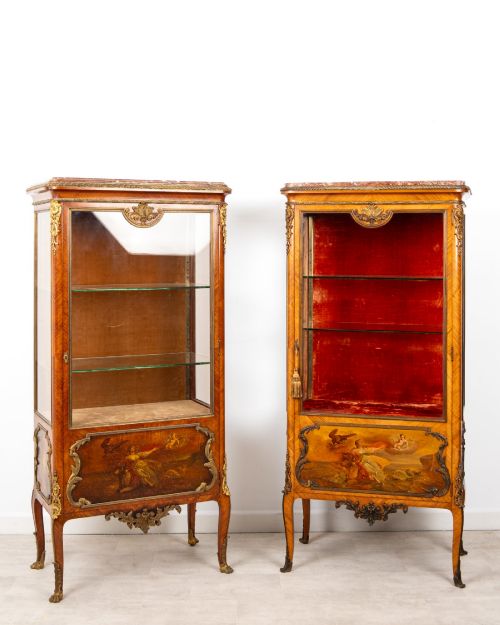
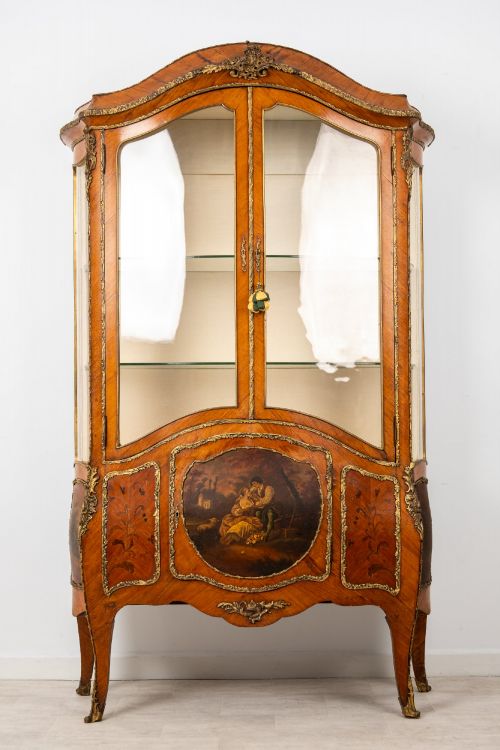
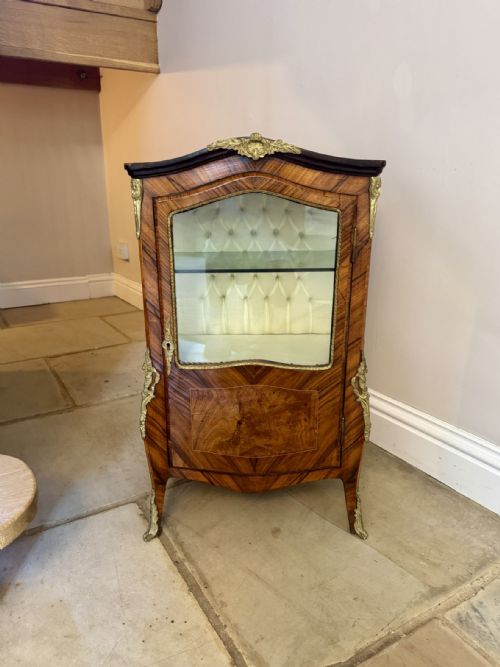
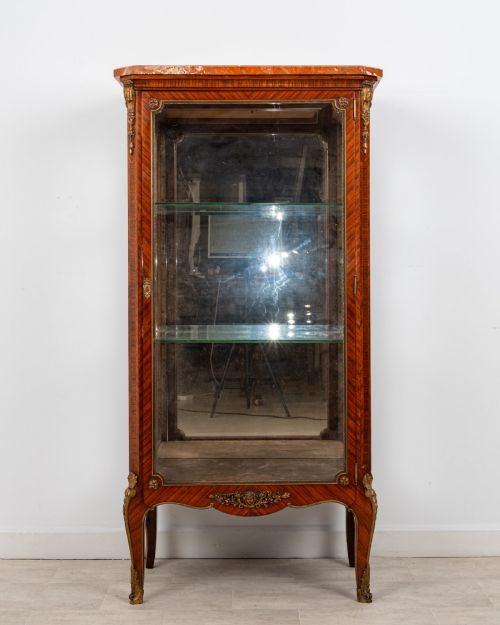

French Ormolu Display Case
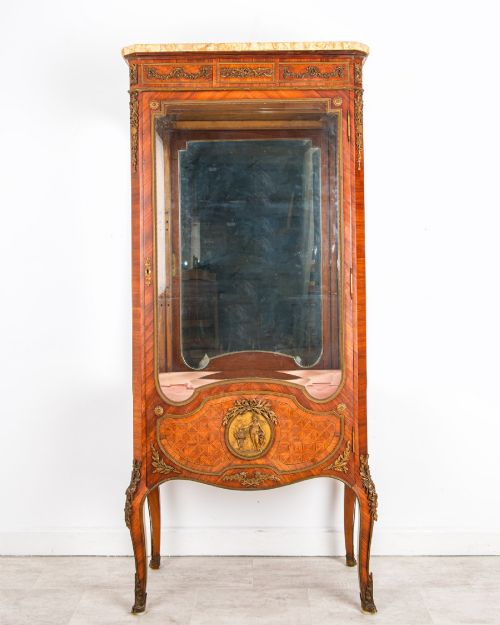
A french ormolu display case brings nineteenth-century salon elegance to a room while holding porcelain and gilt objects securely behind glass.
French Ormolu Display Case
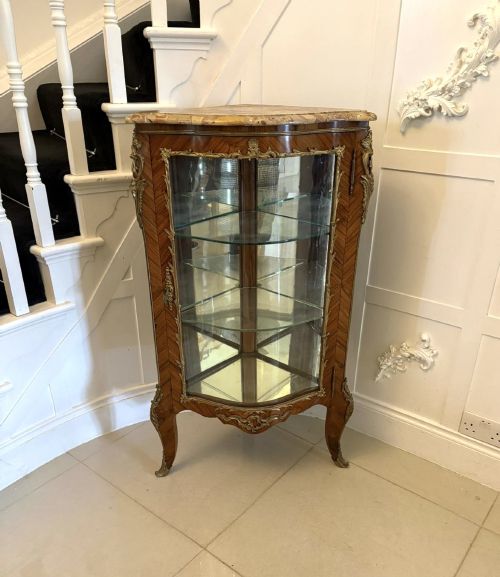
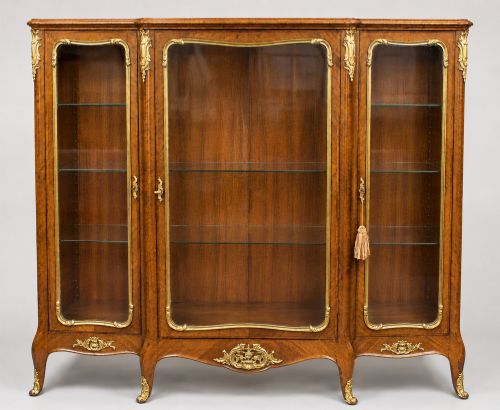
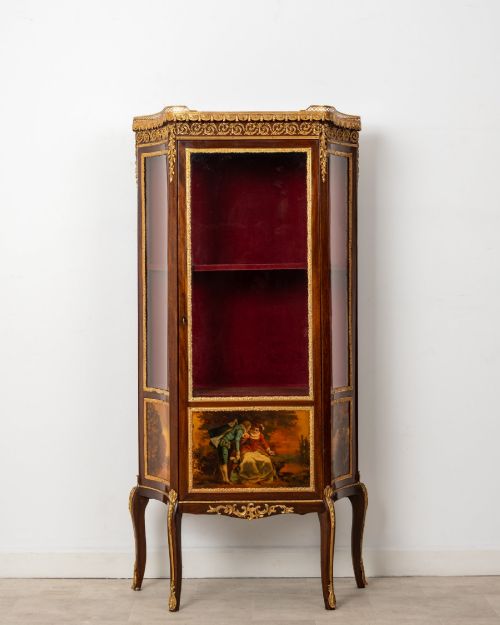
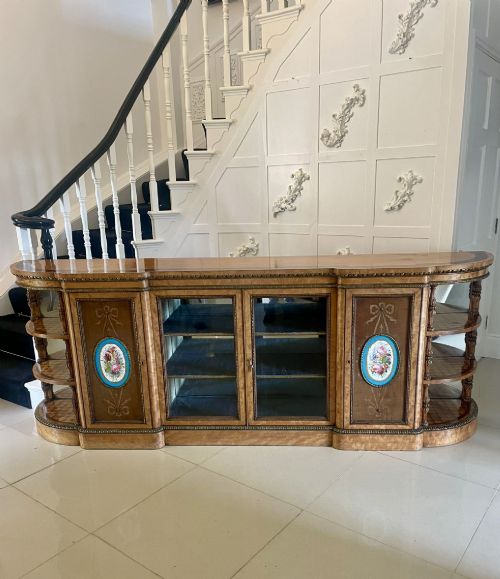
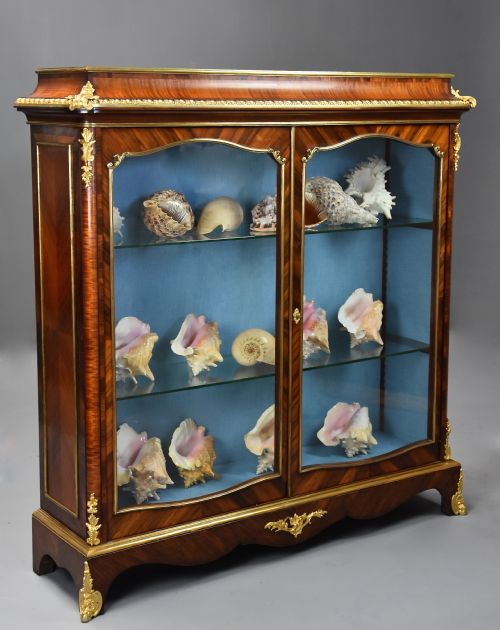
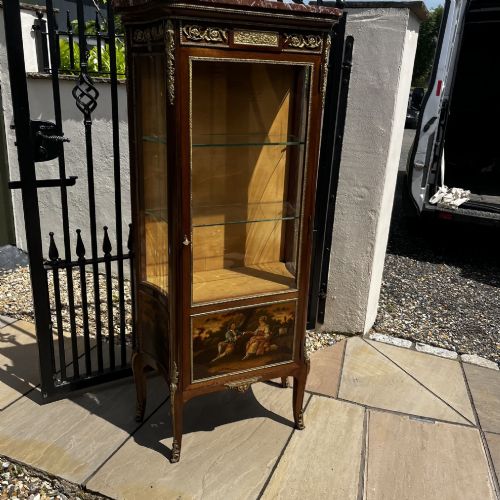
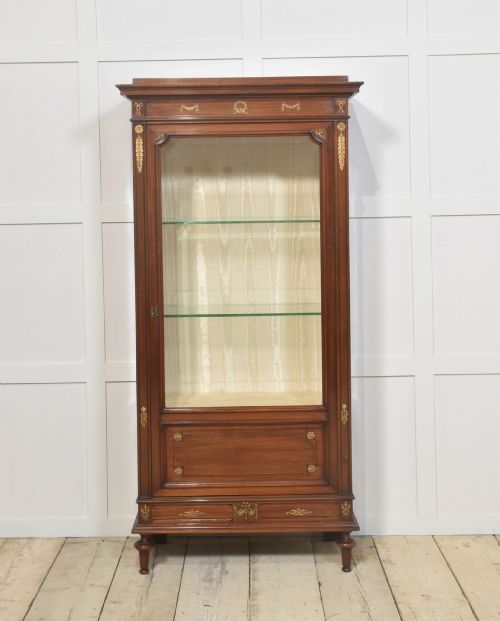
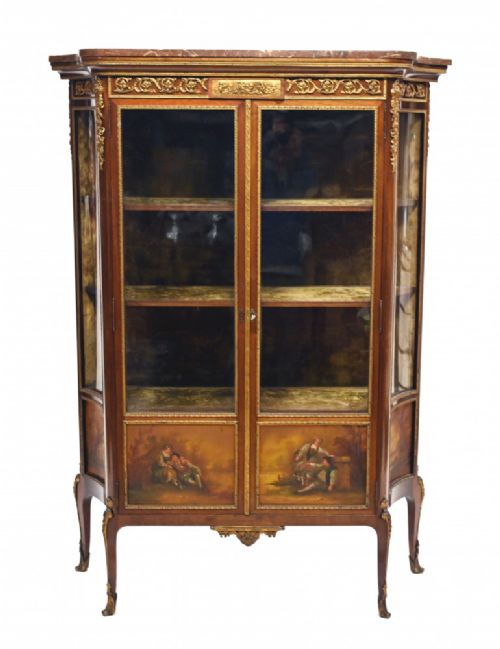
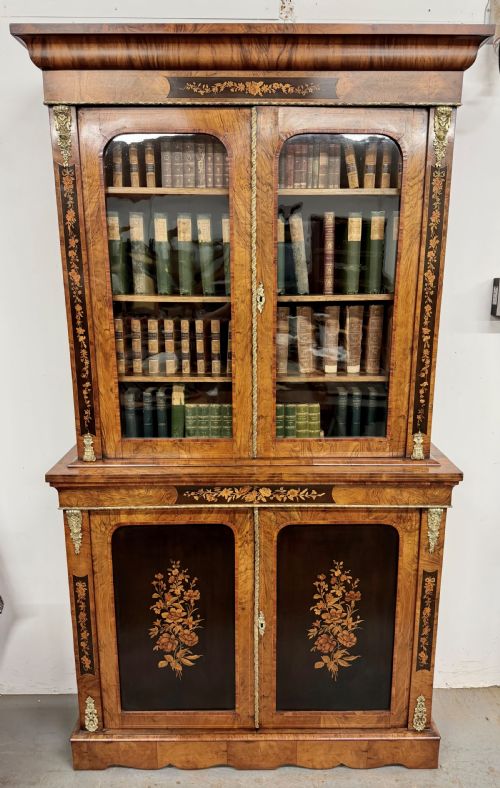
When you search for a french ormolu display case, you encounter vitrines, freestanding cabinets, and table-top pieces dating principally from the nineteenth century. These items combine timber carcases with gilt-bronze mounts and glazed panels designed to exhibit fine possessions.
The prevailing examples on this page adopt Louis XV and Louis XVI revival styles, alongside Napoleon III interpretations. They appear in forms ranging from serpentine corner cabinets to monumental credenzas and compact bijouterie tables.
Makers working in this tradition utilised rich timbers to construct chassis that could support heavy cast metal decoration and marble slabs. The resulting furniture anchors a formal interior while providing visible storage for small collectibles.
Assessing quality and execution
The definition in the ormolu chasing separates standard production from exceptional examples, as sharp chisel work reveals the hand of the metalworker. Heavy, crisply detailed bronze mounts indicate workshops operating at a high level.
Veneer selection and timber matching dictate the visual weight of the cabinet, with quarter-cut kingwood and elaborate marquetry showing superior labour. Interior velvet linings and the precision of the glazed door frames further distinguish finer pieces.
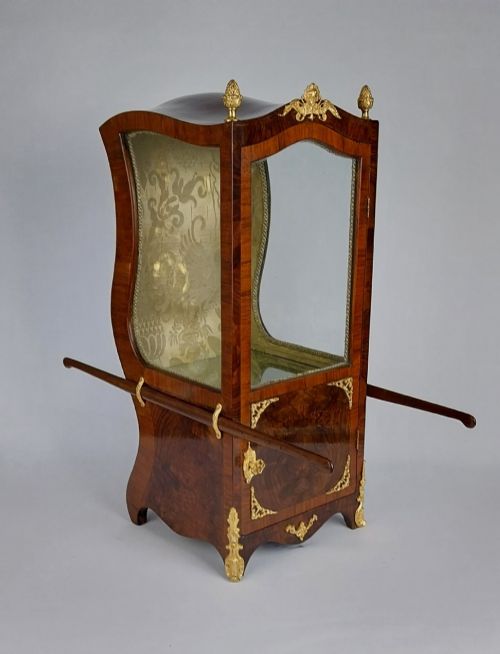
Some table-top vitrines were built slim enough for a sedan chair, letting eighteenth-century owners travel with their favourite trinkets.
François Linke·G. Durand·Gouffel
The French Ormolu Display Case Glossary
- Ormolu
- Gilt bronze applied as decorative mounts to furniture. The technique involves dipping copper or brass alloys in gold amalgam to create a bright metallic finish.
- Vitrine
- A glass-fronted cabinet designed for displaying porcelain, silver, and curiosities. These pieces rely on glazed sides to maximise interior light.
- Vernis Martin
- Simulated Japanese lacquer developed in eighteenth-century France. The technique employs multiple layers of varnish to protect painted pastoral scenes.
- Boulle
- Marquetry technique utilising brass and tortoiseshell inlaid in counter-changed patterns. It takes its name from the cabinetmaker André-Charles Boulle.
- Bijouterie
- A low display table or cabinet specifically made for holding jewellery and small precious items. They typically feature glazed lids opening from the top.
- Marquetry
- Decorative woodwork forming pictorial patterns using various coloured veneers. Craftsmen assemble these designs by hand before gluing them to the carcase.
French Ormolu Display Case: Frequently Asked Questions
What goes inside a french ormolu display case?
These cabinets house collections of porcelain figures, small silver items, and glassware. The glass panels and internal velvet shelves allow viewers to inspect delicate objects without handling them.
Larger credenza versions provide lower cupboard space for heavier books and documents while keeping display areas raised at eye level.
How do I clean ormolu mounts?
Dust bronze mounts gently with a soft dry brush to prevent dirt accumulation in the chased recesses. Avoid abrasive metal polishes that strip the original gilding from the surface.
Keep the cabinet away from direct sunlight and damp conditions to protect both the wood veneers and the fragile gilt-bronze finish.
How do I tell Louis XV and Louis XVI styles apart?
Louis XV revival pieces feature asymmetrical curves, scrolling foliage, and organic rococo outlines. The mounts often wrap around serpentine corners in fluid, asymmetrical shapes.
Louis XVI style emphasises symmetry, straight fluted columns, neoclassical urns, and geometric proportions. The overall silhouette appears more restrained and architectural.
Are these cabinets suitable for modern rooms?
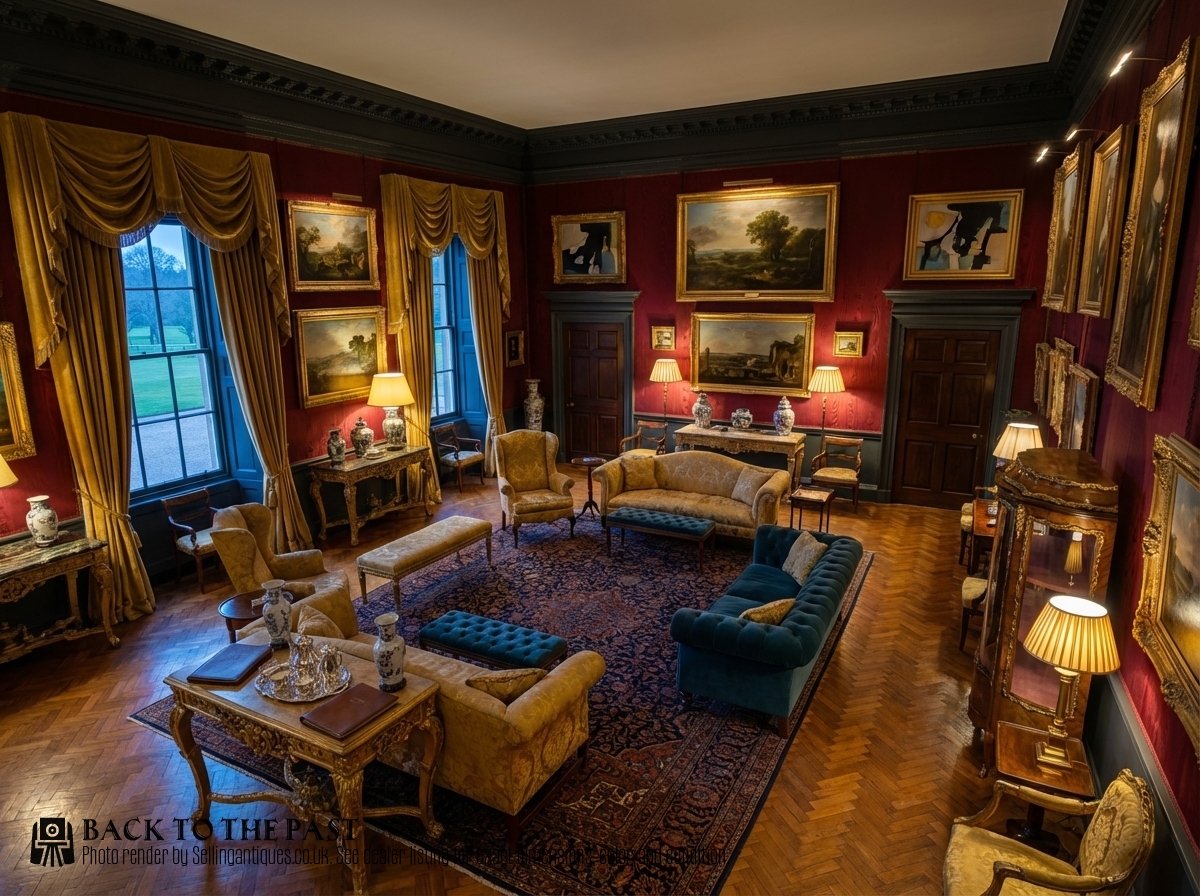
The polished marble and warm kingwood tones integrate well into contemporary interiors as contrasting focal points. Their reflective glass and metallic mounts help bounce light around darker spaces.
Interior lighting can be added carefully to illuminate collections stored behind the original glass doors.