




French Opalescent Glass Bowl
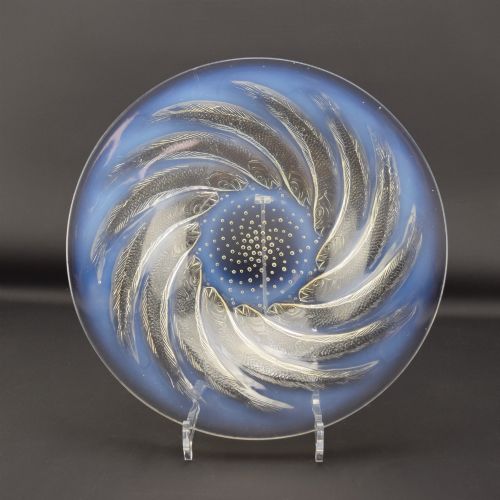
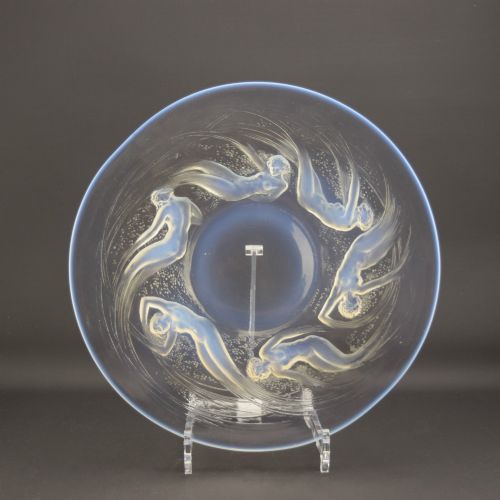
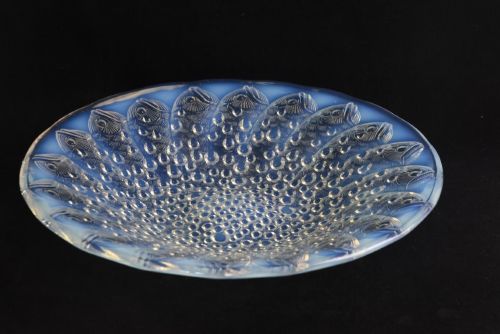
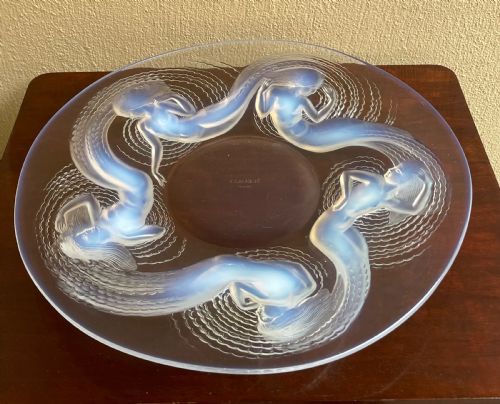
These french opalescent glass bowl examples capture light with milky blue fires, bringing high Art Deco elegance to any room.
French Opalescent Glass Bowl
A french opalescent glass bowl is a decorative vessel that shifts in tone from milky white to translucent blue when struck by light. These pieces primarily emerge from the Art Deco and Art Nouveau periods, spanning the Edwardian era through the nineteen thirties.
Buyers searching for a french opalescent glass bowl will frequently encounter shallow bowls, coupe ouverte forms, chargers, and footed vessels. The selection here leans heavily towards pieces shaped during the nineteen twenties and nineteen thirties by prominent makers.
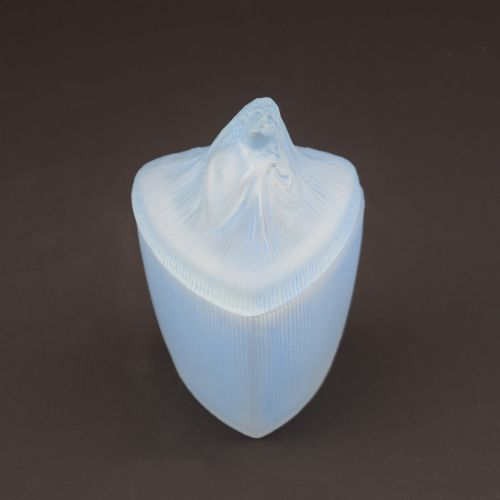
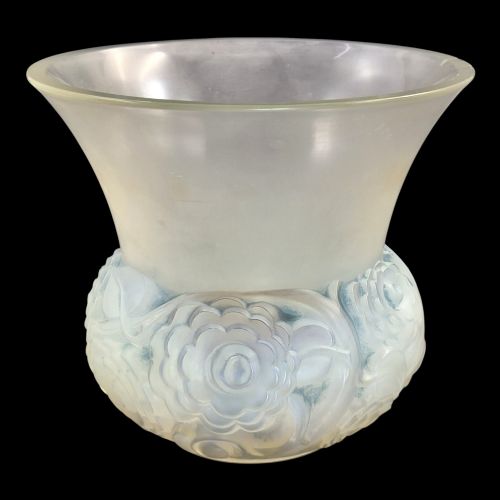
Beyond standard bowls, the evidence shows related forms such as powder boxes, plates, epergnes, and vases sharing the same distinct milky glass aesthetic. These objects served both ornamental and functional roles in period interiors.
How they were made
Makers utilised moulded glass, pressed glass, crystal, and frosted glass to achieve the signature translucent body. The milky opalescence results from specific chemical agents added to the molten glass during production, creating a milky blue glow when lit from the side.
Many pieces combine the primary glass body with pressed details, highlighting botanical or aquatic motifs such as fish, cherries, and flower heads. Some designs incorporate secondary elements like chrome or wood mounts to complete the decorative object.
The listings span the Edwardian era through the nineteen thirties, with a strong concentration of pieces originating around nineteen thirty.
What varies in quality
Quality rests upon the crispness of the moulded relief and the depth of the opalescent fire within the glass. Superior pieces display sharp articulation in complex motifs like fish scales, petals, or female figures, whereas lesser examples appear flat and lack the characteristic blue refraction.
The presence of a clear signature or factory mark influences the standing of the piece. Master ateliers achieved a finer balance of translucence and opacity, giving the glass a tactile, sculptural weight absent in simpler commercial wares.
Rene Lalique·G Vallon·Etling·Sabino·Julien Glass France
The French Opalescent Glass Bowl Glossary
- Opalescent Glass
- Glass that diffuses light to display a milky blue or white appearance, particularly on raised surfaces or edges.
- Coupe Ouverte
- An open bowl or shallow dish form commonly utilised for decorative table display during the early twentieth century.
- Charger
- A large decorative plate or shallow basin placed beneath other vessels or displayed independently on a stand.
- Moulded Glass
- Glass formed by pressing molten material into a metal or wooden matrix to create detailed relief patterns.
- Epergne
- A centrepiece stand featuring a central bowl accompanied by detachable arms or smaller vases for floral arrangements.
French Opalescent Glass Bowl: Frequently Asked Questions
Were these bowls used for food?
Most of these decorative pieces were designed for display, as centrepieces, or for holding powder and small vanity items rather than serving food. The high lead or specialised content in some period glass makes them unsuitable for daily dining use.
Utilise your bowl on a table, sideboard, or mantelpiece where natural light can activate the milky blue opalescence.
How can I tell the period of a bowl?
Examine the stylistic markers, as pieces from the nineteen tens display flowing Art Nouveau curves, while those from the nineteen twenties and thirties show geometric Art Deco symmetry. Maker signatures and moulded registry marks offer precise clues to the date of production.
Compare the depth of the glass press and the quality of the frosted finish against documented examples from the same atelier.
Why does the glass change colour?
The milky blue effect occurs because bone ash, arsenic, or other opacifying agents were added to the molten batch. When light passes through the glass, these suspended particles scatter shorter blue wavelengths while allowing warmer yellow light to pass straight through.
This optical property means the bowl shifts appearance dramatically depending on whether it sits in direct sunlight or ambient room light.