
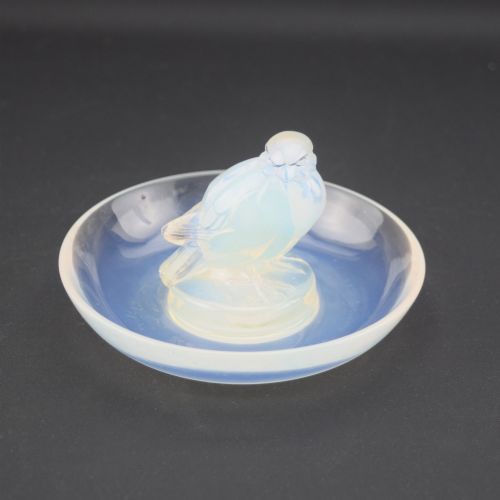
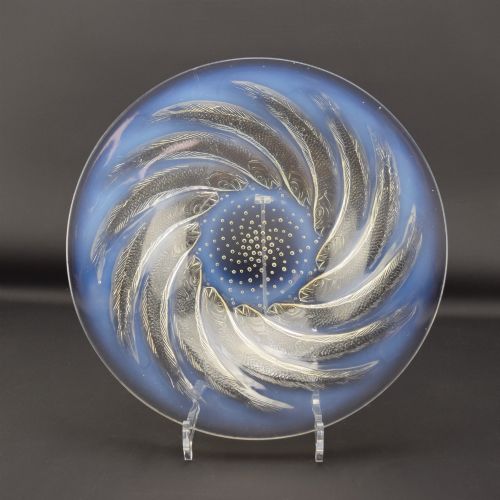
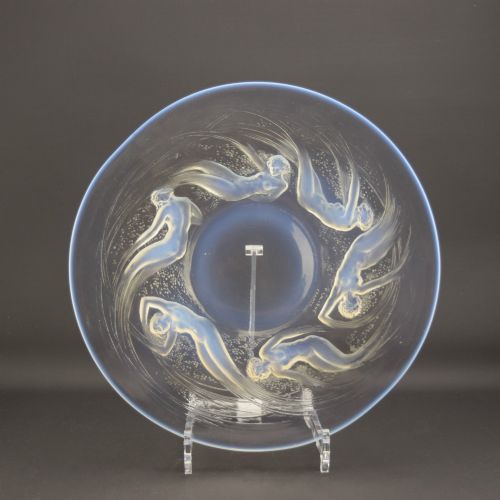
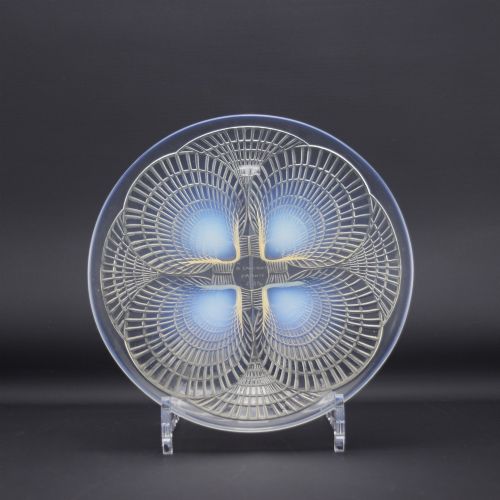




Art Deco Opalescent Dish
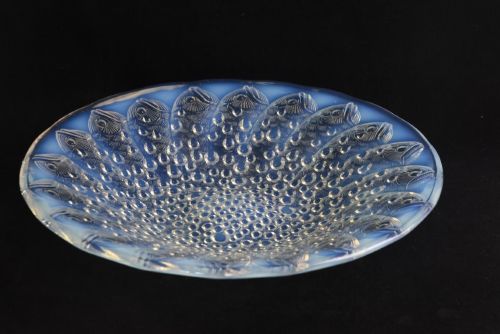
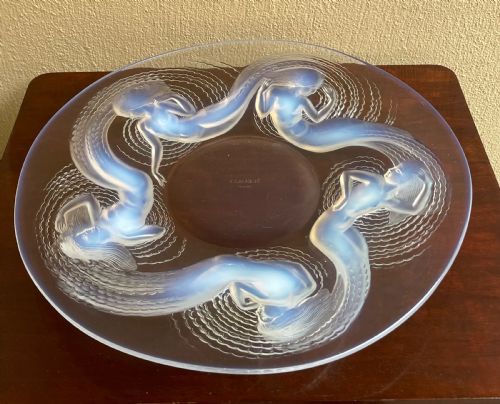
An art deco opalescent dish captures the light with milk-blue fire, offering a striking centrepiece born of the interwar studio tradition.
Art Deco Opalescent Dish
An art deco opalescent dish brings together the geometric rigour of the interwar period and the ethereal, milky glow of specialist glasswork. These pieces span decorative bowls, shallow plates, chargers, and salvers originating primarily from the nineteen-twenties and nineteen-thirties.
Buyers meet varied forms on this page, from wide coupe ouvertes to footed bowls and moulded plates bearing floral or marine motifs. The aesthetic relies on a translucent body that catches ambient light, shifting from pale amber to ghostly blue depending on the angle of view.
Materials and Working Methods
Makers utilised pressed, moulded, and frosted glass to achieve the characteristic light-refracting properties of these vessels. By adding bone ash or other agents to the molten batch, artisans created a semi-opaque material that diffuses illumination across relief-carved surfaces.
The heavy glass pieces emerged from metal moulds, often receiving subsequent surface treatments such as patination or acid-etching to accentuate the contrast between the raised motifs and the recessed background.
Glassmakers occasionally added bone ash to the melting pot, capturing the accidental magic of milky daylight inside a quiet Parisian workshop.
Distinctions in Quality
Quality rests in the crispness of the moulded relief and the intensity of the optical effect within the glass. Superior examples display sharp definition in intricate naturalist motifs, ensuring the milky opalescence concentrates effectively at the edges and high points of the design.
The depth of the sculptural form and the harmony between the glass body and any patinated brass mounts or auxiliary materials dictate the overall standing of an individual piece.
Rene Lalique·G Vallon·Etling·Jobling·Sabino·Verlys
The Art Deco Opalescent Dish Glossary
- Opalescent Glass
- A type of glass that exhibits a milky, bluish glow when lit from the front and an amber tone when lit from behind. This optical phenomenon results from the precise cooling and chemical composition of the batch.
- Coupe Ouverte
- An open bowl form commonly utilised by interwar glassmakers for wide, shallow vessels and chargers. These pieces provide a broad canvas for moulded decorative friezes.
- Press-Moulded Glass
- A manufacturing technique where molten glass is forced into a metal mould by a plunger, enabling the rapid creation of complex patterns and heavy relief work.
- Patination
- The application of pigment or stain to the recessed portions of a glass surface to highlight the carved design. This technique deepens the visual contrast against the pale body.
Art Deco Opalescent Dish: Frequently Asked Questions
How do I clean an opalescent dish?
Wash the glass gently in warm water using a mild detergent and a soft cloth. Avoid abrasive sponges or harsh chemical cleaners that might damage the delicate surface or any historic patination.
Dry the piece immediately with a lint-free towel to prevent water spots from dulling the milky optical effect.
Were these dishes meant for daily use?
Most of these vessels served primarily decorative functions as centrepieces, chargers, or sweetmeat dishes rather than robust tableware. Their heavy moulded glass construction meant they were durable enough for handling, but their artistic value encouraged display.
Placing them on dining tables or sideboards allowed the shifting interior light to activate the opalescent quality of the rims and reliefs.
How can I tell the period?
Examine the stylistic vocabulary of the piece for distinct interwar geometry combined with naturalist motifs such as fish, leaves, and flowers. The weight and texture of the glass, alongside specific moulding signatures or registry numbers, point directly to the production eras of the early twentieth century.
Comparing the relief depth and edge finish against documented examples helps confirm whether a piece belongs to the nineteen-twenties or nineteen-thirties.
What causes the milky blue colour?
The distinct coloration arises from light scattering off microscopic particles suspended within the glass matrix during the cooling process. This deliberate chemical formulation creates the signature opalescence unique to this era of production.
When viewed under direct light, the translucent body catches the rays and scatters shorter blue wavelengths toward the eye.