





French Occasional Chairs
French occasional chairs bring lightness and character to a room, offering practical seating shaped by centuries of stylistic revival.
French Occasional Chairs
French occasional chairs are versatile, moveable seats designed to fill corners, bedrooms, and salons without dominating a floor plan. When you search for french occasional chairs, you encounter a diverse selection spanning the eighteenth, nineteenth, and early twentieth centuries, reflecting changing domestic habits.
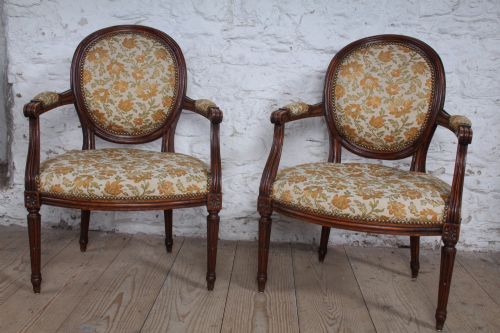
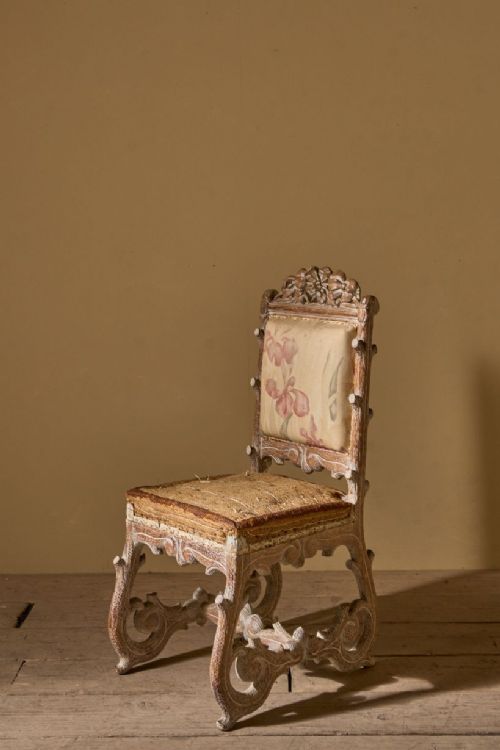
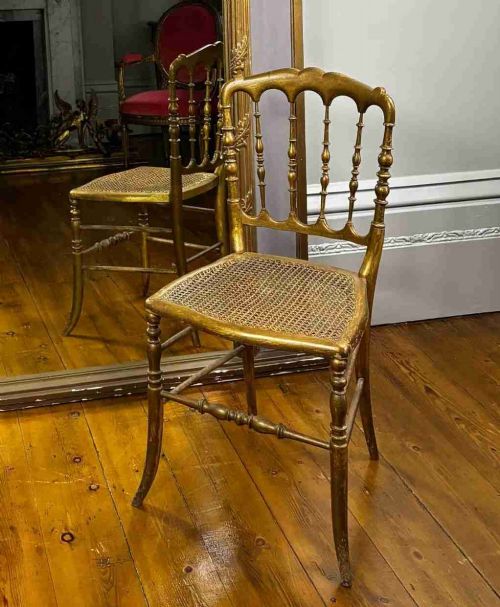
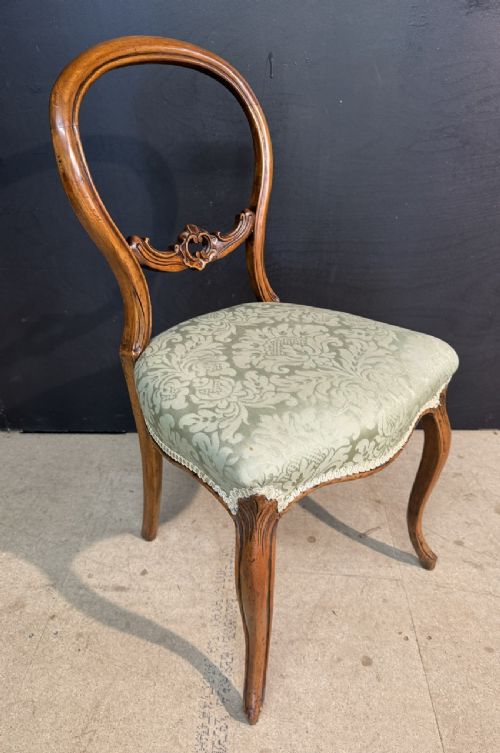
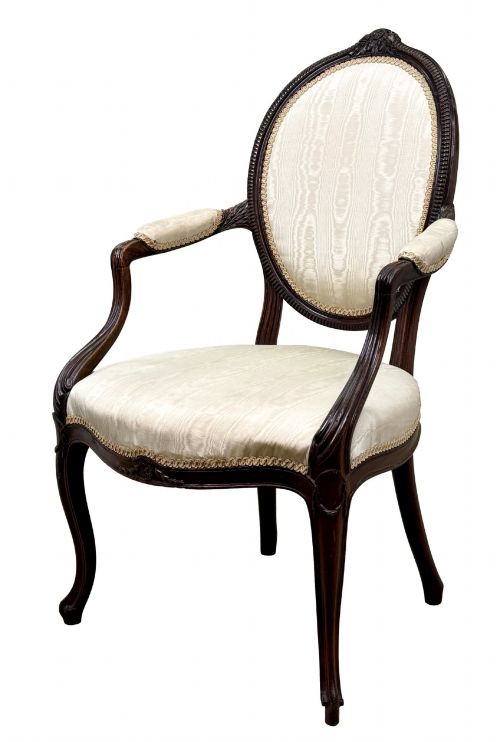
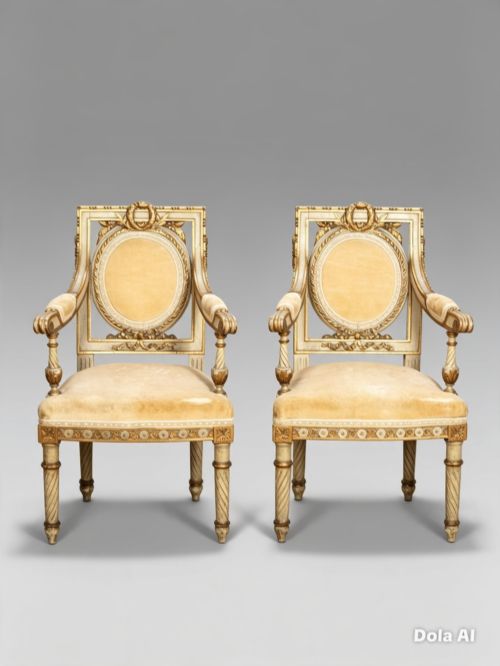
The pieces on this page lean heavily towards nineteenth-century examples and revivals, particularly Louis XVI, Louis XV, and Napoleon III styles. These range from gilded salon chairs to walnut armchairs, boudoir seats, and side chairs upholstered in varied textiles.
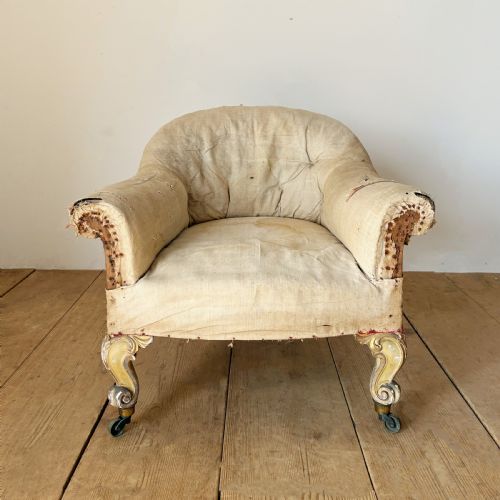
Originating primarily from French workshops, these seats often display playful interpretations of classic motifs, utilised historically for resting, reading, or dressing. They arrive in forms such as tub chairs, bridge chairs, and delicate vanity seats.
Materials and construction
Makers shaped these frames from solid hardwoods like walnut, mahogany, and rosewood, alongside lighter structural timbers finished with paint, ebonisation, or simulated bamboo effects. Giltwood and carved wood provide the ornate architectural detailing characteristic of French revival pieces.
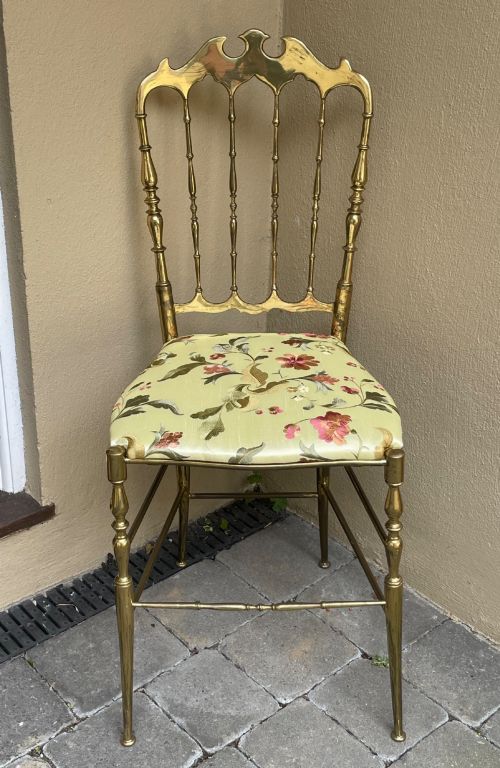
Surface ornament relied heavily on applied gilding, decorative paintwork, and hand-carved details following rococo and neoclassical lines. Metal components such as brass or wrought iron appear in specific industrial and conservatory variants.
Upholstery techniques combined traditional webbing and stuffing with contemporary fabrics, needlepoint, cane, and leather. Caned seats and backs introduced breathable texture, while textile choices ranged from simple linen to elaborate decorative weaves.
The inventory records bridge chairs, tub chairs, and boudoir seating alongside classic salon and side chair formats.
Judging the work
Quality rests in the crispness of the carving and the integrity of the frame construction, where hand-shaped cabriole legs and tight joinery separate superior work from simpler production. Subtle details in the finishing, such as the depth of the gilding or the precision of simulated bamboo turnings, reveal the hand of a skilled maker.
The preservation of original surfaces, whether period paint, patinated giltwood, or aged polish, dictates much of the character. Pieces retaining their early upholstery webbing or authentic cane work demonstrate better continuity of form.
The French Occasional Chairs Glossary
- Fauteuil
- An open-framed armchair with upholstered armrests, typically associated with French formal seating of the eighteenth and nineteenth centuries.
- Cabriole leg
- A furniture leg that curves outward and then tapers inward, mimicking an animal's leg, commonly found on revival pieces.
- Giltwood
- Timber coated with a thin layer of gold leaf or powder, providing a bright decorative surface frequently seen on salon furniture.
- Caning
- Woven rattan or split cane used for seats and back panels, offering a light, textured alternative to solid upholstery.
- Bridge chair
- A compact, often upholstered armchair designed for card games or casual parlour use during the early twentieth century.
- Faux bamboo
- Wood turned and carved to imitate natural bamboo stems, a popular decorative technique during the nineteenth century.
French Occasional Chairs: Frequently Asked Questions
Where should I place an occasional chair?
These chairs suit corners, dressing rooms, and seating groups where extra, moveable seats are needed without cluttering the space.
Because they were built to be portable, they shift easily between rooms to complement existing furniture arrangements.
How do I identify a Louis XVI style chair?
Look for straight, fluted legs, geometric frames, and oval or rectangular backs that reflect neoclassical symmetry rather than flowing curves.
This style emerged in reaction to earlier rococo excesses, favouring restraint and classical architectural motifs.
Were these chairs meant for daily sitting?
Many were built for lighter parlour or bedroom use rather than heavy lounging, though sturdy walnut and mahogany frames handle regular sitting well.
Upholstered salon models and bridge chairs offered comfort for conversation and card games in period homes.
What is simulated bamboo furniture?
Makers carved or turned ordinary timber to replicate the knotted texture of real bamboo, satisfying a nineteenth-century fascination with exotic design.
These pieces were frequently painted or ebonised to complete the decorative effect.