

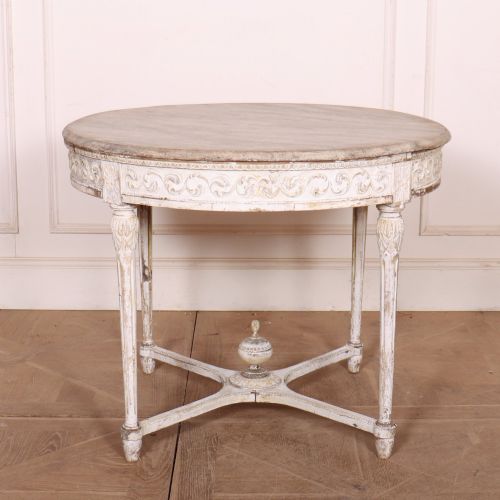
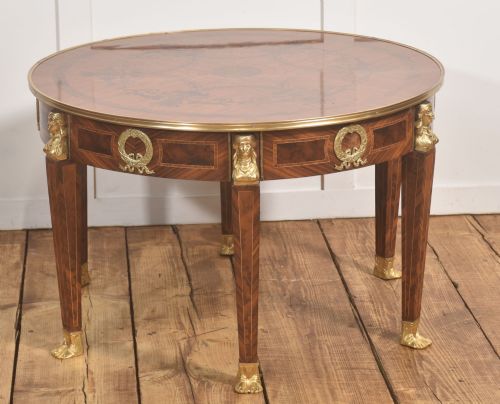
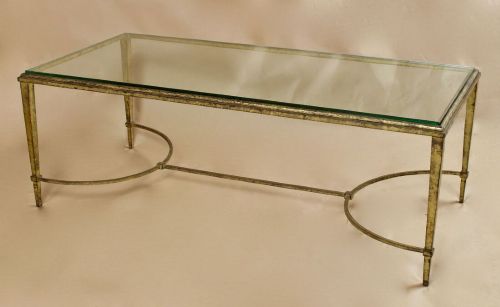
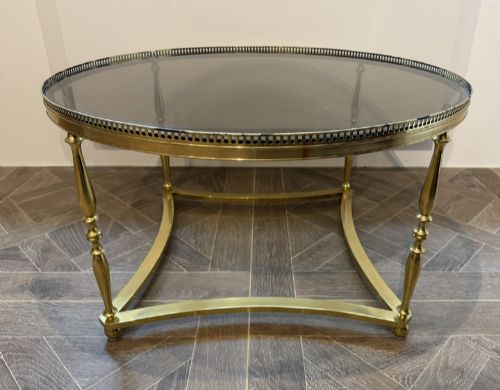
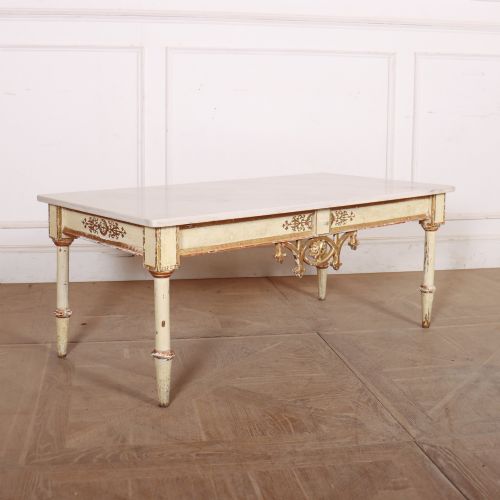
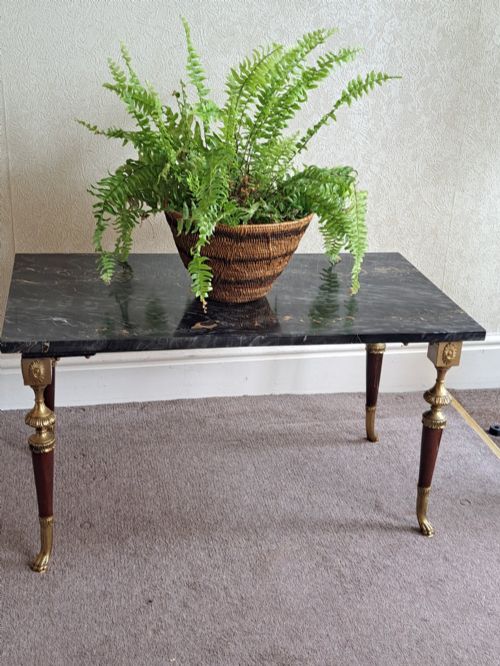
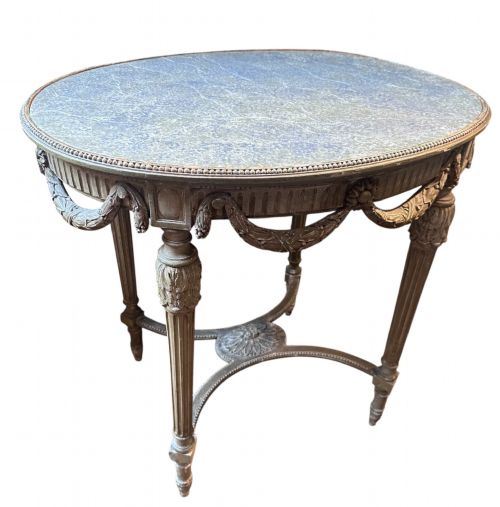
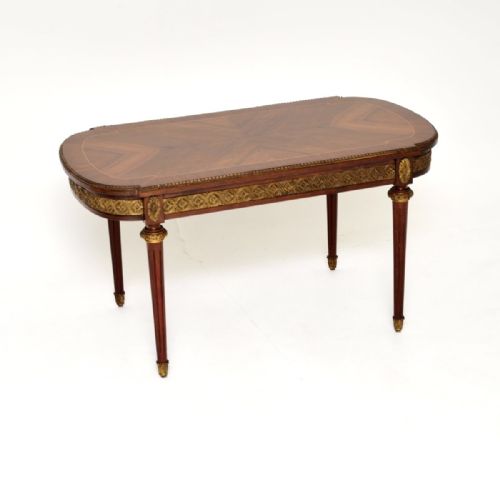


French Neoclassical Center Table
A french neoclassical centre table brings architectural balance and grand proportion to a room, drawing the eye with classic marble and warm mahogany.
French Neoclassical Center Table
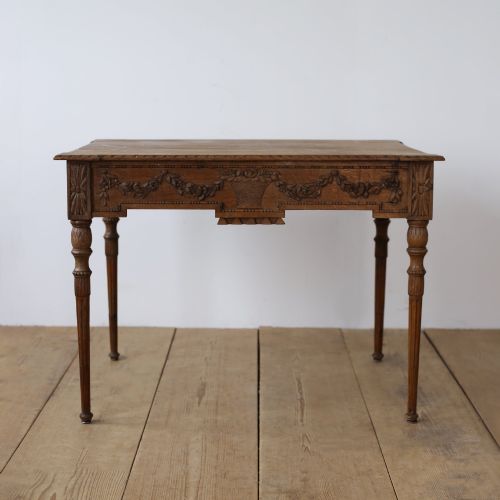
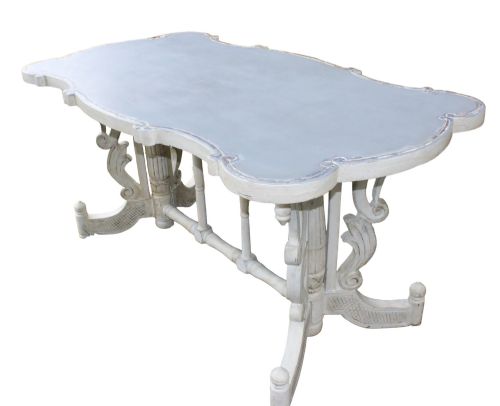
When you search for a french neoclassical centre table, you enter a world of formal proportion, architectural symmetry, and classical restraint. These freestanding pieces sit comfortably in the middle of a room or serve as striking anchor points against a wall.
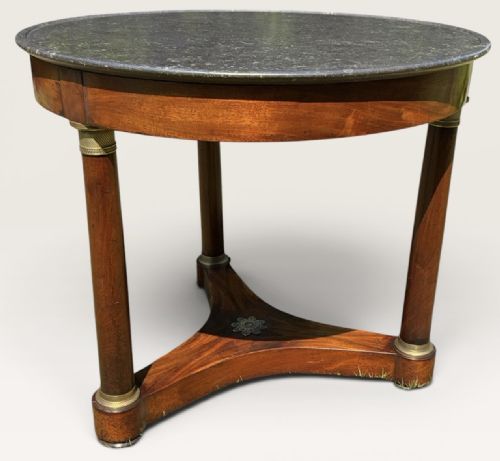
The versions most common here draw heavily on the French Empire and Louis XVI styles, taking the form of round guéridons, oval coffee tables, and occasional tables. They combine practical surface space with distinct historical lineage, originating primarily from the nineteenth century alongside later revivals.
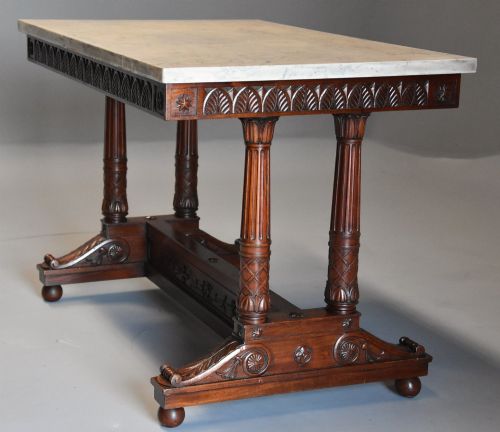
Surfaces in this category frequently pair cool marble tops with rich mahogany, walnut, or ebonised wood structures. Makers utilised classical motifs like rams heads and gilt bronze mounts to create formal tables that commanded attention in high-status interiors.
How they were made
Cabinetmakers constructed these tables using dense timbers such as mahogany and walnut, frequently applying intricate marquetry or rich satinwood veneers to the visible surfaces. Structural integrity relied on traditional joinery techniques suited to supporting heavy stone tops.
The decorative vocabulary depended heavily on cast or chased ormolu, polished brass, and gilded wrought iron applied to the wooden frames. Marble and porphyry tops were carefully cut, polished, and fitted directly into recessed wooden plateaux.
French Neoclassical Center Table Retail Price Guide 2026
Typical asking prices for french neoclassical center table among the pieces listed under this phrase on Sellingantiques today, from the lower quarter to the upper quarter. They describe what is for sale here now, not the wider market.
Several tables feature carved rams heads staring steadfastly outward, guarding your afternoon teacup with classical dignity.
What varies in quality
Quality rests upon the crispness of the cast metal mounts and the depth of the timber grain rather than mere age alone. Superior examples display finely detailed ormolu, sharp carving on wooden elements, and authentic period marble varieties.
The structural harmony between the base and the top dictates the lasting value of the piece. Tables bearing maker stamps or attributed workshops demonstrate a higher grade of craftsmanship in every hidden joint and visible surface.
JACOB·Ince & Mayhew·Maison Ramsay
The French Neoclassical Center Table Glossary
- Guéridon
- A small French round table, typically supported by a central column or three legs, heavily favoured during the Empire period. These pieces function well as freestanding centre tables.
- Ormolu
- Gilded bronze used extensively for decorative mounts on neoclassical furniture. The technique involves applying a gold amalgam to cast bronze before heating.
- Marquetry
- The art of applying pieces of veneer to a structure to form decorative patterns. Craftsmen utilised various exotic woods to create intricate geometrical or floral scenes.
- Porphyry
- A purple-red igneous rock containing crystals of feldspar, prized for its durability and regal appearance. It frequently tops high-end nineteenth-century tables.
- Ebonised
- Wood treated to resemble expensive ebony through a staining and finishing process. This technique provides a sharp dark contrast against gilt brass mounts.
French Neoclassical Center Table: Frequently Asked Questions
Where should I place a centre table?
A centre table works best freestanding in the middle of a large room or a spacious hallway, allowing access from all sides.
Ensure you leave adequate walking space around the perimeter so the piece can function visually as the room's focal point.
How do I care for a marble top?
Marble requires gentle cleaning with a damp cloth and mild soap, avoiding acidic cleaners that can etch the polished stone surface.
Use coasters under glasses and protect the top from heavy impacts to preserve the original finish.
How do I spot an Empire style table?
Look for strong architectural lines, dark mahogany timbers, and classical bronze or ormolu mounts such as rams heads or laurel wreaths.
These pieces often take the round guéridon form and draw direct inspiration from ancient Roman and Greek designs.
Can I use an antique table as a coffee table?
Many occasional and centre tables from the nineteenth and early twentieth centuries sit at a height suitable for modern living rooms.
Confirm the specific dimensions of the piece to ensure it aligns comfortably with your existing seating arrangements.