





French Empire Library Table
A french empire library table brings heavy mahogany, rich ormolu mounts and classical proportion into a room, setting a serious tone for writing and study.
French Empire Library Table
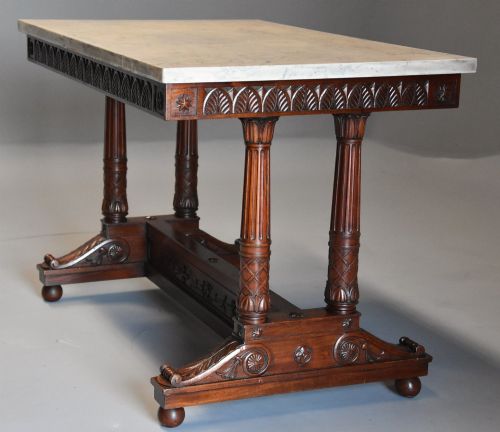
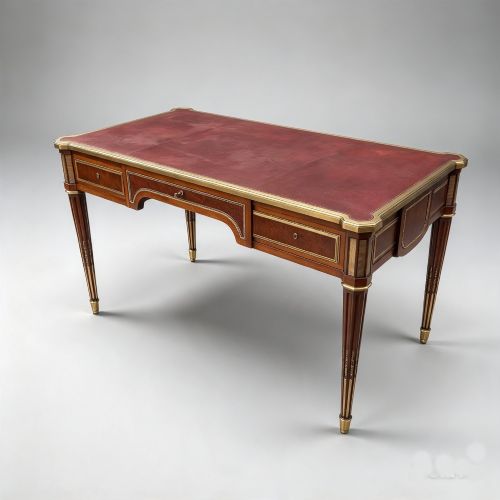
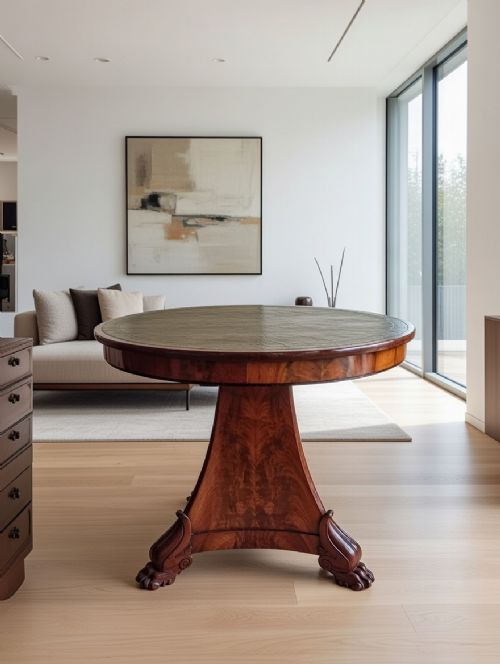
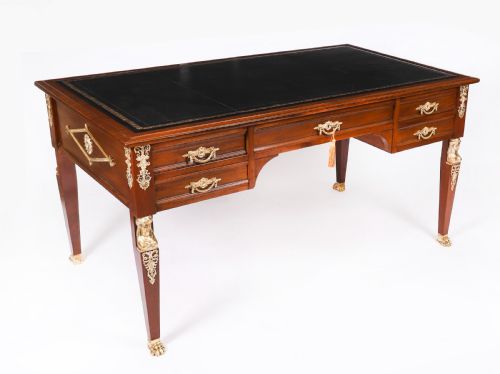
A french empire library table typically manifests as a substantial centre table, bureau plat, or writing desk grounded in classical design. These pieces draw from the 19th Century, 1800, and subsequent revival periods including Napoleon III and Empire Style.
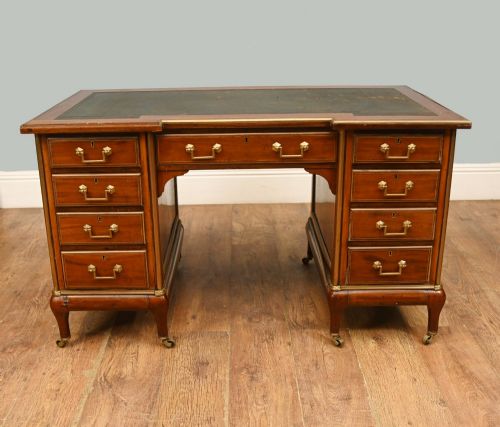
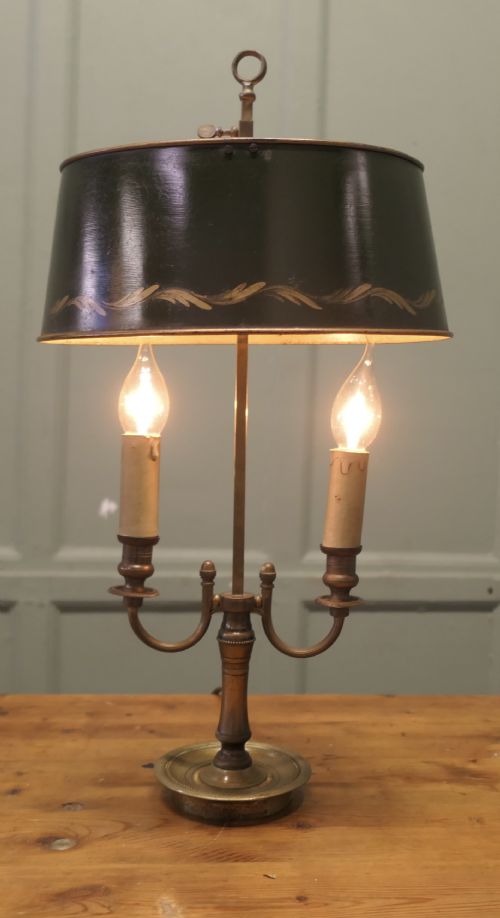
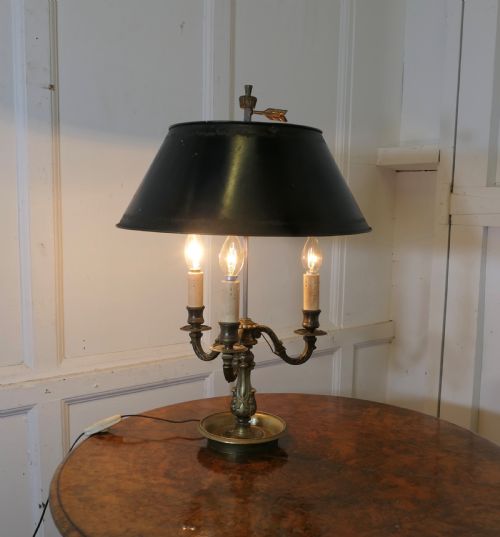
The form prioritises architectural symmetry and surface area, frequently featuring leather inserts and rich timber construction. Centre tables and kneehole desks dominate the selection, often accompanied by related lighting such as toleware and brass bouillotte lamps.
Examples span the early 19th Century through to later revivals around 1890, 1900, and into the 20th century. Buyers encounter both primary French Empire pieces and later interpretations reflecting the enduring appeal of the style.
Materials and Construction
Construction relies heavily on dense mahogany and occasionally rosewood as the primary timber carcase. Cabinetmakers shaped these woods to create smooth writing surfaces, often inset with leather.
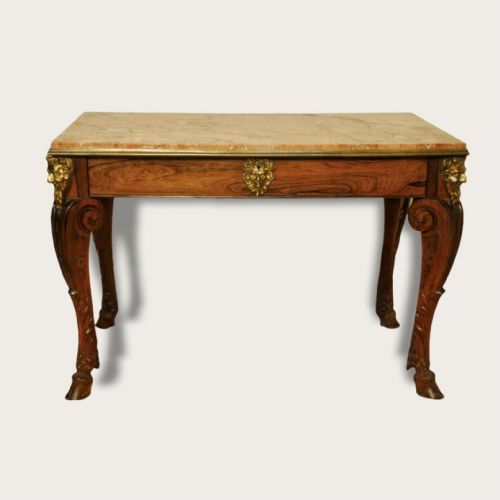
Metalwork defines the aesthetic, utilising cast ormolu, gilt bronze, and brass for mounts, handles, and gallery details. Marble tops also appear on select centre tables, adding weight and a cool tactile surface to the design.
French Empire Library Table Retail Price Guide 2026
Typical asking prices for french empire library table among the pieces listed under this phrase on Sellingantiques today, from the lower quarter to the upper quarter. They describe what is for sale here now, not the wider market.
Listings feature woods including mahogany and rosewood, paired with ormolu, gilt bronze, marble, and leather across the 19th Century and later revivals.
Evaluating Quality and Finish
Quality rests in the crispness of the ormolu mounts and the depth of the timber patina. Finer examples display sharp, detailed casting in the gilt bronze elements rather than soft or repetitive surface decoration.
The integrity of the construction, from the choice of timber veneers to the hand-tooled leather writing surfaces, separates standard production from exceptional pieces. Maker stamps and attribution further elevate the standing of a table.
JACOB·Jean-Joseph Chapuis
The French Empire Library Table Glossary
- Bureau plat
- A freestanding writing desk with drawers in the frieze, designed to sit in the centre of a room rather than against a wall.
- Ormolu
- Gilt bronze ornamentation applied to furniture, created through a mercury gilding process that gives a rich golden finish.
- Centre table
- A freestanding table finished on all sides, intended to be viewed from any angle in the middle of an interior space.
- Bouillotte lamp
- An adjustable desk lamp featuring a central shaft, a toleware shade, and multiple candle arms adapted for electricity.
- Gueridon
- A small round or oval table, often supported by a central column or tripod base, suited for display or occasional use.
French Empire Library Table: Frequently Asked Questions
What is a french empire library table?
A french empire library table is a formal writing desk or centre table rooted in 19th Century classical design. These pieces utilise mahogany, leather, and gilt bronze mounts to create a commanding architectural presence.
They serve as functional workspaces or centrepieces in a room, reflecting the heavy influence of French neoclassical taste. The category also encompasses bureau plat desks and related forms from revival periods.
Where should I place a centre table?
A centre table is designed to stand free in the middle of a room rather than pushed against a wall. Because the back and sides are finished with the same care as the front, it functions from every angle.
Ensure there is enough walking space around the perimeter so the piece can breathe in the room. It works well in studies, libraries, or large hallways as a focal point.
How do I care for leather desk tops?
Leather writing surfaces require gentle maintenance to prevent drying and cracking over time. Dust regularly with a soft, dry cloth and avoid harsh chemical cleaners that strip the finish.
Apply a specialist leather balm occasionally to keep the material supple. Keep the surface away from direct sunlight and excessive heat sources to preserve the colour.
How do I distinguish original Empire from revival pieces?
Distinguishing original pieces from later revivals involves examining the construction methods, timber ageing, and mount casting techniques. Early 19th Century examples exhibit hand-cut joints and wear patterns consistent with extended use.
Revival pieces from periods like Napoleon III or the late 19th century often employ machine assistance while still maintaining high standards of craft. Comparing the weight, patination, and style of the ormolu provides further context for dating.