

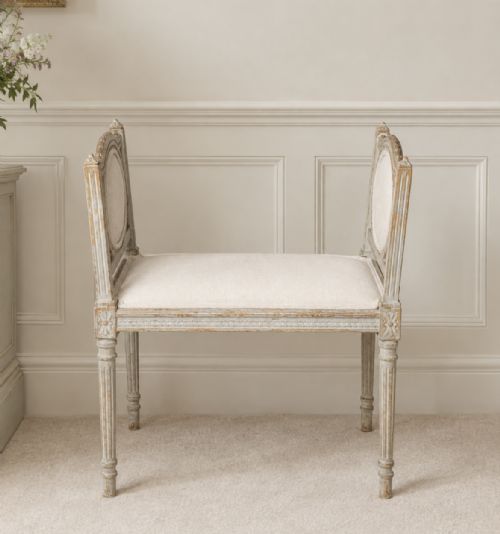


French Neoclassical Bench
A french neoclassical bench brings restrained classical symmetry and refined seating into a room, drawing on eighteenth-century design traditions.
French Neoclassical Bench
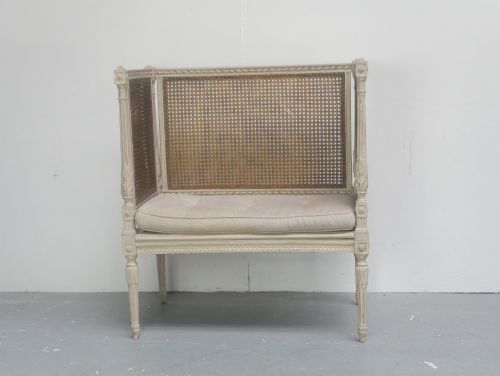
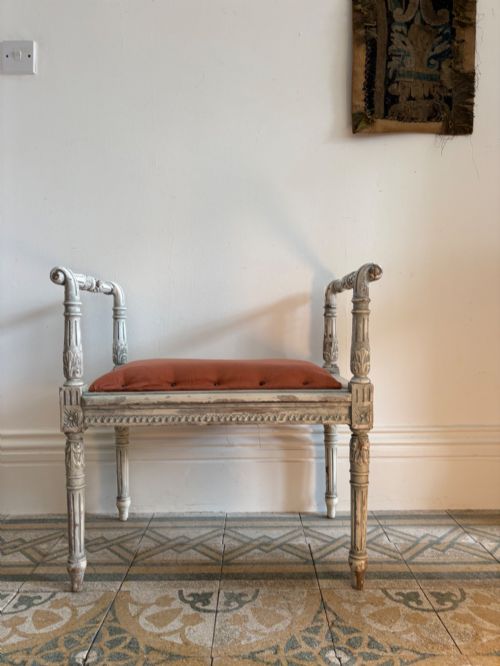
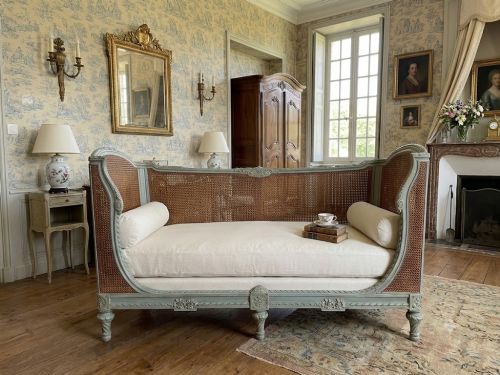
A french neoclassical bench encompasses a variety of seating forms designed with classical restraint, ranging from window seats and small stools to larger settees and daybeds. These pieces draw primarily upon Louis XVI, Gustavian, and Empire styles, reflecting the enduring influence of classical antiquity on European furniture design.
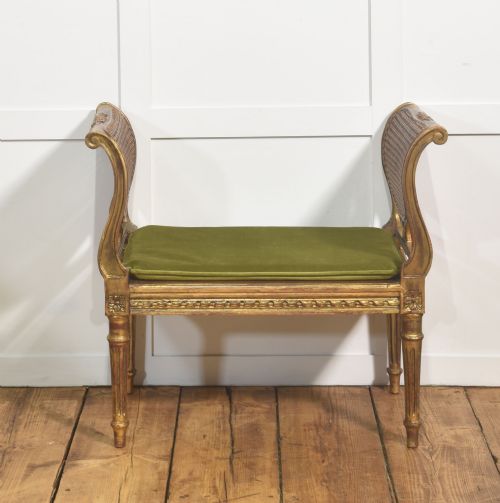
The pieces encountered on this page span several centuries, appearing in eighteenth-century originals alongside nineteenth-century revivals and early twentieth-century interpretations. Common variations include giltwood frames, painted wood finishes, and integrated canework, often upholstered in silk, velvet, or other textiles.
Makers and manufacturers produced these forms for formal salons, boudoirs, and halls, utilising architectural motifs such as fluted legs and symmetrical geometry. Buyers frequently encounter window seats and duet stools alongside larger settees and sofas sharing the same neoclassical vocabulary.
Materials and Construction
Makers constructed these frames from solid timbers such as beech, walnut, and mahogany, often applying a white or cream paint finish, or laying down gold leaf to create giltwood surfaces. Skilled artisans incorporated woven cane panels into backrests and seats, providing both textural contrast and structural lightness.
Upholstery techniques involved traditional textiles, including silk and velvet, secured over supportive foundations within the wooden framework. Ormolu mounts were occasionally applied to empire revival pieces to accent the mahogany structures with cast bronze details.
Listings feature pieces spanning from the eighteenth century through the 1920s, constructed in beech, walnut, and mahogany with giltwood, paint, and cane finishes.
Assessing Craftsmanship and Detail
The refinement of the wood carving and the crispness of architectural details dictate the distinction between standard production and superior work. Finishes such as hand-applied gesso and gilding or layered paint show greater depth on finer pieces.
The integrity of the structural joinery and the precision of integrated canework indicate the level of care invested by the maker. Original surface patination and the harmony of proportions further separate exceptional examples from simpler revivals.
The French Neoclassical Bench Glossary
- Giltwood
- Wood that has been decorated with a thin layer of gold leaf. This finish was widely utilised during the eighteenth and nineteenth centuries to impart a luxurious appearance to seating frames.
- Canework
- Woven rattan or cane material used for chair seats and back panels. It offers a resilient, breathable surface characteristic of period daybeds and window seats.
- Ormolu
- Gilded bronze mounts applied as decorative ornaments on furniture. These fittings are frequently found on Empire revival pieces.
- Curule stool
- An ancient Roman magistrate chair form featuring crossed legs in an X shape. This classic profile reappears in nineteenth-century revival seating.
- Bergère sofa
- An enclosed upholstered sofa style with solid sides. These pieces often feature exposed painted or gilded wood frames.
French Neoclassical Bench: Frequently Asked Questions
What is a french neoclassical bench?
A french neoclassical bench is a seat inspired by classical architecture and proportions, encompassing styles from the Louis XVI period through to later nineteenth-century revivals.
These pieces typically feature straight tapered legs, symmetrical ornamentation, and frames finished in paint, giltwood, or polished timber.
How do I date a french neoclassical bench?
Dating relies on examining the construction methods, tool marks, wood species, and the specific stylistic revival movement represented by the piece. Eighteenth-century originals differ significantly in joinery and wear patterns from nineteenth-century Empire revivals or early twentieth-century interpretations.
Comparing the decorative motifs, such as the handling of classical foliage or fluting, helps position the object within its correct historical era.
Where should I place a window seat?
A window seat suits hallways, bedrooms, or living spaces where low-profile seating maintains sightlines and light levels. They fit naturally beneath windows or against blank walls as accent furniture.
Their narrow depth also makes them practical for transitional spaces and narrower rooms.
How do I care for giltwood frames?
Giltwood requires gentle dusting with a soft, dry cloth to prevent abrasion to the delicate gold leaf layer. Avoiding direct sunlight and moisture preserves the underlying gesso and wooden substrate.
Professional conservation is recommended if the surface shows signs of flaking or separation.