

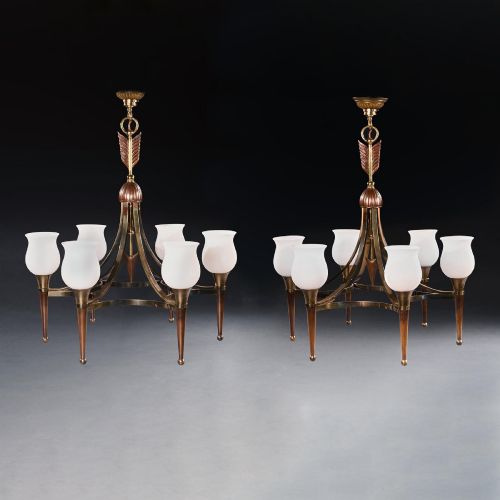
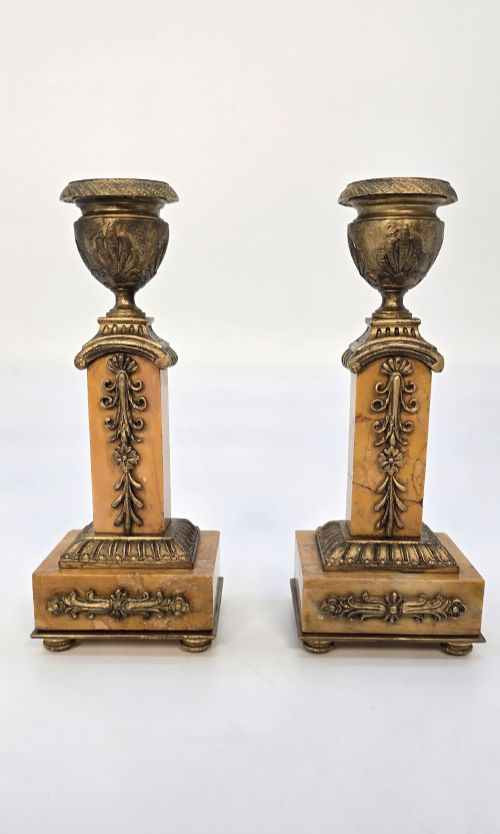
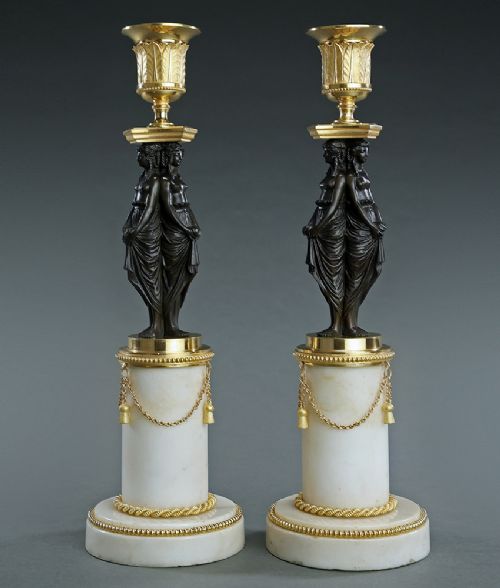
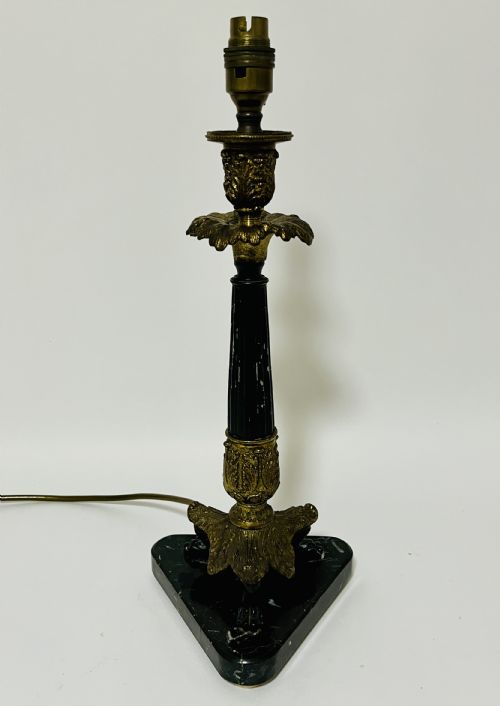


French Neoclassic Lighting
French neoclassic lighting brings formal architectural discipline and rich gilt metalwork into a room.
French Neoclassic Lighting
French neoclassic lighting encompasses chandeliers, wall lights, table lamps, and candlesticks derived from classical antiquity and the Louis XVI, Empire, and revival periods. These pieces draw on architectural motifs like columns, caryatids, and urns to create a structured and imposing decorative presence.
The selections encountered here range from early nineteenth century Empire and Louis XVI examples to later nineteenth century revivals and mid-century interpretations after designers such as Andre Arbus. Wall sconces, lanterns, and multi-arm chandeliers dominate the forms currently available.
Buyers seeking french neoclassic lighting will find a strong emphasis on pairs designed for symmetrical placement on walls, mantels, or tables. The forms bridge functional illumination and ornamental sculpture through disciplined design vocabulary.
How they were made
The primary metals utilised across these pieces include gilt bronze, ormolu, brass, copper, and gilded brass, often combined with carved white Carrara marble. Metal components were cast, chased, and gilded to achieve contrasting textures of bright burnished highlights and matte surfaces.
Lighting fixtures frequently incorporate structural glass elements, such as frosted glass shades or lantern panels, to diffuse the light from candles or early electric bulbs. Construction relies on mechanical joinery and threaded fittings to secure heavy bronze and marble assemblies safely.
French Neoclassic Lighting Retail Price Guide 2026
Typical asking prices for french neoclassic lighting among the pieces listed under this phrase on Sellingantiques today, from the lower quarter to the upper quarter. They describe what is for sale here now, not the wider market.
The listings show periods spanning from 1800 through the nineteenth century to the 1950s, featuring materials such as gilt bronze, marble, and frosted glass.
What varies in quality
The weight and gauge of the cast metal components dictate the structural integrity of larger chandeliers and wall sconces. Earlier nineteenth century examples and documented revival pieces by makers like Maison Jansen show greater precision in assembly than standard commercial production.
Maison Jansen·Andre Arbus·Dugourc
The French Neoclassic Lighting Glossary
- Ormolu
- A technique of applying finely ground high-carat gold to a bronze object using a mercury amalgam, producing a durable golden finish. This surface treatment is characteristic of finer French metalwork from the eighteenth and nineteenth centuries.
- Caryatid
- A sculpted female figure serving as an architectural support in place of a column or pilaster. These figures frequently appear on the stems of candlesticks and table lamps.
- Louis XVI Style
- A decorative aesthetic defined by straight lines, symmetry, and classical restraint drawn from ancient Greek and Roman art. It experienced several nineteenth-century revivals.
- Carrara Marble
- A type of white or blue-grey marble quarried in the city of Carrara in Tuscany, widely used for the plinths and columns of nineteenth-century lamps and candlesticks.
- Wall Sconce
- A wall-mounted lighting fixture designed to hold candles or electric bulbs, often backing against a decorative gilt bronze backplate.
French Neoclassic Lighting: Frequently Asked Questions
How do I wire antique French lighting?
Most antique fixtures require rewiring to meet modern electrical safety standards while preserving their external metal and marble components. Professional electricians can thread modern wiring through historical channels without altering the visible body.
For chandeliers and wall lights, contemporary internal wiring must support the weight of the metal arms and glass elements securely. Using low-heat LED bulbs helps protect fragile nineteenth-century materials from thermal damage over time.
Are these pieces made of solid bronze?
Many fixtures combine cast bronze, brass, and copper elements, where only the higher-grade pieces utilise solid bronze throughout. Gilt bronze and ormolu describe the surface finishing applied to the underlying metal base.
Marble and gilt brass components frequently appear alongside bronze in nineteenth-century table lamps and candlesticks. Examining the weight and the underside of the base usually reveals the construction materials used.
How do I distinguish original from revival pieces?
Original pieces from the early nineteenth century display patination, casting methods, and wear consistent with the period of Napoleon or the Bourbon Restoration. Revival pieces from the later nineteenth or mid-twentieth century reflect the manufacturing techniques and stylistic interpretations of their own decades.
Documentation, stylistic proportions, and the quality of the chasing help identify whether a piece dates to the 1800s or a subsequent revival era. Both carry distinct historical value based on their respective periods of manufacture.
How should I clean gilt bronze and marble?
Gilt bronze and ormolu require gentle dusting with a soft dry brush to prevent accumulation of dirt in the chased recesses. Water and chemical cleaners can strip historical finishes and should be avoided entirely.
Carrara marble bases can be wiped down with a barely damp cloth and dried immediately to protect the stone surface. Regular careful maintenance preserves the original patination of the metalwork.