



French Narrow Chest Drawers
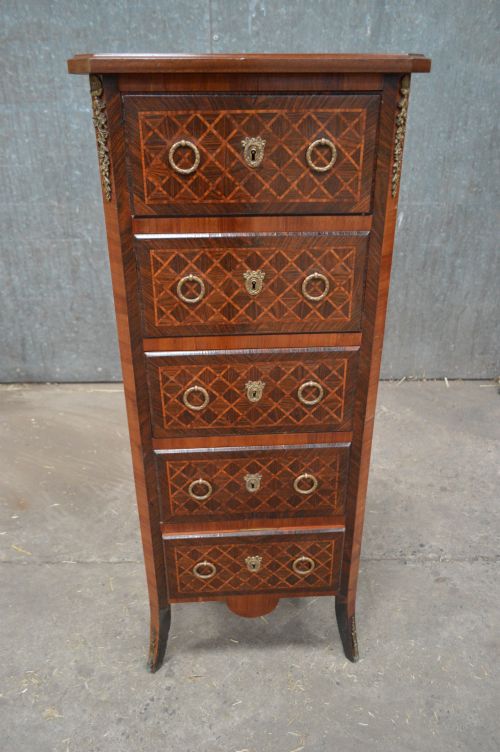
These French narrow chest drawers are upright storage pieces built to save floor space while offering deep timber drawers.
French Narrow Chest Drawers
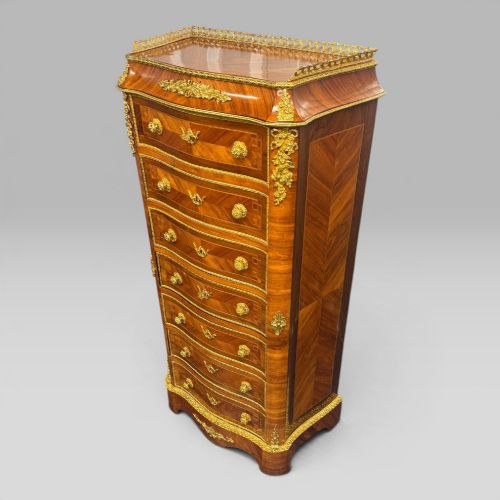
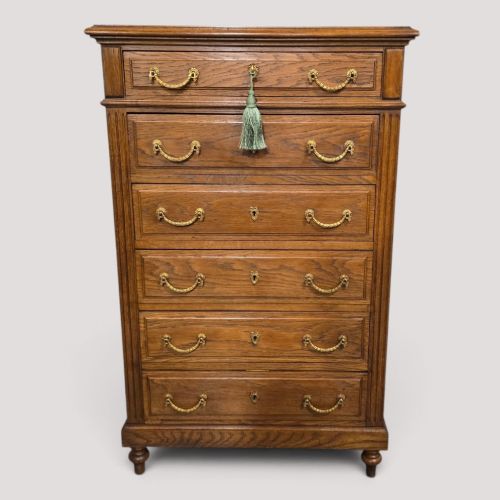
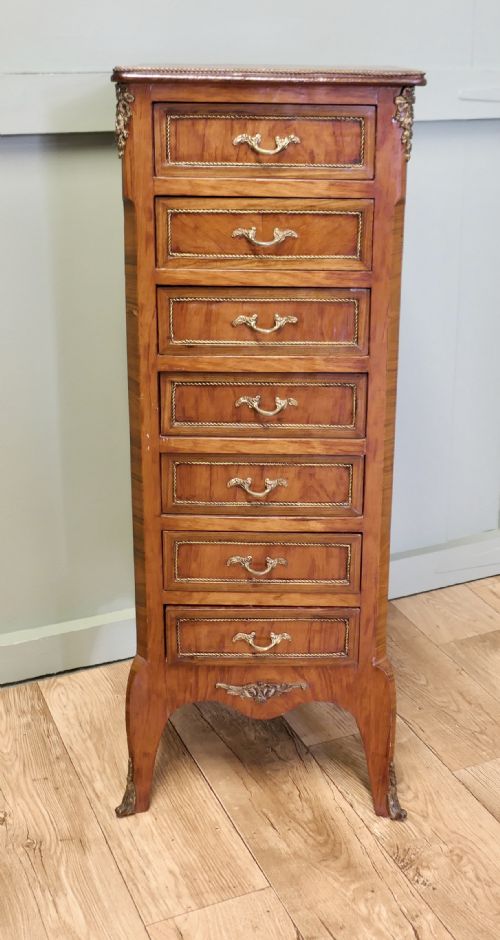
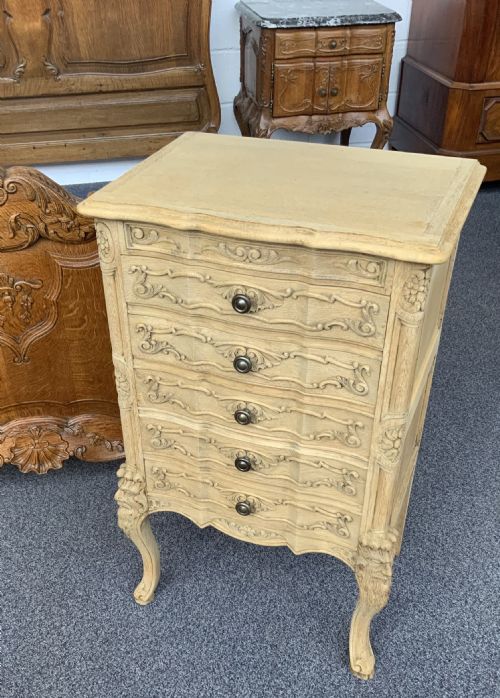
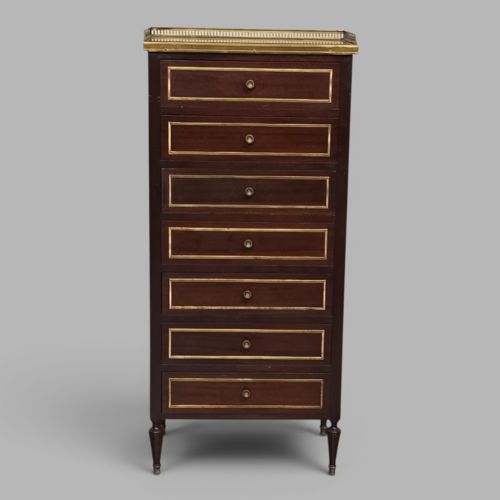
French narrow chest drawers are tall, vertical storage pieces designed to maximise vertical space in smaller rooms. You will frequently find these pieces taking the form of a semainier or a tall Wellington chest across the selection.
The inventory spans the nineteenth century up to the nineteen-thirties, drawing on provincial workshops and urban cabinet makers alike. These upright chests suit bedrooms and dressing rooms where floor space is at a premium.
Makers shaped these tall carcases in styles ranging from Louis XV Revival and French Provincial to Empire and Transitional. Each piece combines slender proportions with multiple functional drawers.
Materials and construction methods
Cabinet makers built these chests using solid timbers like oak, walnut, mahogany, rosewood, kingwood and tulipwood, often laying fine veneers over secondary woods. Marquetry, parquetry and brass stringing decorate the drawer fronts and sides on many examples.
Many instances feature fitted marble tops in white or coloured stone, adding weight and a smooth durable surface to the top. Ormolu mounts and cast brass handles complete the hardware, fixed securely to the timber frames.
French Narrow Chest Drawers Retail Price Guide 2026
Typical asking prices for french narrow chest drawers among the pieces listed under this phrase on Sellingantiques today, from the lower quarter to the upper quarter. They describe what is for sale here now, not the wider market.
Listings feature walnut, mahogany, rosewood, and oak, alongside decorative marble tops and brass ormolu mounts.
Distinguishing quality in the build
Quality rests in the precision of the timber joints, the crispness of the parquetry or marquetry patterns, and the integrity of the veneer work. Smoother drawer runs and heavier, well-cast ormolu mounts signal superior workshop execution.
The presence of an undamaged marble top and intact brass inlay elevates a piece above simpler utilitarian versions. Balance and proportion in the tall, narrow carcase dictate the overall elegance of the furniture.
The French Narrow Chest Drawers Glossary
- Semainier
- A tall, narrow chest traditionally containing seven drawers, one for each day of the week. This form originated in France and remains a staple of vertical bedroom storage.
- Marquetry
- Decorative veneer work arranged in pictorial or geometric patterns using various coloured woods. Craftsmen applied these thin slices of timber to the main carcase.
- Parquetry
- Geometric wood mosaic work used for decorative surfaces on floors and furniture. Triangular and diamond-shaped veneers create repeating patterns across the drawer fronts.
- Ormolu
- Gilded bronze mounts applied to furniture as decorative feet, handles, and corner accents. This technique adds metallic contrast to the polished wood surfaces.
French Narrow Chest Drawers: Frequently Asked Questions
What is a semainier?
A semainier is a specific type of tall, narrow chest designed with seven separate drawers. The seven-drawer count traditionally allowed owners to organise garments or linens by the day of the week.
These pieces stand taller than standard chests while maintaining a small footprint on the floor. They serve as practical storage units in compact bedrooms.
Where do I put a narrow chest?
These upright chests fit well in alcoves, narrow hallways, or beside a bed where standard wide furniture will not fit. Their vertical build provides ample storage without dominating the room.
Position them against solid walls where the height balances the narrow width. They work effectively in bedrooms, dressing rooms, and study spaces.
How do I care for marble tops?
Marble top surfaces require gentle cleaning with a damp cloth and mild soap to avoid staining the porous stone. Avoid harsh chemical cleaners and acidic liquids that etch the polish.
Use coasters and pads beneath objects placed on the marble to prevent scratches. Regular wiping keeps the stone smooth and preserves its natural grain.