





French Modernist Oil Canvas
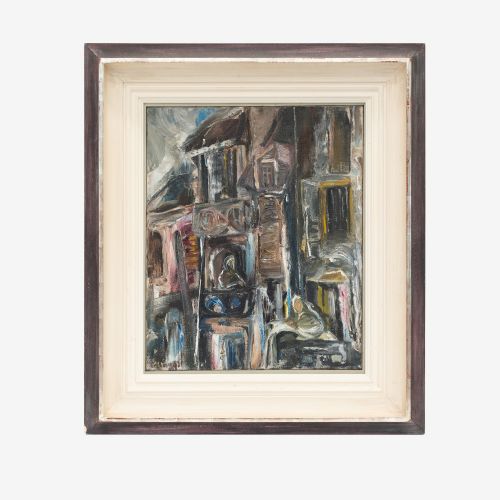
When you search for a French modernist oil canvas, you encounter mid-century compositions that capture the evolving spirit of twentieth-century European painting.
French Modernist Oil Canvas
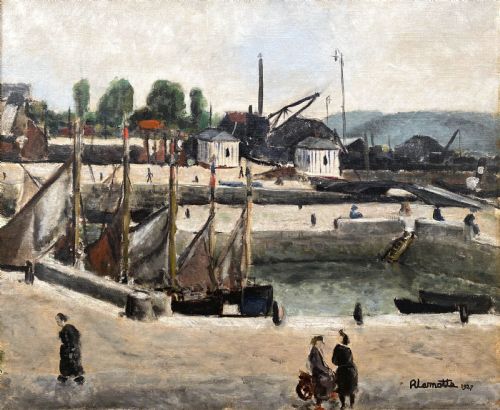
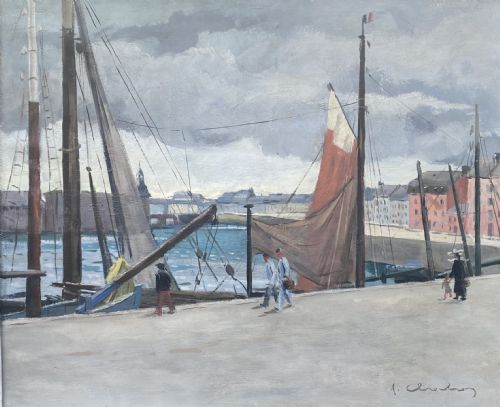
A French modernist oil canvas captures the dynamic artistic shifts spanning from the nineteen-twenties through the nineteen-sixties. Buyers exploring this phrase find an array of subjects including harbour scenes, figure studies, floral still lifes, and urban landscapes.
The works reflect the varied influences of movements such as Art Deco, Cubism, Fauvism, and mid-century modernism. Canvases from Paris, Provence, and Brittany dominate the selection, showing both intimate interiors and expansive coastal vistas.
Most examples date from the interwar period up to the nineteen-sixties, capturing the hand of diverse makers ranging from established painters to lesser-known studio artists.
Materials and construction
The foundational medium relies primarily on oil paint applied to woven canvas, occasionally supported by wood panels or paper laid onto canvas. Artists utilised rich pigment loads, sometimes incorporating encaustic or varied brushwork to build tactile surfaces.
Surviving works frequently retain their original wood or gilt wood frames, which complement the modernist aesthetic and protect the edges of the stretched fabric over decades of display.
Several canvases capture domestic felines, pigeons, and hidden birds alongside bustling Parisian street scenes.
Distinguishing quality across the range
Quality reveals itself in the confidence of the brushwork and the structural coherence of the composition, whether the style leans toward strict realism or abstracted forms. Stronger works demonstrate a deliberate handling of light and space that elevates the subject beyond mere illustration.
Provenance and documentation also separate standard decorative pieces from significant historical examples, particularly when exhibition labels or established artist attributions accompany the canvas.
Paul Bret·Lilian Colbourn·Raymond Moritz·Gabriel Dauchot·Pinchus Krémègne·Yo Mayer·André Delfau·Claude Mendelovic·André Raffin
The French Modernist Oil Canvas Glossary
- Canvas
- A heavy woven fabric used as a surface for oil painting. It provides the necessary tension and texture for layered pigment applications.
- Avant-garde
- Artworks that push experimental boundaries away from traditional academic standards. These pieces often challenge conventional perspective and colour application.
- Cubism
- An early twentieth-century style breaking subjects down into geometric planes. Artists using this approach fragmented forms to show multiple viewpoints simultaneously.
- Gilt wood frame
- A wooden picture surround covered in a thin layer of gold leaf or metallic gilt paint. These frames add a reflective border that isolates the painting from its surroundings.
- Still life
- An artwork depicting inanimate subject matter, typically commonplace objects or natural items such as fruit and flowers. Modernist interpretations often flatten perspective and emphasise bold colour palettes.
French Modernist Oil Canvas: Frequently Asked Questions
How do I date a French modernist canvas?
Dating relies on stylistic markers, artist signatures, exhibition records, and framing materials. Mid-century works often display characteristic abstract tendencies absent in earlier decades.
Examining the canvas verso can also reveal period stamps, gallery labels, or handwritten dates left by the creator.
Where were these modernist paintings produced?
Many originate from artistic hubs in France, particularly studios around Paris such as Montparnasse, alongside regional locations in Provence and Brittany. Artists frequently travelled between urban centres and coastal retreats for inspiration.
Local landscapes and Parisian street scenes form the primary settings captured in these compositions.
How should I care for an oil painting?
Keep the canvas away from direct sunlight and severe humidity fluctuations to prevent pigment cracking and wood warping. Dust the surface gently with a soft, dry brush without applying pressure.
Professional conservators should handle any deep cleaning or structural repairs to the fabric.
What distinguishes abstract from figurative works here?
Figurative paintings retain recognizable subjects like portraits, interiors, or landscapes rendered with expressive distortion. Abstract compositions prioritize colour, line, and form over literal depiction.
Many pieces bridge both categories by featuring recognizable motifs interpreted through simplified geometric lenses.