


Art Deco Female Portrait
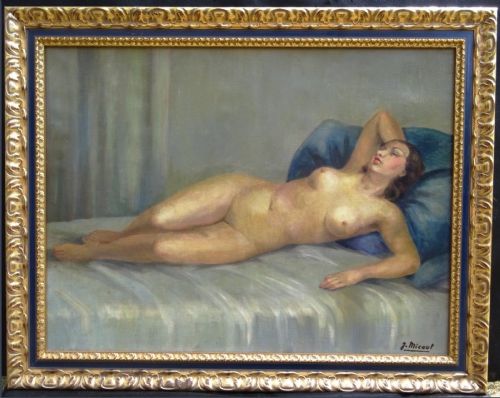
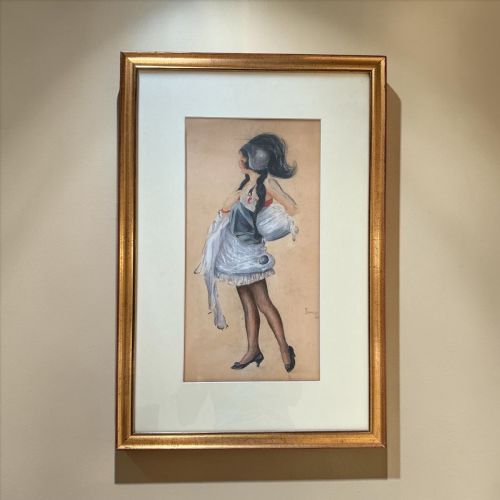
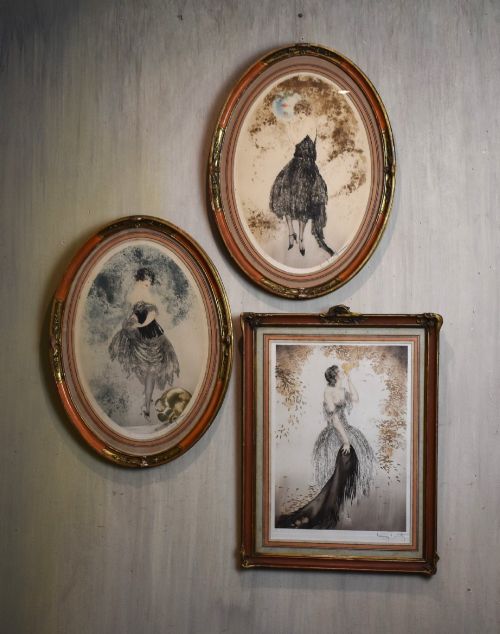
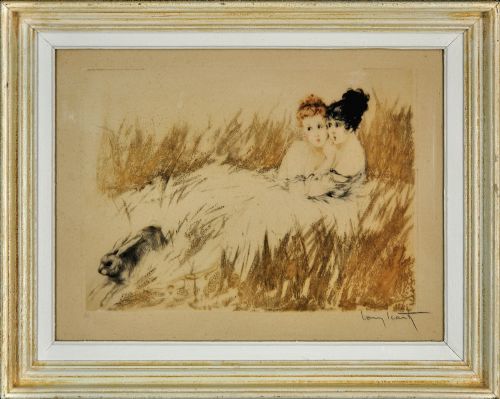
These art deco female portrait pieces capture the distinctive style of the era through striking depictions of women.
What these pieces are
An art deco female portrait brings the quintessential modernist aesthetic of the early twentieth century into a room, capturing women in oils, watercolour, and miniature form. These works emerge from the nineteen tens, twenties, and thirties, reflecting the artistic currents of French and English studios.
Buyers encounter oil paintings on canvas, delicate watercolours, and hand-painted miniatures framed in wood, gilt moulding, and brass. The subjects range from Parisian bohemian models and sunbathing figures to stage personalities and flapper women.
The selection on this page leans toward French art deco and School of Paris aesthetics, featuring framed canvases and drawings that document the liberated social attitudes of the interwar period.
How they were made
Artists painted these works using oil paint on canvas and watercolours on paper, applying pigments to capture the likeness and mood of their sitters. Miniature portraits required meticulous brushwork on small surfaces, often set within protective glass and brass surrounds.
Framing forms an integral part of the physical object, utilising carved wood and gilt moulding to finish the piece. Materials such as brass hardware secure the miniature portraits and protect the delicate media within.
Retail Price Guide 2026
Typical UK retail prices for art deco female portrait, calculated from the Sellingantiques database of over a million retail prices indexed since 2003. This retail price guide relies exclusively on Sellingantiques data; no external sources or auction records are used, so the figures do not describe the wider market.
Listings feature works spanning three decades from nineteen ten to nineteen thirty, utilising oil paint, watercolour, glass, and brass.
What varies in quality
The distinction between standard works and exceptional examples lies in the confidence of the brushwork and the expressive capture of the sitter's personality. Masterful handling of oil paint or watercolour creates depth and character that lesser works miss.
The quality of the framing and mounting, from original gilt moulding to bespoke brass settings, contributes to the overall integrity of the piece. Provenance and attribution to documented artists elevate the historical and aesthetic standing of a portrait.
Susie Lassam RMS RA·Raymond Moritz·Leo Klin
The Art Deco Female Portrait Glossary
- Miniature portrait
- A small-scale painting executed with fine detail, often featuring a specific individual. These works required high technical skill due to their restricted size.
- School of Paris
- A term describing the community of foreign and local artists residing in Paris during the early twentieth century. It denotes a stylistic melting pot of modernist approaches.
- Gilt moulding
- Decorative wooden framing coated with a thin layer of gold leaf or metallic paint. This finish enhances the visual boundary of the artwork.
- Flapper
- A descriptor for fashionable young western women in the nineteen twenties who embraced modern styles. Portraits capturing this archetype reflect the social shifts of the decade.
- Provenance
- The documented history of ownership of an art object. A clear record helps establish authenticity and historical context.
Frequently Asked Questions
What periods do these portraits cover?
The available works span the nineteen tens, twenties, and thirties, aligning with the rise of the art deco movement and modernist European art.
This timeframe captures shifts in portraiture from early twentieth-century conventions to the bold, liberated aesthetics of the interwar years.
How were miniature portraits displayed?
Miniature portraits were typically created on a small scale to be held, carried, or hung in intimate domestic spaces. They often feature protective glass and decorative brass surrounds.
These compact formats allowed sitters and owners to keep personal likenesses close at hand during travel or within private rooms.
What materials are used in these frames?
Frames and enclosures incorporate traditional materials such as carved wood, gilt moulding, and brass hardware. These elements complement the paintings and protect the canvas or paper.
Original frames provide context regarding how the artwork was presented during the period of its creation.
Are these works signed by artists?
Some portraits feature signatures or documentation linking them to named painters and miniaturists from English and French artistic circles. Other pieces represent the broader output of the School of Paris without explicit attribution.
Signed works often connect to exhibited artists and specific regional movements of the early twentieth century.