


French Marquetry Tier Stand
A french marquetry tier stand brings tiered display surfaces and intricate floral wood veneers together in furniture dating from the nineteenth and early twentieth centuries.
French Marquetry Tier Stand
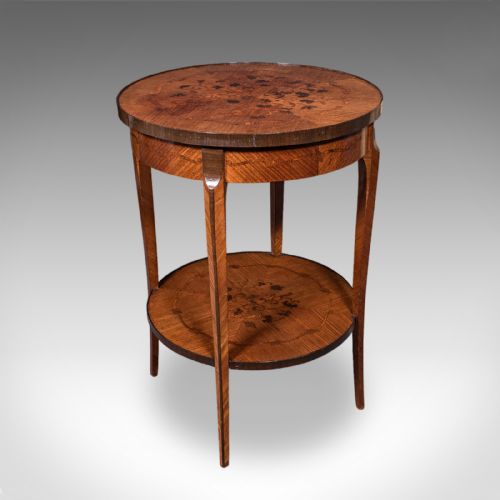
When you search for a french marquetry tier stand, you encounter multi-tiered display furniture built in the French taste during the nineteenth and early twentieth centuries. These pieces function as etageres, occasional tables, and whatnots, providing stacked platforms for holding ornaments, lamps, and planters. Most examples span the Victorian and Edwardian eras, referencing earlier Louis styles through decorative veneers and gilt metal mounts.
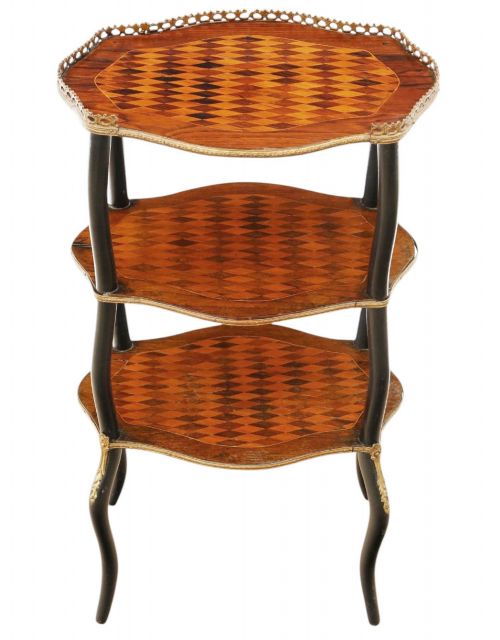
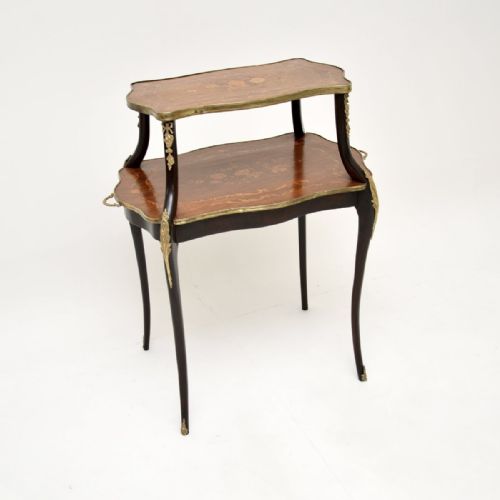
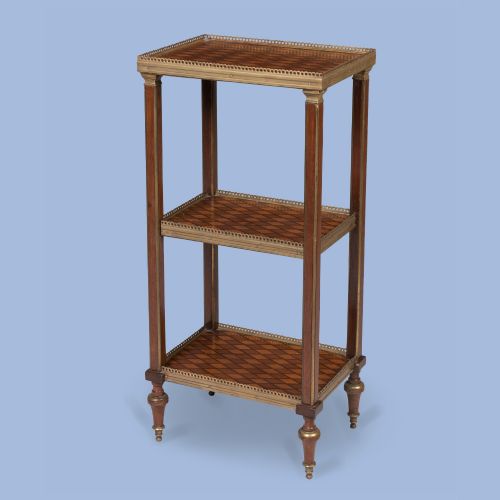
The format typically involves two or three open tiers supported by slender uprights, often finished with a raised brass or gilt metal gallery around the edges. Woods such as kingwood, rosewood, walnut, and mahogany form the carcass, decorated with patterned wood inlay across the top and shelves. Such tables appear frequently in nineteenth century varieties that emphasise display utility over heavy storage.
Materials and construction
Cabinetmakers constructed these stands using dense timbers such as mahogany, walnut, kingwood, and rosewood, often applying contrasting satinwood or ebonised wood for detail. The distinct decorative surfaces utilise marquetry and parquetry, cutting fine wood veneers into floral patterns or geometric shapes and laying them onto the structural base. Brass and ormolu mounts edge the platforms, while gilt metal accents highlight the vertical supports and corners.
Joinery focused on lightweight stability to support multiple open shelves without bulk, resulting in delicate corner posts and tiered platforms secured by brass fixtures. Ormolu mounts were cast and chased before being affixed to corners and feet, protecting vulnerable veneer edges while adding metallic contrast. Surface finishing relied on traditional French polishing to seal the timber and bring out the grain variations of the inlaid woods.
Tiered formats span etageres, occasional tables, and whatnots equipped with two or three display levels.
Defining quality
Quality rests upon the precision of the wood inlay and the selection of timber veneers utilised across the tiers. Superior examples display crisp floral marquetry using contrasting natural woods without excessive reliance on ink or stain to create shading. The refinement of the brass and ormolu mounts also separates standard production from finer cabinetmaking.
The weight and gauge of the gallery edging and the structural integrity of the tiered uprights indicate the standard of construction. Pieces retaining their original cast mounts and balanced proportions across every tier demonstrate greater integrity than later adaptations or heavily restored variants.
Edwards & Roberts·Donald Ross
The French Marquetry Tier Stand Glossary
- Marquetry
- Decorative veneer work forming pictures or patterns by arranging small pieces of wood, shell, or ivory onto a structural carcass. This technique allows intricate floral and scroll designs to cover flat table surfaces.
- Etagere
- A piece of furniture consisting of a set of open shelves for displaying small objects or ornaments. These usually feature two or three tiers supported on slender upright posts.
- Ormolu
- Gilt bronze mounts applied to furniture edges, feet, and corners for decoration and protection. The process involves coating cast bronze with a layer of gold amalgam.
- Parquetry
- Geometric mosaic woodwork used for floors and furniture tops, formed from small rectangular or triangular wooden blocks. It differs from marquetry through its strict geometric repetition.
- Galleried
- A raised metal or wooden rim running along the edge of a shelf or tabletop to prevent items from sliding off. These appear frequently in brass on French display stands.
French Marquetry Tier Stand: Frequently Asked Questions
What is a french marquetry tier stand used for?
These pieces serve primarily as display furniture for holding small decorative objects, lamps, or table plants across multiple levels. Their tiered design provides elevated surfaces for ornamental items in reception rooms and parlours.
Historically, they occupied prominent spaces where homeowners could showcase porcelain, silver, and small curiosities. Today, they function in the same capacity, fitting neatly beside seating areas or against walls.
How do I date a french marquetry tier stand?
Dating relies on examining the timber construction, the style of the marquetry, and the manufacturing techniques visible in the joints and mounts. Pieces from the mid nineteenth century often reflect Napoleon III or Victorian interpretations of earlier French revivals.
Later Edwardian examples frequently show lighter wood choices and simplified ormolu casting. Comparing the secondary timbers beneath the veneer helps confirm the nineteenth or early twentieth century timeframe.
Where should I place a tier stand at home?
A tier stand suits corners, open wall spaces, or positions beside low seating where the top and lower shelves remain visible. Their narrow profile allows them to fit into tighter areas than standard bulky tables.
Keep them away from direct sunlight and sudden heat sources to protect the delicate wood veneers and prevent the marquetry from lifting over time.