





French Marquetry Plant Stand
When you search for a french marquetry plant stand, you are looking at ornamental tables and jardinieres designed to bring greenery inside.
How They Were Made
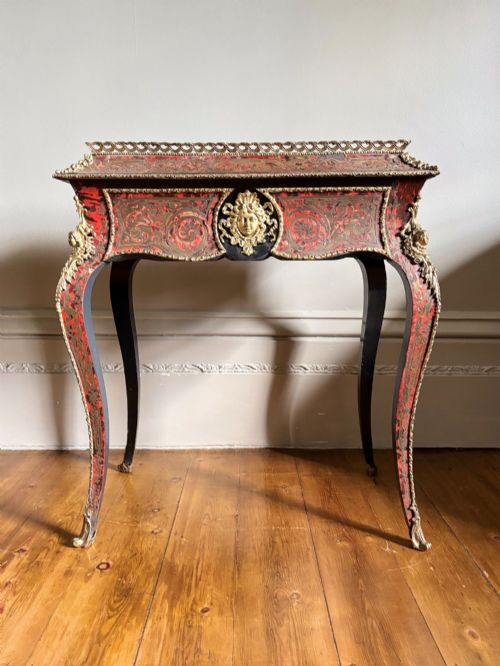
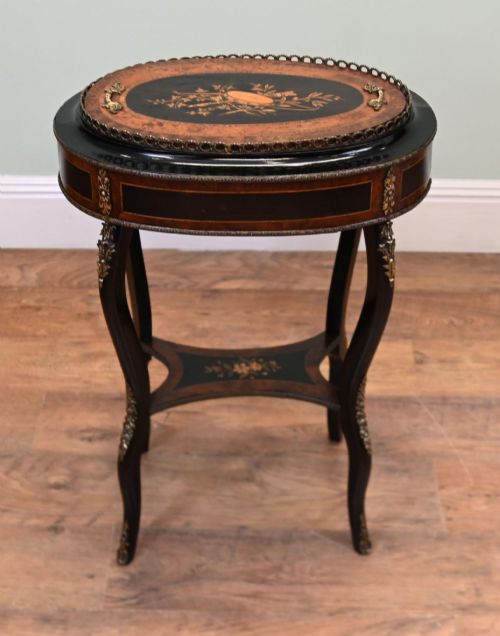
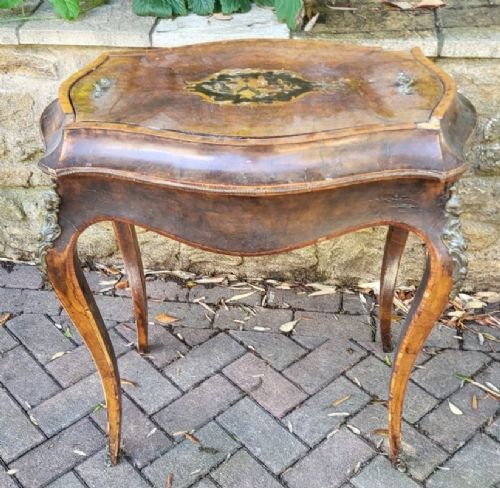
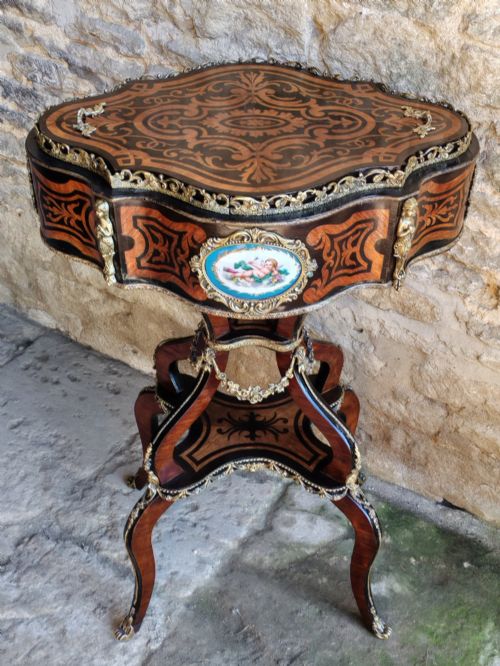
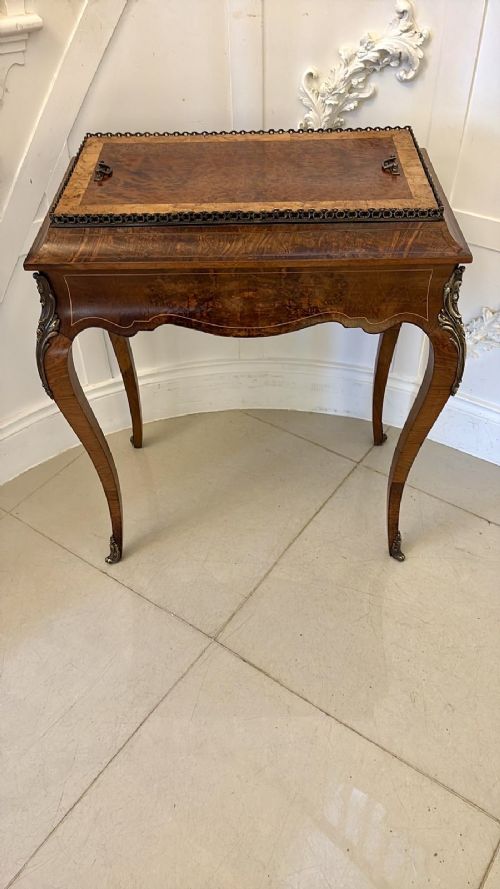
Cabinet-makers built the carcasses using dense timbers such as walnut, burr walnut, kingwood, rosewood, and ebonised wood, overlaid with intricate marquetry and parquetry patterns. This wooden foundation provided a stable base for detailed veneer work and pictorial inlay.
Gilt metal, brass, and ormolu mounts were applied to edges, legs, and galleries to protect the timber and accentuate the curved contours. Porcelain plaques and liners added colour and functional water resistance to the upper sections.
What Varies in Quality
The refinement of the marquetry cutting and the choice of timbers dictate the upper tier of these pieces. Dense burr walnut and carefully selected kingwood combined with finely chased ormolu distinguish superior examples from simpler production.
Structural harmony between the wooden stand and its metal or porcelain additions determines the overall success of the piece. Well-integrated mounts and balanced proportions show the hand of a skilled workshop rather than standard mass fabrication.
French Marquetry Plant Stand Retail Price Guide 2026
Typical asking prices for french marquetry plant stand among the pieces listed under this phrase on Sellingantiques today, from the lower quarter to the upper quarter. They describe what is for sale here now, not the wider market.
The listings on this site demonstrate a strong presence of nineteenth-century walnut and burr walnut pieces featuring ormolu mounts.
Donald Ross
The French Marquetry Plant Stand Glossary
- Marquetry
- Decorative veneer work arranged in pictorial or geometric patterns across a wooden surface. Craftsmen cut thin slices of contrasting wood to form intricate designs.
- Jardiniere
- An ornamental stand or container designed to hold plants or flowers. These vessels often feature metal liners to protect the surrounding woodwork from moisture.
- Ormolu
- Gilt bronze mounts applied to furniture for decoration and edge protection. The technique involves treating metal with a gold amalgam.
- Etagere
- A set of open shelves for displaying small objects or plants. These tiered stands allow for multi-level arrangement in a room.
- Parquetry
- Geometric wood inlay forming repeating patterns such as cubes or chequers. It differs from marquetry by using strict geometric arrangements rather than figurative pictures.
French Marquetry Plant Stand: Frequently Asked Questions
How were french marquetry plant stands used?
These stands functioned as decorative holders for potted plants and floral arrangements within nineteenth-century reception rooms. The inner metal liners protected the delicate wood veneers from water damage during daily maintenance.
Beyond holding plants, many designs doubled as occasional tables or wine coolers. Their tiered shelves and display surfaces allowed owners to exhibit porcelain and small ornaments alongside greenery.
What woods appear on these stands?
Walnut and burr walnut form the primary wooden structures for a large portion of these pieces. Kingwood, rosewood, and ebonised wood also appear frequently in the listings.
Inlays incorporate various contrasting timbers to create floral and geometric marquetry patterns. Brass and ormolu framing often surrounds these wooden panels.
How do I identify the period?
Nineteenth-century pieces often display revival styles such as Louis XV, Louis XVI, and Napoleon III. Characteristic details include gilt metal mounts, curved legs, and elaborate floral marquetry.
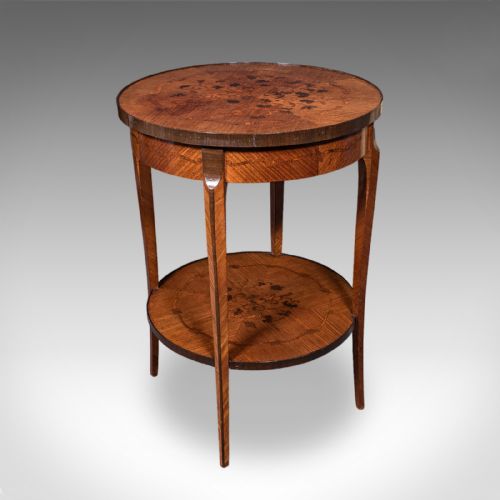
Victorian examples frequently utilise burr walnut and feature lift-off lids or tiered shelving. Edwardian and later twentieth-century iterations tend towards lighter two-tier occasional formats.
Where should I place a plant stand?
These stands suit drawing rooms, hallways, and studies where natural light complements indoor foliage. Their finished marquetry allows them to sit centrally or against walls.
Care should be taken to protect antique wood and veneer from direct sunlight and excessive moisture. Using a suitable inner container prevents water from reaching the historic timber.