


French Marquetry Pedestal
A French marquetry pedestal brings warmth and intricate timber detail to a room, offering a decorative surface rooted in 19th-century cabinet-making.
French Marquetry Pedestal
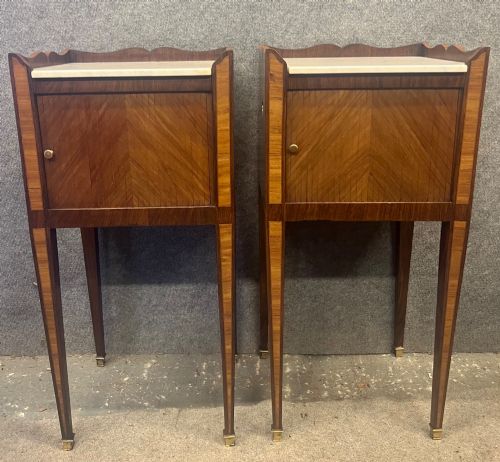
A french marquetry pedestal and related occasional furniture represent centuries of continental woodworking traditions, spanning the 19th century through to the early decades of the 20th century. Buyers seeking this phrase encounter a variety of forms including bedside cabinets, lampstands, centre tables, and tall jardiniere stands rather than single-use columns alone.
The aesthetic leans heavily towards historic revival movements, with Louis XV and Louis XVI styles dominating the selection alongside Victorian interpretations. These items function as focal points in a room, designed to hold lamps, clocks, or planters while displaying complex patterned wood surfaces.
What varies in quality
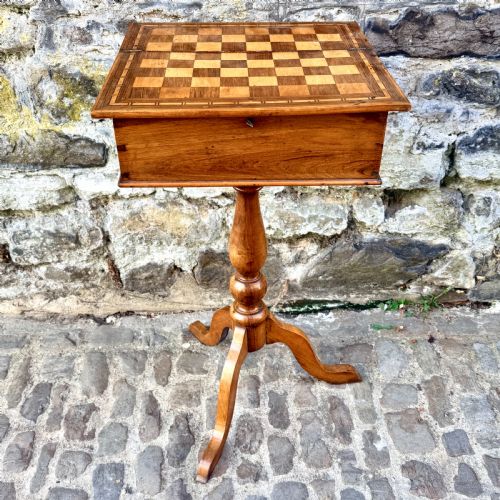
The distinction between standard and exceptional pieces rests upon the precision of the veneer cutting and the complexity of the timber selection. Finer examples display tight, seamless geometric parquetry or elaborate floral marquetry where individual grain directions catch the light.
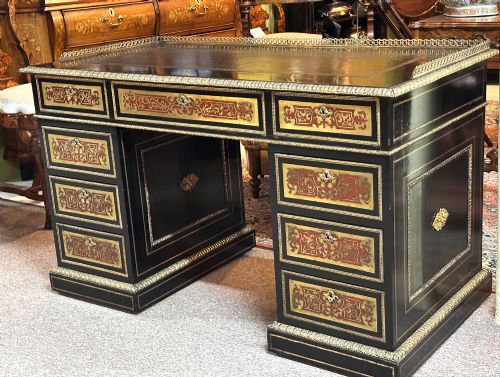
Quality is further demonstrated in the weight and detailing of the ormolu mounts, where hand-chased brass and gilt metal elements show crisp definition rather than soft, mass-produced casting. The choice of secondary timbers and the integrity of the underlying carcase construction dictate the longevity of each cabinet or table.
Listings feature 19th-century pieces alongside early 20th-century works, utilising materials including kingwood, tortoiseshell, marble, and ormolu.
A Hugnet Paris·Gillows
The French Marquetry Pedestal Glossary
- Marquetry
- The art of applying small pieces of veneer to a structure to form decorative patterns or pictures. This technique allows cabinet-makers to utilise contrasting woods and metals.
- Ormolu
- Gilt bronze mounts applied to furniture for decorative and protective purposes. These metal elements are typically cast and finished by hand.
- Kingwood
- A dense, richly figured timber often used in high-end French cabinet-making. Its dark grain provides strong contrast in geometric designs.
- Boulle work
- A form of marquetry employing tortoiseshell and brass inlay developed in France. It creates a shimmering metallic effect across the surface.
- Gueridon
- A small round occasional table supported by a central column or legs. These tables frequently feature inlaid tops and gilt metal mounts.
French Marquetry Pedestal: Frequently Asked Questions
How do I clean marquetry surfaces?
Dust surfaces gently with a soft, dry cloth to prevent accumulation in the fine veneer joints. Avoid using harsh chemical sprays or excessive moisture which can damage old timber.
Apply a traditional beeswax polish occasionally to nourish the wood and maintain a natural sheen. Buff the surface lightly after application to protect the delicate inlay work.
Where should I place a pedestal?
Position pedestals and lampstands in corners or beside seating areas where their detailed timber work remains visible. Ensure they sit away from direct heat sources to prevent the wood veneers from drying out.
Keep them out of direct sunlight to prevent fading in the coloured timbers like kingwood and satinwood. A stable environment preserves both the wooden carcase and any applied ormolu mounts.
How do I identify Louis XVI style?
Look for straighter structural lines, symmetrical geometric patterns, and classical motifs such as fluting and laurel wreaths. This style generally moves away from the asymmetrical curves typical of earlier periods.
Parks of parquetry and subtle ormolu mounts are common characteristics. The overall impression is one of restrained elegance and balanced proportions.