




French Marquetry Curio Cabinet
A French marquetry curio cabinet brings together patterned wood veneers and glass display space, offering a refined setting for cherished objects.
French Marquetry Curio Cabinet
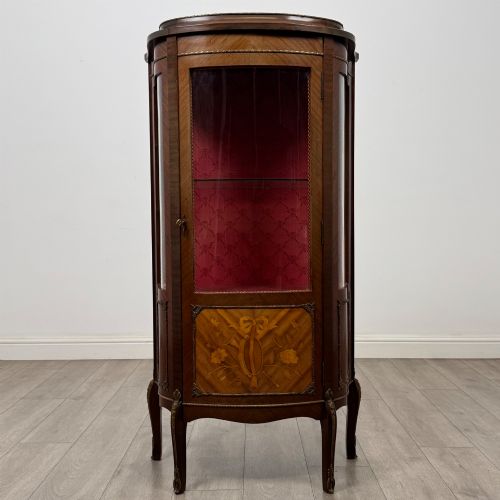
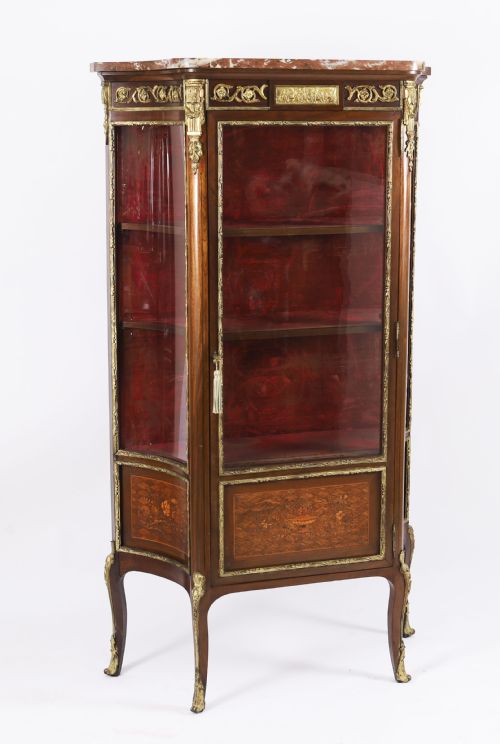
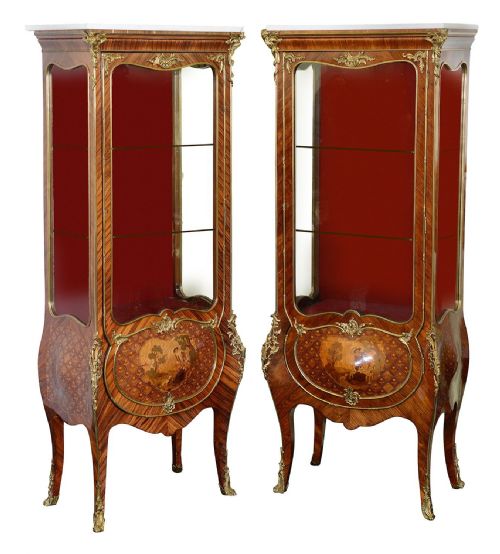
A French marquetry curio cabinet functions primarily as a vitrine or display cabinet for housing porcelain, miniatures and small treasures behind glazed doors and side panels. These pieces commonly emerge from nineteenth-century workshops, drawing heavily upon Louis XV and Louis XVI revivals as well as Edwardian interpretations.
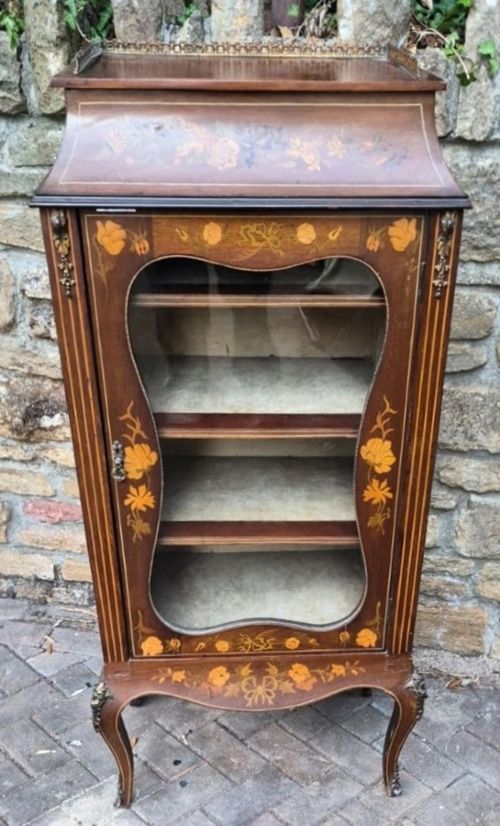
The dominant forms span serpentine and bombé profiles, alongside standing cabinets and corner units finished with parquetry or pictorial floral inlay. Walnut, mahogany and kingwood serve as the main carcase timbers, frequently shaped with gentle curves that echo eighteenth-century prototypes.
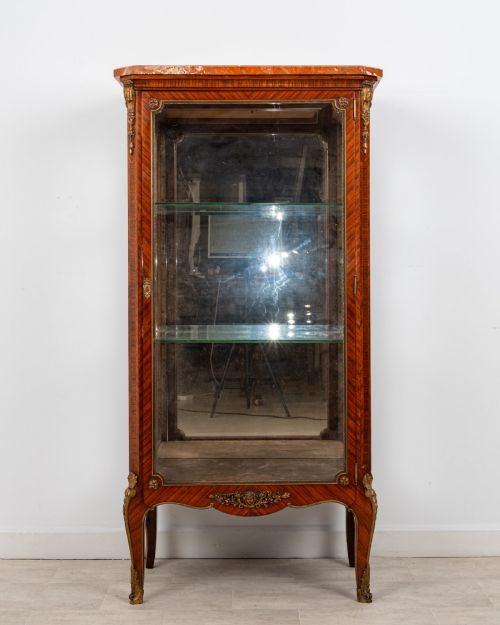
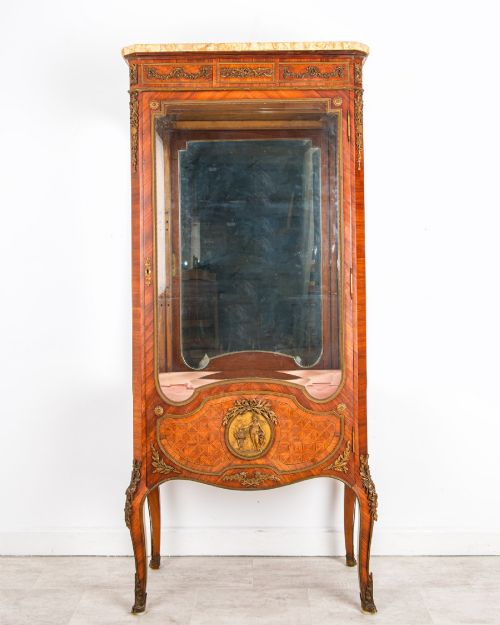
Makers working in these historical styles produced vitrines mounted with gilt-metal or ormolu details, often topped with shaped marble slabs. Buyers encountering this selection will find pieces ranging from intimate single-door cabinets to larger imposing display furniture.
Materials and construction methods
Cabinet makers built the foundational carcase using timbers such as mahogany, walnut and oak, onto which they applied finely sliced veneers of kingwood and other exotic woods. Individual pieces of contrasting timber were cut and fitted by hand to create intricate marquetry and geometric parquetry patterns across the doors and panels.
Gilt bronze or ormolu mounts were cast and chased separately before being fixed to corners, feet and framing edges to accentuate the curved contours of the cabinet. Marble tops, cut and polished to fit the serpentine or bombé profiles, were then set onto the upper surface.
Glazing bars divided the glass panels of the doors and sides, holding the panes securely within timber rebates while maintaining clear sightlines into the interior display space, which was frequently lined with fabric.
Listings feature pieces spanning the Victorian and Edwardian eras, alongside specific dates from 1860 through 1910.
Distinctions in craftsmanship
The standard of a French marquetry curio cabinet rests heavily on the precision of the veneer work and the crispness of the cast ormolu mounts. Finer examples display seamless alignment in their floral marquetry and tight joints where curved mouldings meet.
Master makers and prominent workshops incorporated heavier, more deeply chased gilt-bronze mounts and selected superior marbles for the upper surface. The fluidity of the serpentine or bombé shaping and the subtlety of the timber shading further separate standard production pieces from exceptional items.
François Linke·G. Durand
The French Marquetry Curio Cabinet Glossary
- Marquetry
- The art of applying decorative veneer pieces to a structure to form pictorial or geometric designs. This technique relies on contrasting wood colours and grains.
- Ormolu
- Gilded bronze used widely for ornamental mounts on nineteenth-century furniture. The metal is cast and then finished with mercury gilding or modern electroplating.
- Vitrine
- A glass-fronted display cabinet designed for exhibiting ceramics and decorative objects. These glazed enclosures protect contents from dust while allowing all-round visibility.
- Bombe
- A swollen or bulging outward curve found on the front and sides of furniture carcases. This profile requires skilled veneer shaping to follow the undulating contours.
- Parquetry
- Geometric wood inlay forming repetitive patterns such as cubes, chequers or lozenges. It provides a structured contrast to pictorial marquetry flowers.
French Marquetry Curio Cabinet: Frequently Asked Questions
How do I clean the glass and ormolu?
Use a soft, dry cloth to remove dust from both the glass panels and the gilded bronze mounts without introducing moisture that could damage the timber or fabric lining.
Avoid abrasive household cleaners entirely, as harsh chemicals will strip the gilt finish from the metal mounts and scratch the antique glass surfaces.
Where should I place a vitrine?
Position the cabinet away from direct sunlight and strong heat sources to protect sensitive wood veneers from fading, drying out, and warping over time.
Ensure the floor surface is entirely level so the glazed doors hang true and latch correctly without straining the structural joints.
How can I tell the period?
Examine the timber construction, interior linings, and the style of the cast ormolu mounts to help determine whether a piece belongs to the nineteenth-century revival eras or the Edwardian period.
Twentieth-century revival items often blend Louis XV and XVI design elements, reflecting the ongoing popularity of French historical styles among cabinet makers.
What is inside the cabinet?
Many vitrines feature internal timber or glass shelving, frequently lined with velvet or similar fabric to cushion displayed porcelain and small ornaments.
Side panels and glazed doors allow natural light to illuminate the interior space from multiple angles, highlighting the objects kept within.