


French Marine Landscape
A french marine landscape captures the shifting light over harbours, shores and open water.
French Marine Landscape
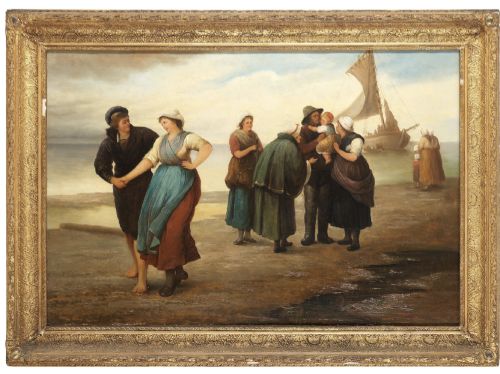
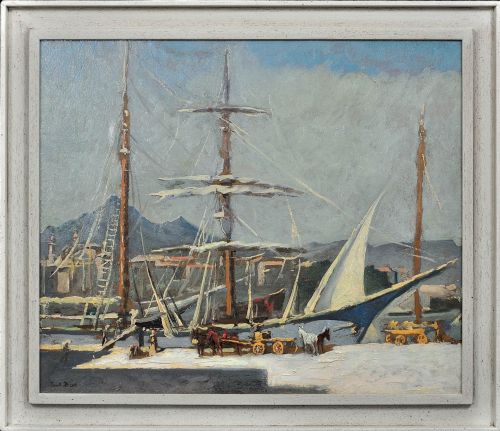
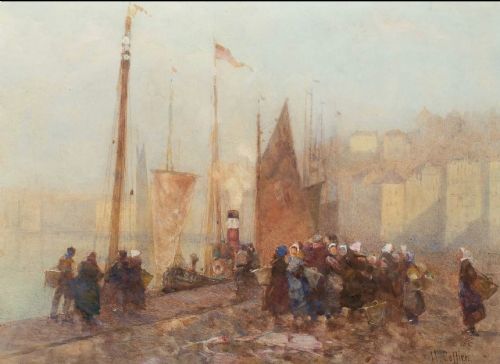
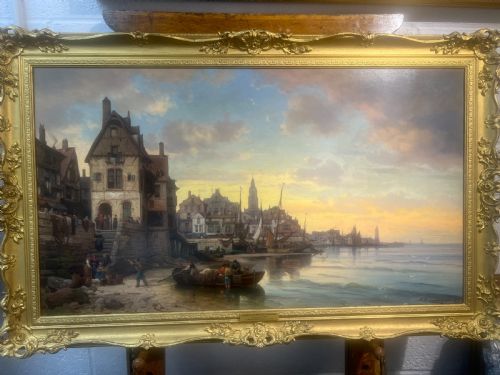
A french marine landscape brings together coastal harbours, fishing ports and open coastal vistas rendered in oil or watercolour. These works record maritime life along the shores of Normandy, Brittany and the Mediterranean Cote d'Azur.
The selections span from the nineteenth century through to mid-century modern interpretations. Works range from academic nineteenth-century school pieces to post-impressionist and twentieth-century realist visions of coastal scenes.
Materials and methods
Painters typically applied oil paint onto canvas, board or wood panels, occasionally utilising watercolour on paper. Canvases and panels sit within period wood frames that complement the maritime subject matter.
Techniques vary from academic precision to loose post-impressionist brushwork and abstract impasto. Pigments capture atmospheric coastal light, evening clouds, sunlit seas and rugged cliffs.
The listings include works executed in oil on canvas, oil on board, and watercolour from the nineteenth and twentieth centuries.
Distinguishing finer works
Superior execution shows in the confident handling of light, shade and coastal atmosphere. The best works convey a convincing sense of movement in the water and sky through assured brushwork.
Compositional strength and the integration of figures, boats and architecture elevate a piece above standard decorative views. Condition of the original paint surface and the suitability of the accompanying wood frame also contribute.
Paul Bret·Hector Caffier·Charles Kuwasseg·Louis Suire·Gustave Vidal·Raymond Picque·William Lee Hankey·Fred Pailhes·Charles Malfroy·Roger de la Corbiere·Marc Aldine·Antoine Bouvard Senior·Edward Henry Holder·Henri Ottman·Henri Cadiou
The French Marine Landscape Glossary
- Post-Impressionism
- A French art movement developing roughly from the late nineteenth century that rejected naturalistic depiction in favour of expressive forms and colour. Artists built upon impressionist foundations while exploring structural and emotional depth.
- Impressionism
- A nineteenth-century painting style focusing on the accurate depiction of light and its shifting qualities. Practitioners often worked outdoors to capture immediate visual impressions of coastal scenes.
- Impasto
- Paint applied thickly to a canvas or panel, standing out in relief from the surface. This technique allows brush or palette knife marks to retain their texture and catch the light.
- Provenance
- The chronological history of the ownership of a painting. Documented backgrounds help establish authenticity and past exhibition history.
French Marine Landscape: Frequently Asked Questions
What subjects do these marine paintings show?
These works depict harbours, fishing ports, beaches and coastal cliffs. Scenes often feature moored boats, figures returning from voyages, and bustling quaysides.
Settings range from the rugged northern shores of Brittany and Normandy to the sunlit waters of the French Riviera and the Mediterranean.
How do I date a french marine landscape?
Dating relies on stylistic shifts, clothing of figures, and documented artist working periods. Academic nineteenth-century works differ visibly from twentieth-century post-impressionist and modernist interpretations.
Frame styles and panel construction also offer clues to the era of production.
Are these works original paintings?
The listings comprise original oil paintings on canvas or board, alongside watercolours on paper. Each piece is a unique hand-painted work created by the named artist.
Signatures, brush textures, and material supports confirm their status as original fine art.
How should I display and care for these paintings?
Keep paintings away from direct sunlight, high humidity and dramatic temperature fluctuations to protect the oil paint and wood supports. Proper hanging in stable indoor environments ensures longevity.
Dust surfaces gently with a soft, dry brush and avoid liquid cleaners on the paint layer.