


French Marine Artwork
French marine artwork captures coastal scenes, harbour views and open seas through the brush of continental painters.
French Marine Artwork
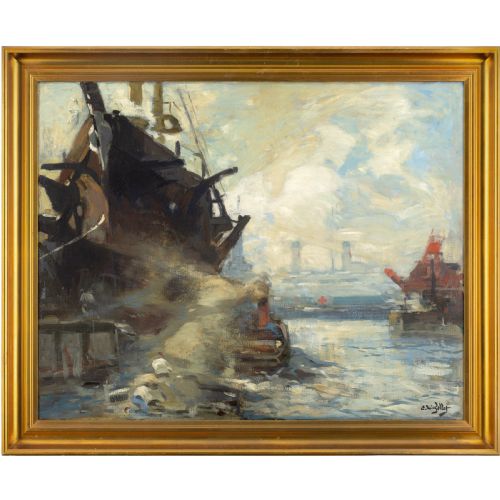
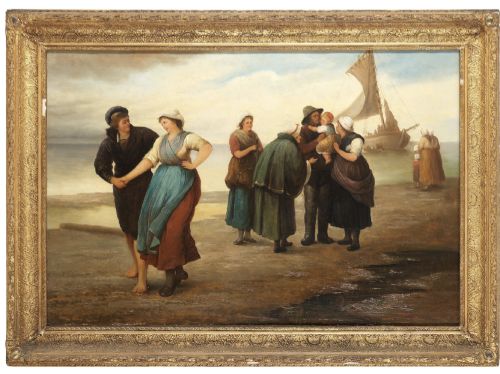
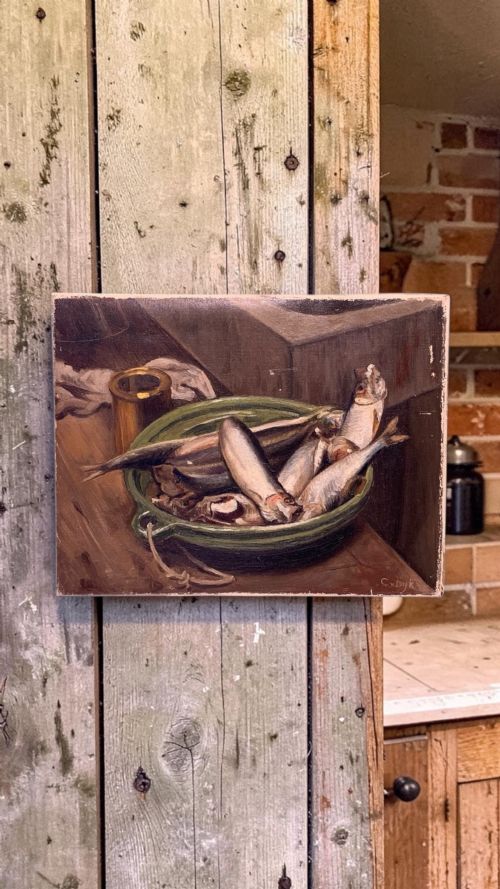
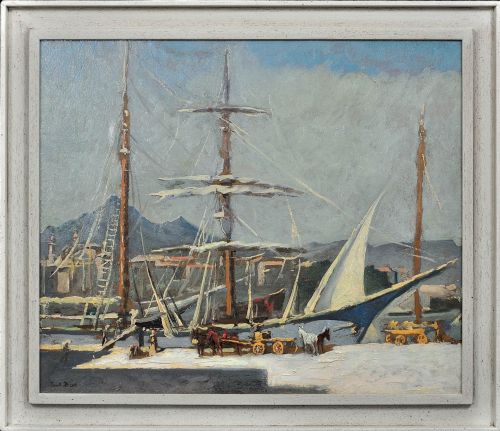
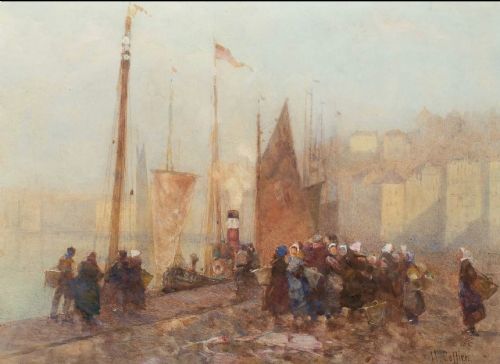
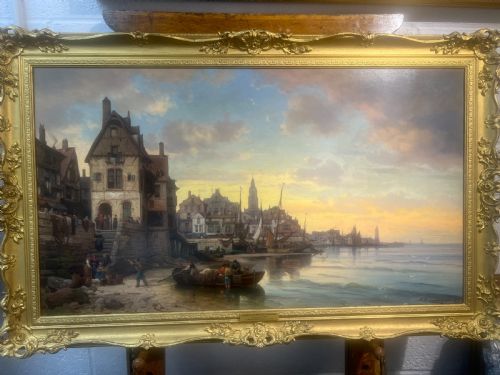
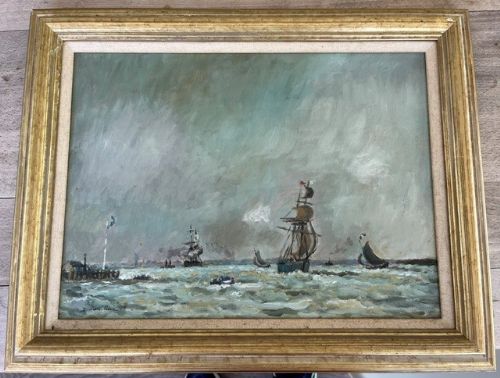
French marine artwork covers oil paintings, watercolours and gouache pieces depicting coastal towns, fishing ports, harbours and vessels at sea. These works span the nineteenth century through the mid-twentieth century, recording maritime life along the northern coasts of Normandy and Brittany as well as the southern shores of the Mediterranean.
You will encounter pieces executed in styles ranging from nineteenth-century realism and post-impressionism to twentieth-century realism and abstract impressionism. Common compositions feature sailing yachts, bustling quaysides, rocky shorelines and ironclad battleships rendered on canvas, board or paper.
Distinctions in quality
Quality in French marine artwork rests on the artist's handling of light, atmosphere and spatial depth within the coastal landscape. Stronger examples demonstrate confident brushwork, assured draughtsmanship and a clear command of colour harmony across water and sky.
The sophistication of the composition and the fidelity of the atmospheric conditions elevate certain pieces above standard topographical records. Works bearing clear signatures and documented provenance from established artists generally display greater artistic ambition.
An ironclad battleship portrait doubles as a sentimental sailor's tribute to his shipmates.
Eugène-Louis Gillot·Paul Bret·Hector Caffierii·Charles Euphraisie Kuasseg·Louis Suire·Gustave Vidal·Raymond Picque·William Lee Hankey·Fred Pailhes·Charles Malfroy·Roger de la Corbiere·Marc Aldine·Marie-Edouard Adam·Edward Henry Holder·Henri Ottman·Henri Cadiou
The French Marine Artwork Glossary
- Impasto
- Paint applied thickly to a canvas or panel so that it stands out in relief from the surface. This technique allows the artist to capture the physical texture of crashing waves or rough masonry.
- Gouache
- An opaque water-based medium that dries to a matte finish. It provides heavier coverage than traditional watercolour, lending solidity to skies and vessel hulls.
- Post-Impressionism
- A French art movement developing roughly from the late nineteenth century that rejected naturalistic depiction in favour of expressive forms and arbitrary colour. Artists used these principles to convey the emotional resonance of coastal scenes.
- Oil on Board
- A painting executed with oil colours directly onto a rigid wooden or composition board rather than stretched fabric. This substrate offers a smooth, firm resistance to the brush.
French Marine Artwork: Frequently Asked Questions
What subjects do these paintings show?
These works depict maritime and coastal subjects including fishing ports, harbours, rocky cliffs, sandy beaches and various vessels at sea. Scenes range from working quaysides in Brittany to sunlit Mediterranean shores.
Compositions often capture daily maritime activities such as unloading catches, gathering seaweed, or ships at anchor in choppy waters.
Which periods are represented?
The selection spans from the nineteenth century through the mid-twentieth century, encompassing periods from the 1860s to the 1960s. Many pieces date from the early decades of the twentieth century.
Stylistic shifts across these decades trace movements from academic realism toward impressionist and modernist interpretations of light and water.
How should I frame and display them?
Paintings on canvas or board typically suit traditional wooden frames that complement the period of the artwork. Works on paper require protective glazing and acid-free mounts to prevent environmental degradation.
Display these pieces away from direct sunlight and excessive humidity to preserve the stability of oils, watercolours and paper supports.
How do I identify different coastal regions?
Regional specifics often emerge through architectural details in harbour townscapes, the typography of titles, or distinct atmospheric lighting conditions. Northern settings like Normandy and Brittany present cooler, tidal coastal environments.
Southern locations along the Côte d'Azur or Mediterranean feature brighter light, distinct vegetation and calmer, sunlit waters.