



French Marble Desk Clock
A french marble desk clock combines heavy stone architecture with precise brass movement, anchoring a mantel or desk with distinct period character.
French Marble Desk Clock
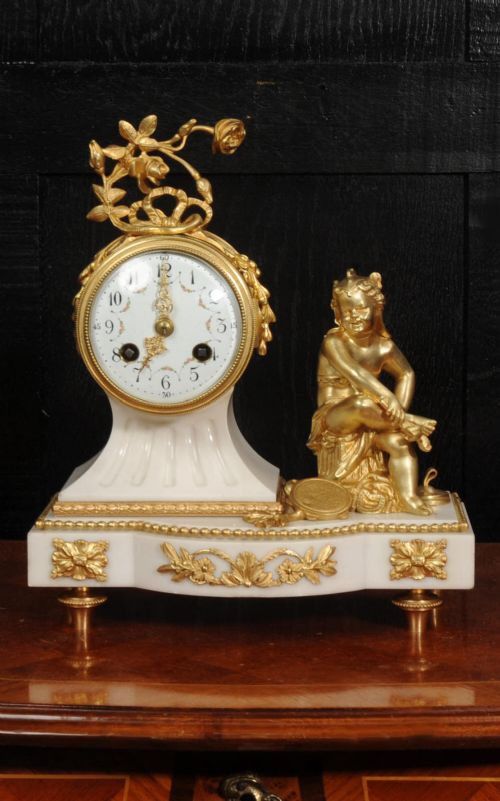
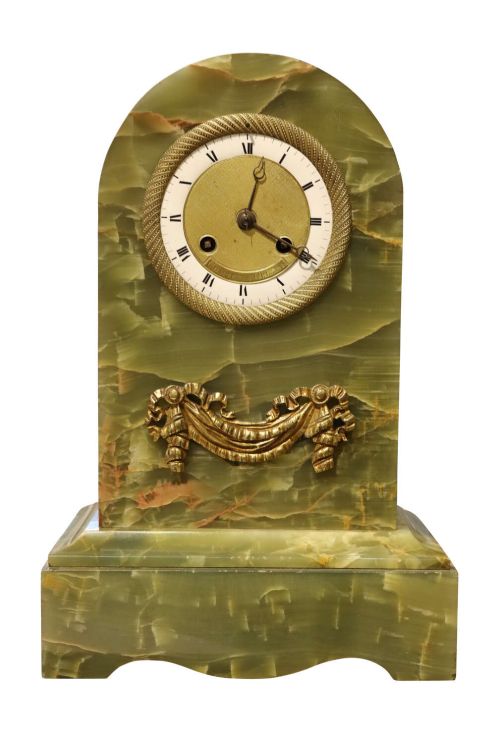
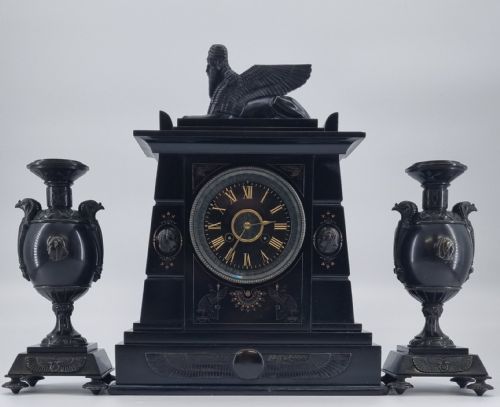
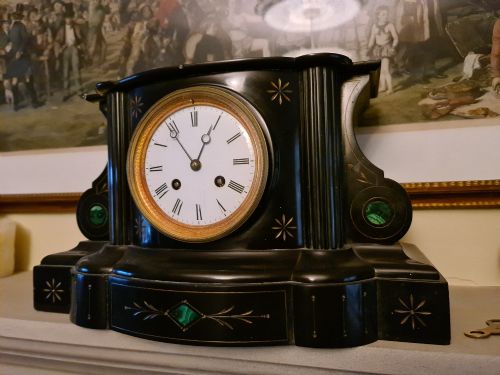
The french marble desk clock appears across the nineteenth and early twentieth centuries, spanning periods from Victorian and Second Empire to Art Deco. These pieces function as timekeepers and architectural ornaments, often appearing as heavy block forms, drumhead designs, or elaborate garniture sets accompanied by matching sidepieces. Buyers encounter variations in stone colour, including green onyx, red rouge marble, and sienna varieties, alongside contrasting metal mounts.
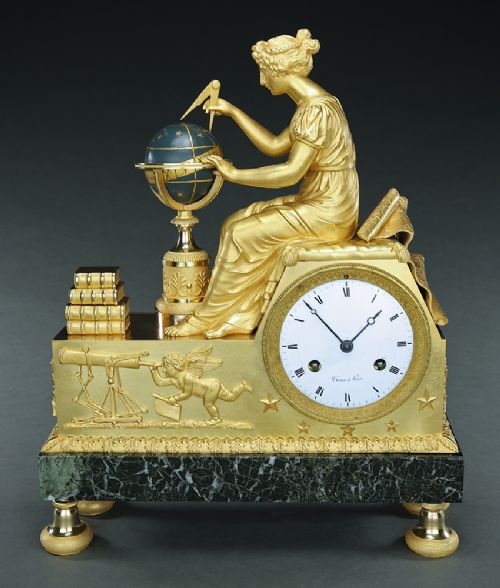
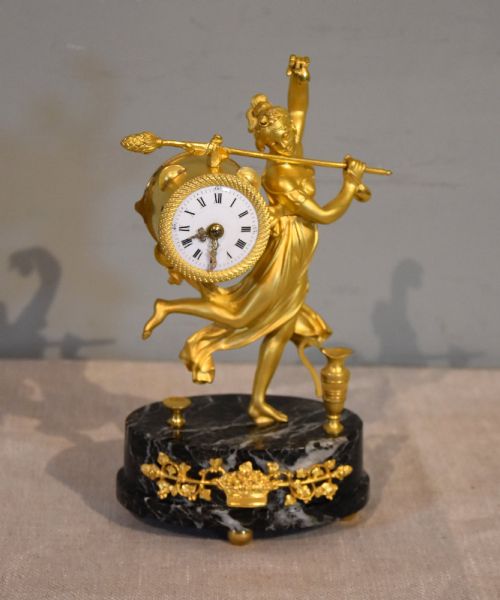
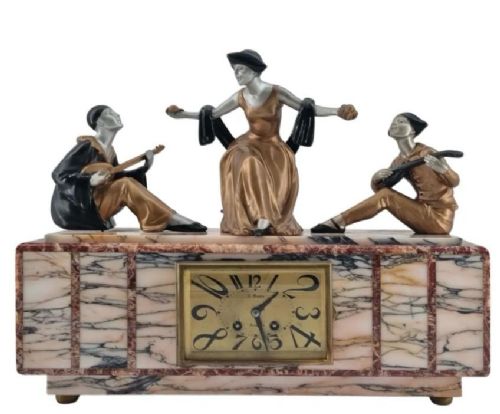
Makers and workshops across France produced these objects in diverse stylistic revivals, ranging from Louis XVI and French Empire to Egyptian Revival. While some examples take the form of simple timepieces, others incorporate calendar functions, astronomical themes, or figural sculptures such as animals and pierrots. The scale ranges from compact desk clocks to large mantel garnitures designed to dominate a room.
Assessing quality and execution
Superior examples demonstrate precision in the bronze casting and chasing, where mounts fit flush against the stone surface without gaps. The weight and selection of the marble itself dictate the standard, with richly figured sienna or green onyx marking out better pieces from plain slate.
The sophistication of the movement separates standard timepieces from complicated calendar or astronomical mechanisms. Artisans who signed their bronze mounts and clock faces delivered a higher grade of overall assembly.
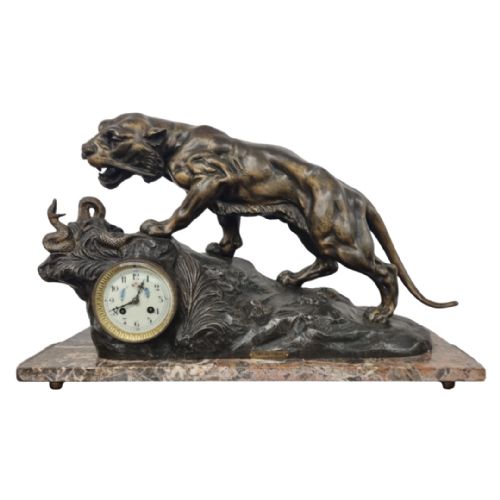
Several clocks feature unexpected creatures on top, including a tiger, a serpent, and a stallion keeping watch over the hours.
Japy Freres·Charles a Orleans·R Varnier·Louis Goret·Sacre
The French Marble Desk Clock Glossary
- Ormolu
- Gilded bronze applied to the surface of clock cases and mounts. This technique creates a rich gold-coloured finish that contrasts with dark marble.
- Garniture
- A set consisting of a central clock flanked by matching decorative sidepieces. These sets create a symmetrical display on a mantel or desk.
- Enamel dial
- A metal face covered with fused glass powder, fired to create a smooth white surface. Numerals are painted onto this durable ground.
- Drumhead clock
- A timepiece featuring a circular clock case shaped like a drum mounted upon a rectangular stone plinth. This form is common in Victorian examples.
- Sienna marble
- A yellow-brown Italian marble marked with dark veins. Clock makers utilised this decorative stone for its warm, variegated appearance.
French Marble Desk Clock: Frequently Asked Questions
How do I wind a mechanical french marble desk clock?
Insert the appropriate key into the winding arbour on the enamel dial and turn it gently until resistance is felt. Care must be taken not to overwind the mainspring.
Most mechanical movements require a weekly wind to maintain accurate timekeeping. Setting the time involves moving the minute hand forward rather than backward.
Are these clocks suitable for daily use on a desk?
These clocks function reliably as daily timekeepers provided the mechanical movement receives routine servicing and cleaning by a professional horologist. Their solid stone construction makes them stable on flat surfaces.
Placement should avoid direct sunlight and temperature fluctuations that might affect the enamel dial or lubricating oils within the gear train.
What is a clock garniture set?
A garniture comprises a central clock accompanied by a matching pair of side ornaments, such as urns or candelabra. Designed to sit together on a mantelpiece, they share identical materials and stylistic motifs.
This arrangement originated in French interior design to create visual balance across a fireplace or large piece of furniture.
How do I distinguish an Art Deco clock from a Victorian one?
Art Deco examples from the twentieth century utilise streamlined geometric forms, chrome accents, and stylised figural elements like greyhounds. Their lines reflect modern industrial design influences.
Victorian pieces lean towards heavier classical revivals, featuring elaborate bronze mounts, ornate columns, and dark slate or multi-coloured marble blocks.