


French Mahogany Occasional Table
A french mahogany occasional table brings continental polish to a room, combining rich timber with polished marble and bright metal mounts.
French Mahogany Occasional Table
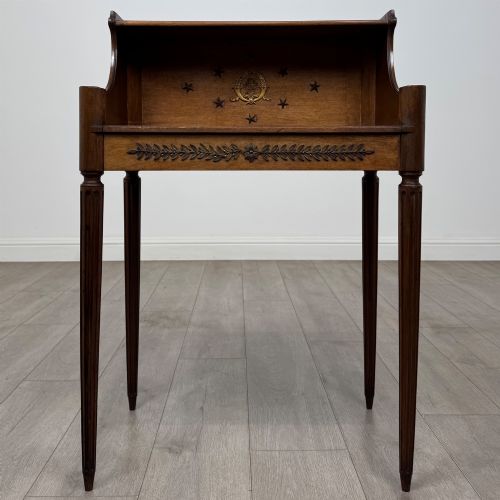
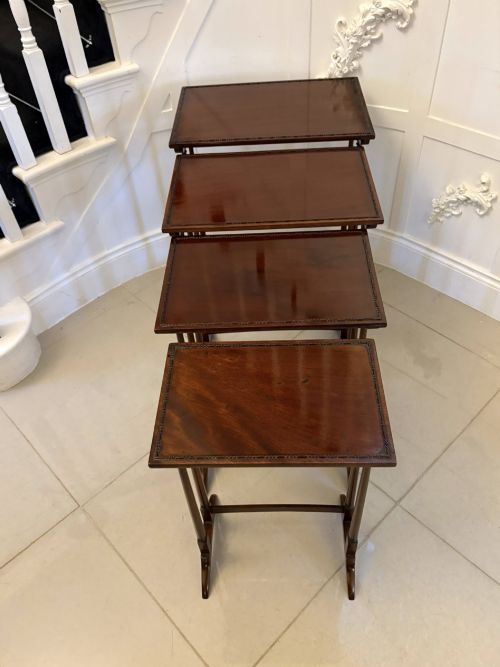
A french mahogany occasional table covers a range of compact, movable furniture pieces designed for utility and display across the nineteenth and early twentieth centuries. These pieces appear primarily as round gueridon tables, side tables, and multi-tiered étagères reflecting Louis XVI, Empire, and revival aesthetics.
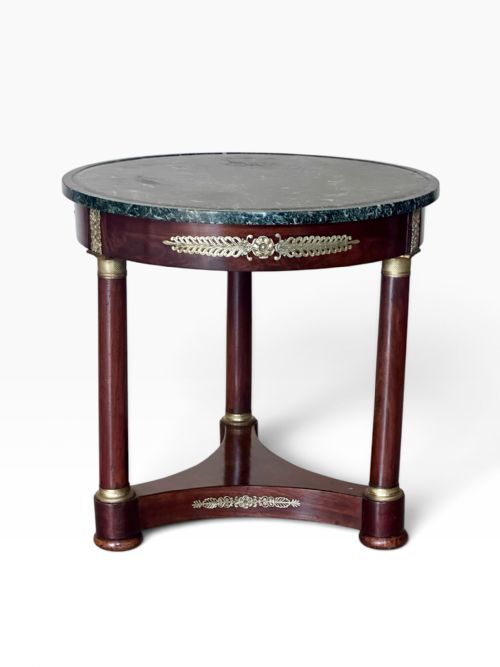
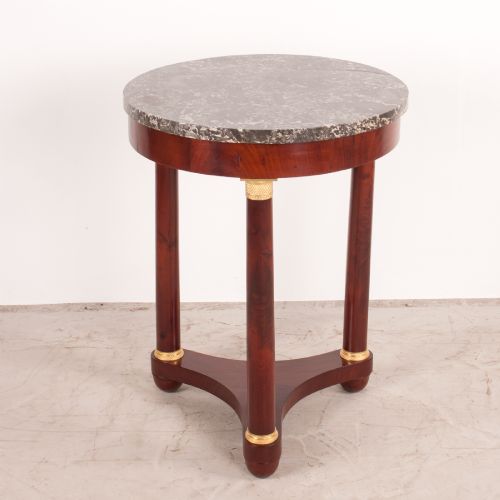
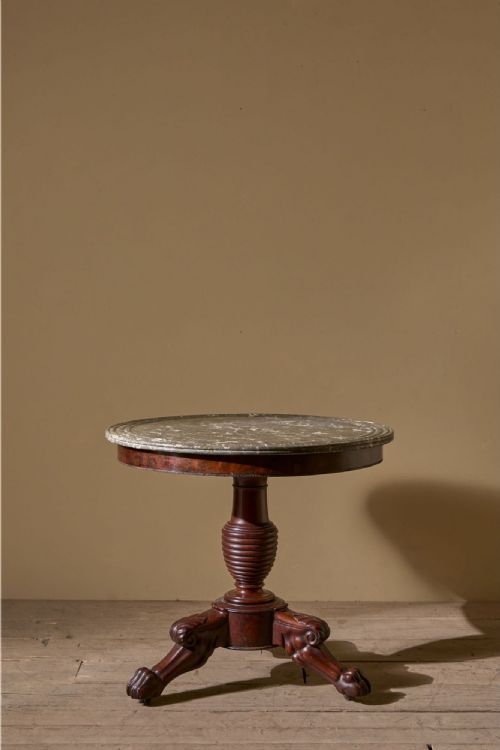
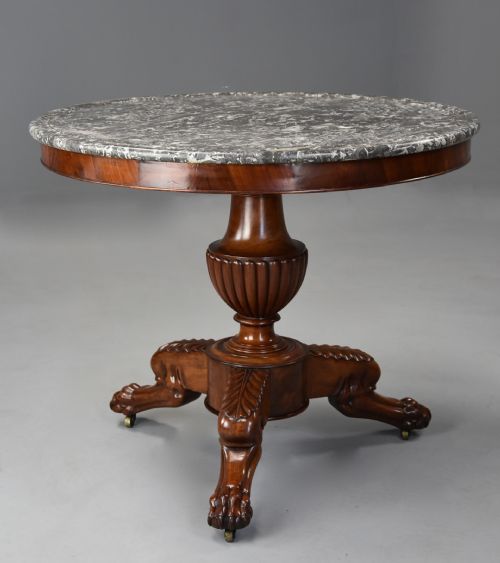
The version most commonly encountered on this page is the circular gueridon, typically supported by a central pillar or slender legs and topped with inset white, grey, or veined marble. Such tables served as tea tables, lamp stands, or decorative surfaces in period drawing rooms and salons.
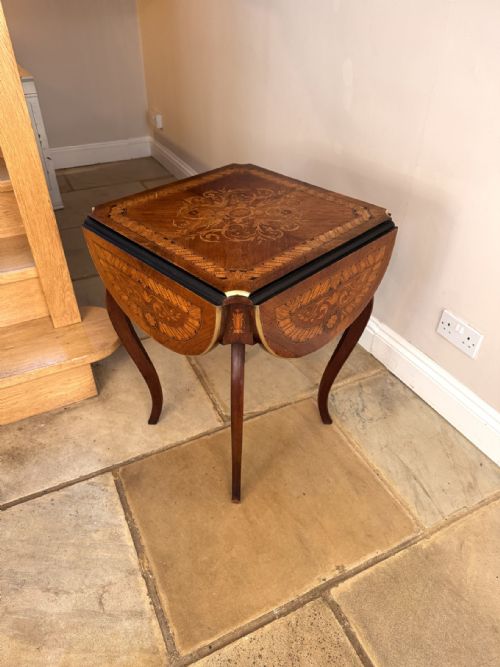
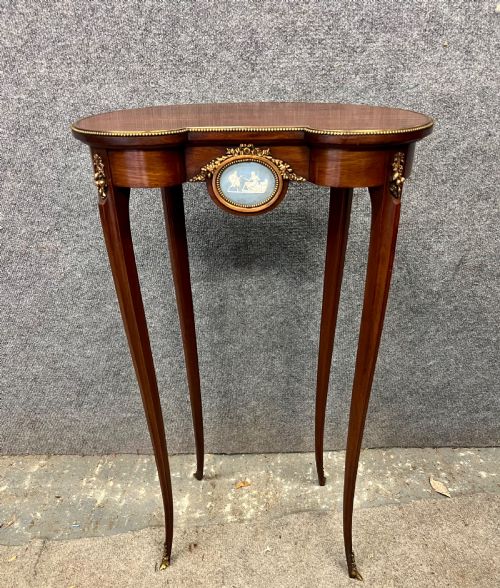
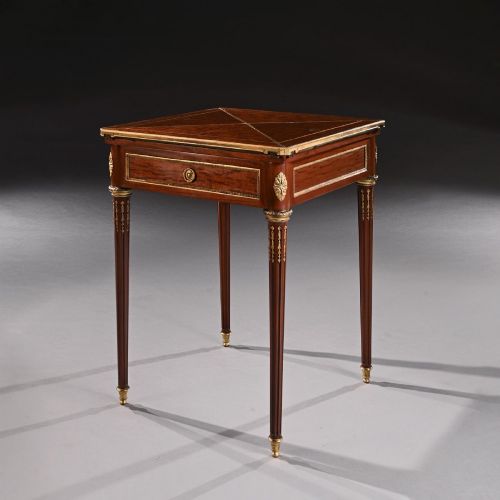
Makers and workshops adapted these forms through various decades, incorporating marquetry inlay, ormolu mounts, and drop-leaf or envelope folding mechanisms for card and game playing.
Materials and construction
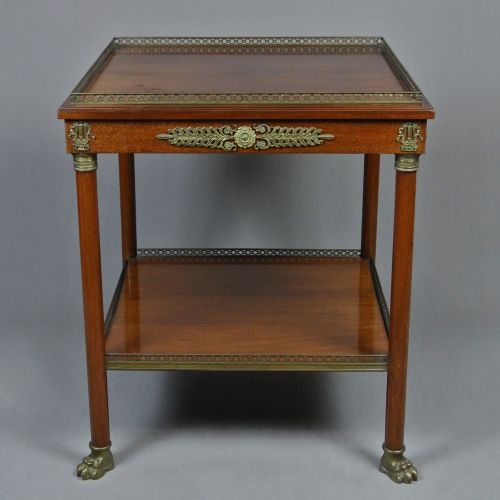
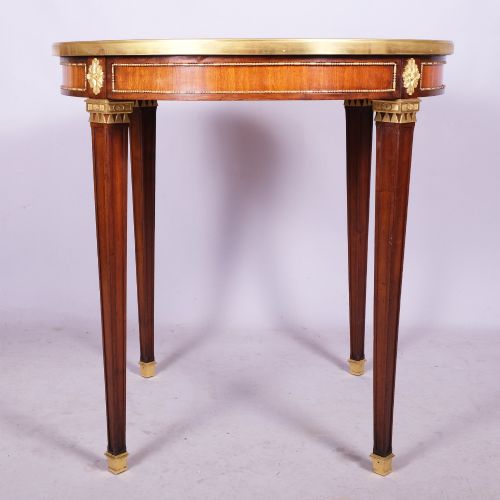
Cabinetmakers utilised solid mahogany and flame or plum pudding mahogany veneers over secondary timbers, building carcases designed to support heavy inset stone tops. Frames frequently incorporate brass stringing, satinwood marquetry, and moulded ormolu or gilt bronze mounts fixed to corners and legs.
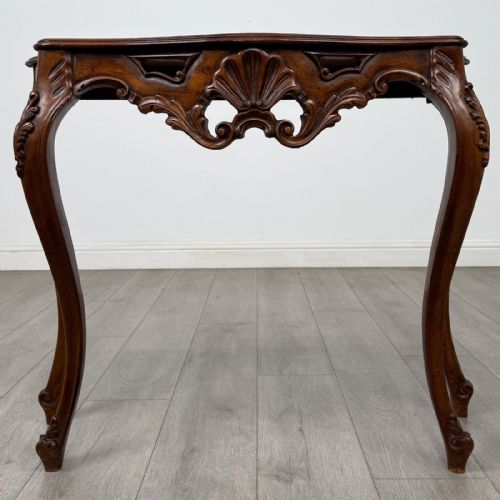
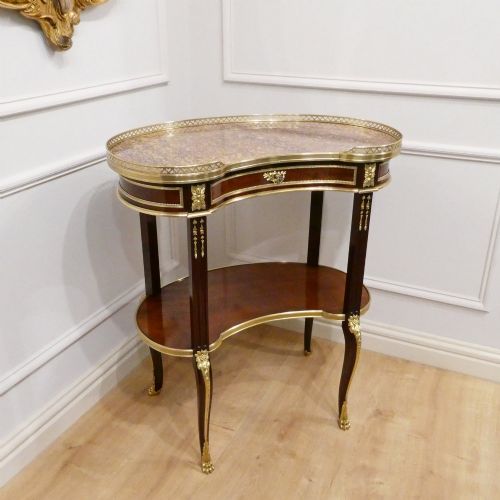
Marble tops were carefully shaped and polished to fit tight wooden rebates, often accompanied by perforated cast brass galleries that prevented items from sliding off the surface. Structural stability relied on turned central pedestals with tripod sabre legs or delicate cabriole supports terminating in brass sabots.
French Mahogany Occasional Table Retail Price Guide 2026
Typical asking prices for french mahogany occasional table among the pieces listed under this phrase on Sellingantiques today, from the lower quarter to the upper quarter. They describe what is for sale here now, not the wider market.
Some tables hide clever mechanisms that reveal velvet-lined wells for cards or tiny treasures beneath the top.
Markers of quality
Quality rests in the crispness of the cast bronze ormolu mounts and the depth of the mahogany grain selected for the top. Finer examples display hand-chiselled detailing on metal components rather than mass-produced stamped brass.
The weight and veining of the marble top, along with the precision of the joinery connecting the legs to the central column or apron, separate workshop standards. Tables bearing signatures or stamps from known makers demonstrate superior cabinetmaking and command greater attention.
Maison Millet·Antoine Lampre·François Linke·A Hugnet
The French Mahogany Occasional Table Glossary
- Gueridon
- A small French round table supported by a central pillar or columns. These versatile pieces frequently feature marble tops and brass galleries.
- Ormolu
- Gilt bronze mounts applied to furniture for decoration. The technique involves treating metal with a mercury and gold amalgam.
- Bijouterie table
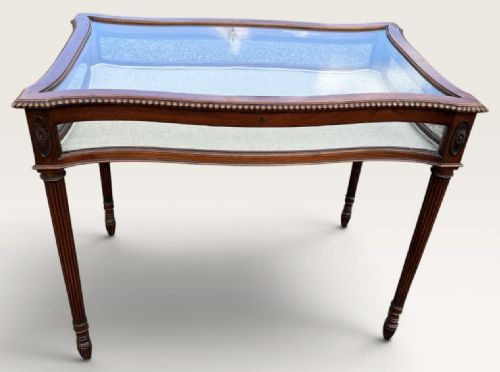
- A glass-topped display table used for showing small valuables and curiosities. They often include velvet-lined interior trays.
- Bouillotte table
- A small circular card or occasional table with a raised edge or gallery. They traditionally accompanied card games played by three or four players.
- Marquetry
- Decorative veneer work forming pictures or geometric patterns using various coloured woods. Craftsmen cut thin slices of timber to fit exact puzzle-like recesses.
French Mahogany Occasional Table: Frequently Asked Questions
What is a gueridon table?
A gueridon is a small French circular table supported by a central pillar or distinct legs. They emerged in various sizes for holding lamps, tea, or decorative items.
Most examples found today feature marble inserts and brass galleries designed to keep items secure on the polished surface.
How do I care for a marble top?
Clean marble surfaces using a soft cloth dampened with warm water and mild, pH-neutral soap. Avoid acidic cleaners, vinegar, or citrus products that etch the polished stone.
Use coasters under glasses and mats under heavy objects to prevent scratches and staining on antique marble.
Were these tables used for dining?
These occasional pieces were not intended for formal meals but rather for light refreshment, such as afternoon tea or wine. Their compact proportions made them easy to move around a drawing room as needed.
Some specialised variants included folding envelopes or game tops designed specifically for card playing and social evenings.
How do I identify the period?
Dating relies on stylistic clues, construction methods, and the specific revival movements popular at the time of manufacture. Empire pieces show neoclassical influence with heavy columns, whereas later revival items adopt lighter proportions.
Makers' signatures, stamps on the bronze mounts, or labels beneath the top often provide exact attribution to French workshops.