



French Mahogany Display Table
A french mahogany display table bridges furniture and showcase, designed to lift precious objects into the light on slender legs.

French Mahogany Display Table
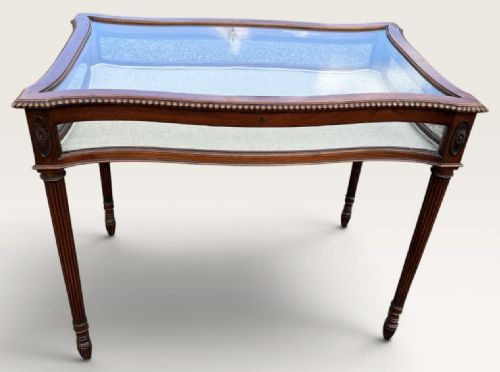
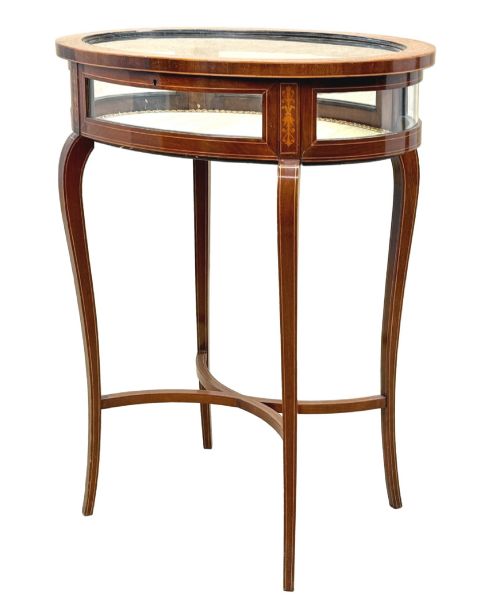
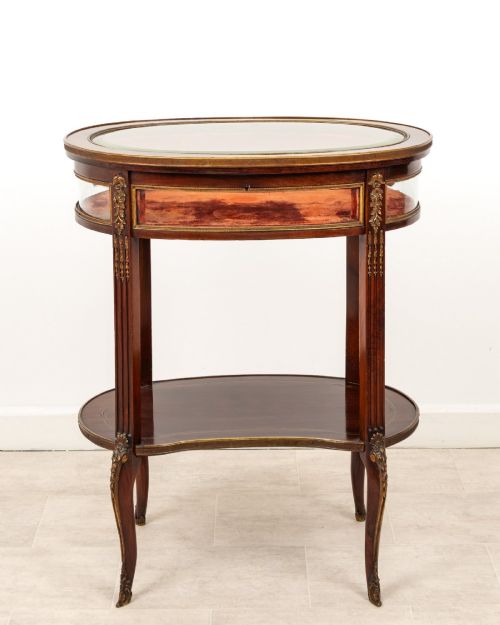
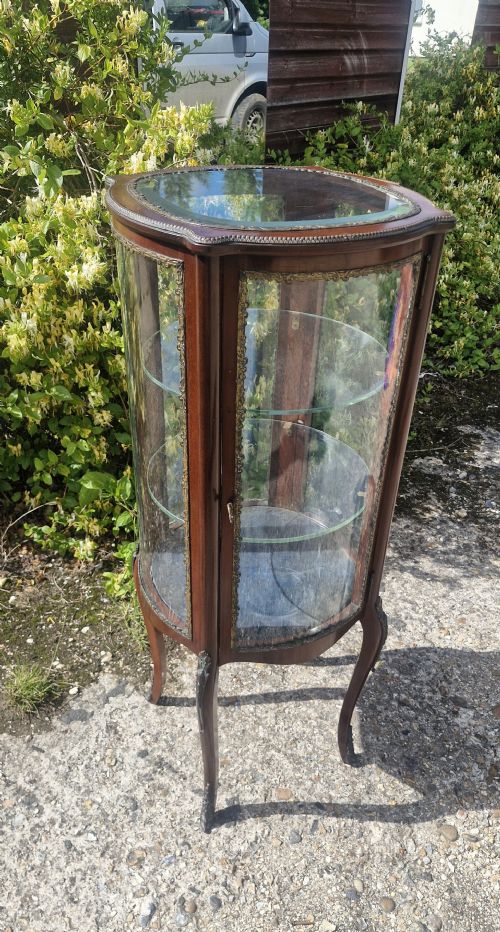
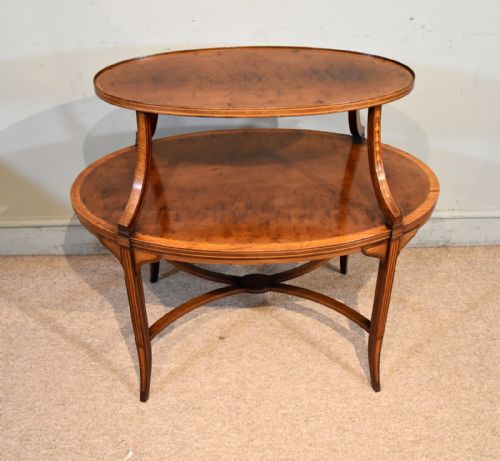
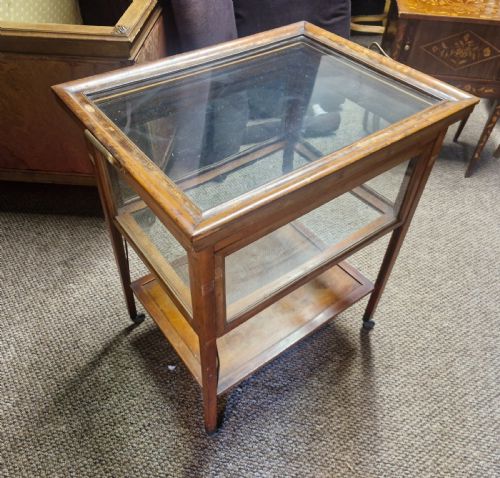
A french mahogany display table is typically encountered as a bijouterie table, vitrine or étagère, built to exhibit small treasures beneath glass surfaces. The form draws upon Victorian, Edwardian and nineteenth century traditions, channelling Louis XV and Louis XVI revival aesthetics through serpentine, oval or kidney shapes.
Makers often drew inspiration from French design vocabulary, incorporating glass tops, hinged display compartments and tiered shelving to hold ornaments, jewellery and collections. Examples range from compact occasional tables to large cabinets, sometimes finished with marquetry inlay or brass detailing.
Most items date from the nineteenth century through to the Edwardian era, bearing the hallmarks of continental cabinet-making traditions. Their primary function remains the presentation of objects, balancing utility with decorative presence in a room.
What varies in quality
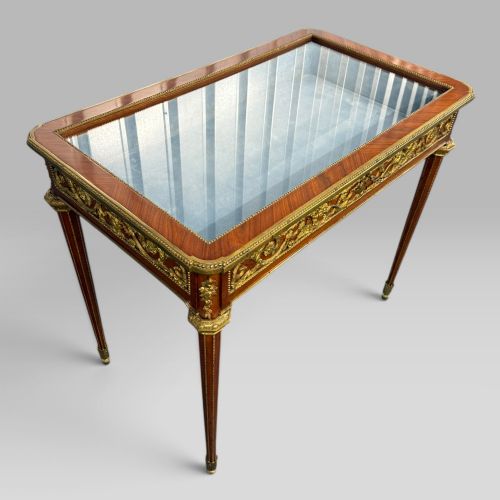
The standard of a french mahogany display table rests heavily on the crispness of its cast ormolu mounts and the precision of its timber joints. Finer examples display hand-chased metalwork with sharp detail, whereas simpler pieces rely on standard commercial brass castings.
Timber selection and veneer matching dictate the visual depth of the surface, particularly on marquetry-inlaid or kidney-shaped tops. Superior execution shows seamless grain continuity and tight, stable mitres around glass frames and tiered shelves.
Periods represented span from the nineteenth century through Victorian, Edwardian and up to nineteen sixty.
François Linke
The French Mahogany Display Table Glossary
- Bijouterie table
- A specialist display table with a glazed top and a shallow internal compartment designed to show off jewellery and small trinkets. These tables often stand on slender cabriole or tapered legs.
- Ormolu
- Gilded brass or bronze applied as decorative mounts to furniture frames and corners. It provides metallic contrast against dark mahogany surfaces.
- Étagère
- An open tiered piece of furniture with multiple shelves supported by columns or legs. It serves to display ornaments, tea wares or small books.
- Marquetry
- Decorative veneer work created by fitting thin pieces of wood and other materials together to form pictorial or geometric designs. It covers flat surfaces on tabletops and friezes.
- Vitrine
- A glass-fronted or glass-topped cabinet used for displaying porcelain, curiosities and fine objects. It protects contents from dust while offering all-round visibility.
French Mahogany Display Table: Frequently Asked Questions
What is a bijouterie table?
A bijouterie table is a display table featuring a glazed top and a shallow well beneath for exhibiting small objects. They gained popularity in the nineteenth century for showing collections of coins, medals and jewellery.
Such tables allowed owners to curate portable exhibitions within a domestic drawing room. The glass protected fragile items while keeping them visible to seated guests.
How do I style a display table?
Keep the contents inside the glass compartment curated and uncluttered to let the timber frame and mounts breathe. Group small items by material or colour to create visual harmony beneath the glass.
Position the table where natural light can strike the glass top without causing harsh glare. Avoid overcrowding the surface so the craftsmanship of the mahogany remains prominent.
Are these tables sturdy enough for daily use?
Most pieces are built with slender legs and delicate glass frames intended for decorative display rather than heavy loads. They suit holding lamps, small ornaments or light collections rather than daily dining.
Care should be taken when moving them, lifting from the main framework rather than the legs or decorative mounts. Ensuring level flooring prevents strain on glazed compartments and hinged lids.
How do I identify French style furniture?
French style pieces often display serpentine curves, ormolu mounts and motifs drawn from Louis XV or Louis XVI reigns. Look for symmetrical floral marquetry, fluted legs and kidney or oval tabletop shapes.
Construction details such as brass stringing, serpentine aprons and gilt metal sabots further indicate continental influence. These elements distinguish them from standard British cabinet-making of the same eras.