



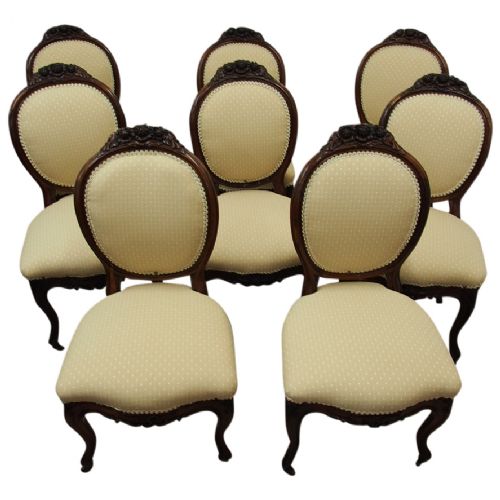
French Mahogany Dining Chairs
These french mahogany dining chairs bring formal continental seating to a room, offering rich timber frames and period details that anchor a traditional interior.
French Mahogany Dining Chairs
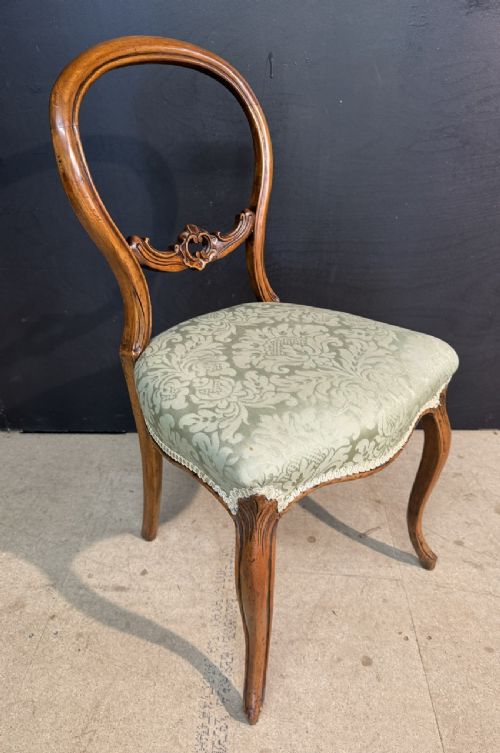
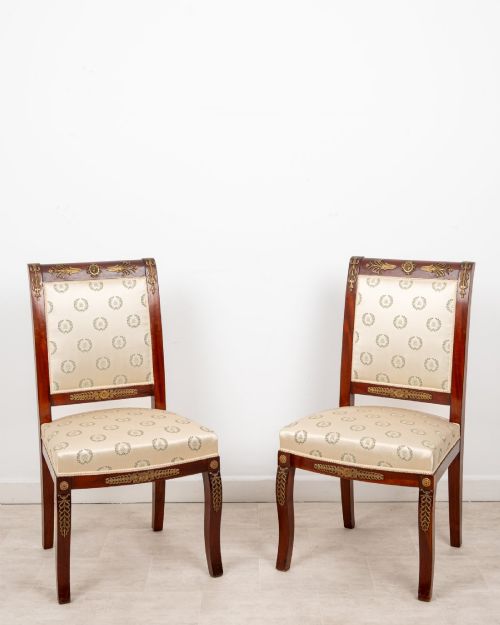
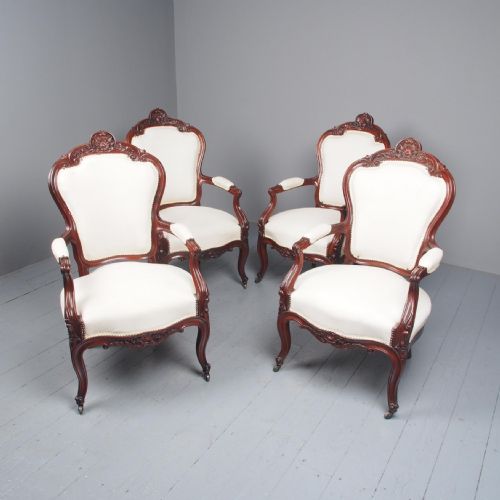
When you search for french mahogany dining chairs, you encounter seating solutions spanning the nineteenth century and the early twentieth century, including both sets and matched pairs. The forms range from side chairs to grand armchairs, drawing upon stylistic influences such as French Empire, Louis XV Revival, and French Neoclassical.
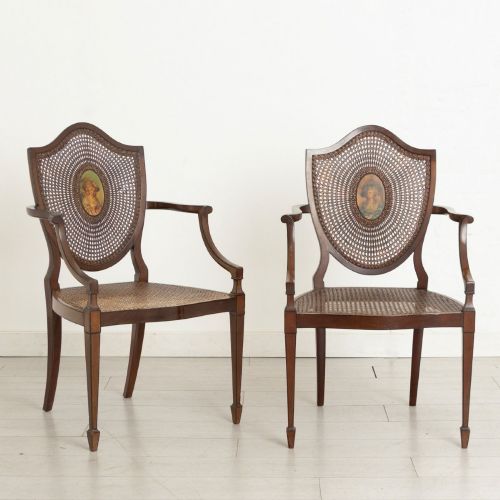
You will regularly meet Victorian interpretations alongside continental imports, built from solid timbers and frequently upholstered in contemporary fabrics, damask, or cane. These chairs serve functional seating roles around a dining table while carrying distinctive sculptural silhouettes and carved wooden frames.
How they were made
Cabinetmakers constructed these frames using dense mahogany and occasional secondary woods like walnut, shaping the timber through hand-carving and joinery techniques typical of nineteenth-century workshops. Many examples incorporate applied or cast ormolu mounts, brass details, and giltwood highlights to accentuate the structural lines.
Upholstery methods varied from traditional horsehair stuffing beneath damask and fabric covers to open cane work woven directly into wooden backrests and seat bases.
The listings feature mahogany, walnut, brass, ormolu, cane, and damask across the nineteenth century and early twentieth century.
What varies in quality
The standard of carving and the crispness of applied ormolu mounts dictate much of the visual distinction between individual chairs. Fine pieces display deeply undercut timber ornamentation and securely fastened metalwork rather than cast details with softened edges.
The integrity of the mahogany framing, the symmetry of cabriole or tapered legs, and the uniformity across larger sets distinguish master workshop production from more utilitarian seating.
Louis Majorelle
The French Mahogany Dining Chairs Glossary
- Mahogany
- A durable tropical hardwood prized for its deep reddish-brown tone and smooth grain. It forms the primary structural material for these dining chairs.
- Ormolu
- Gilded bronze mounts applied to furniture for decorative enrichment. These metallic ornaments frequently define the Empire Revival style.
- Cabriole leg
- A furniture leg that curves outward and then tapers inward, mimicking an animal's curving limb. This form appears frequently on Louis XV style frames.
- Damask
- A reversible figured fabric woven on a jacquard loom, commonly utilised for period upholstery. It adds a textured pattern to the seat and back panels.
- Cane
- Woven peeled rattan strips utilised for chair seats and backs. This material provides lightweight resilience and visual transparency.
- Medallion chair
- A chair featuring an oval upholstered backrest framed in carved wood. This shape is characteristic of neoclassical revival designs.
French Mahogany Dining Chairs: Frequently Asked Questions
How do I clean mahogany?
Dust the timber regularly with a soft, dry cloth to prevent accumulation in the carved crevices. Avoid silicone-based sprays and excessive moisture.
Apply a microcrystalline wax periodically to nourish the surface and maintain the natural sheen of the wood.
Can I mix chair styles?
Pairing side chairs with complementary armchairs works well at the heads of a dining table. Sticking to similar nineteenth-century periods helps maintain visual cohesion.
Ensure seat heights match appropriately so guests sit at a uniform level around the dining surface.
Are these chairs comfortable?
Period upholstery varies widely depending on whether the padding relies on traditional horsehair or modern foam replacements. Many side chairs offer upright support suited for formal dining.
Armchairs provide additional lateral support through their enclosing wooden frames and padded armrests.
How do I spot revival styles?
Empire Revival and Louis XV Revival pieces adopt classical continental motifs from earlier centuries but utilise nineteenth-century timber preparation and construction methods. Examine the carving style and joinery clues to separate revival work from original eighteenth-century artefacts.
Look for machine-sawn timber marks hidden underneath the seat rails to confirm nineteenth-century production dates.