
French Louis XVI Furniture
French louis xvi furniture brings classical restraint and refined proportions into a room through polished woods and gilt mounts.
French Louis XVI Furniture
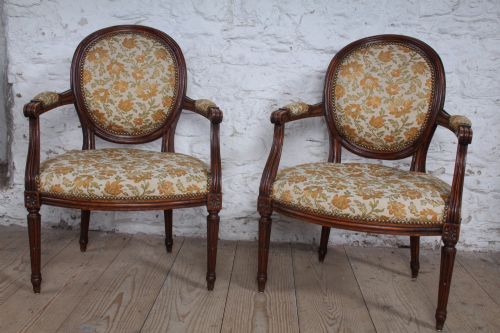
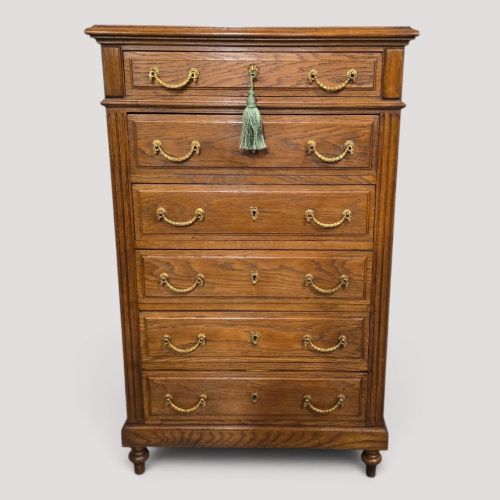
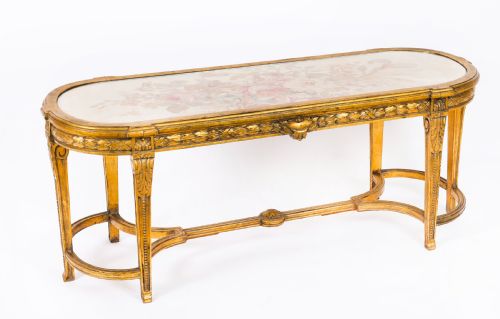
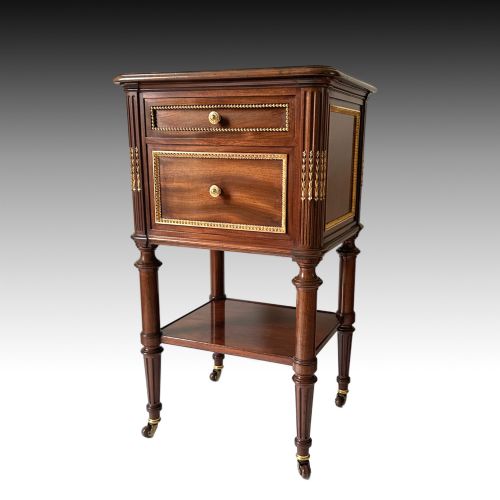
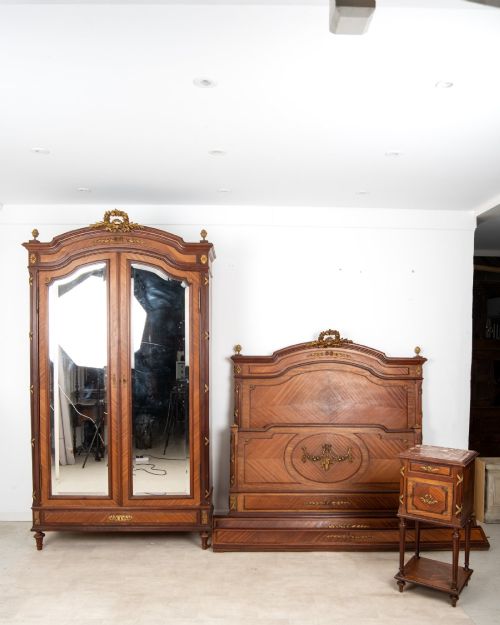
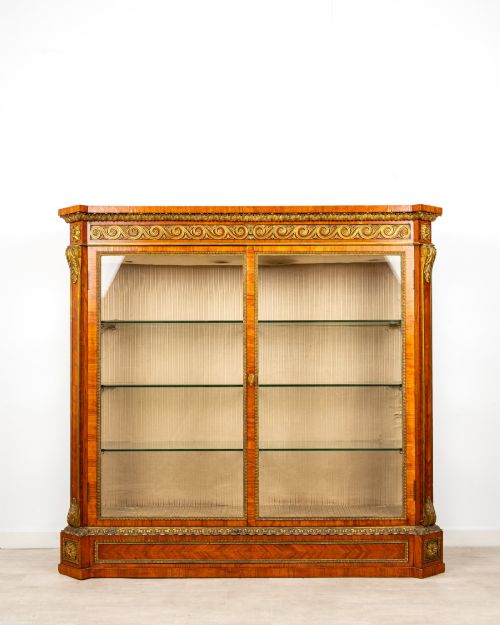
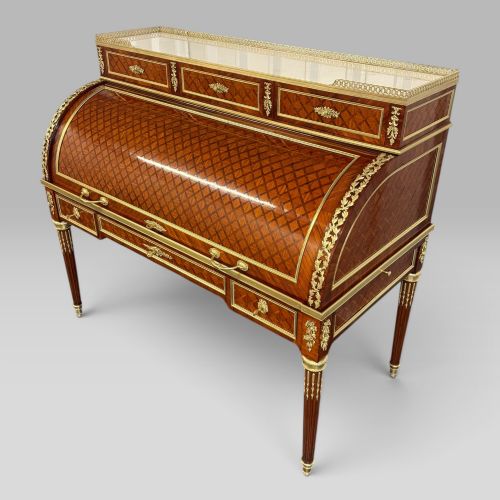
French louis xvi furniture centres on symmetry, straight lines and classical geometry, departing from the curving extravagance of earlier rococo work. Buyers encounter these pieces in forms ranging from commodes and display cabinets to side tables, writing desks and complete bedroom suites.
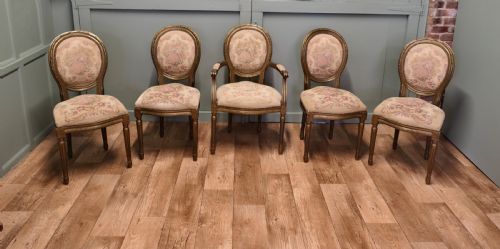
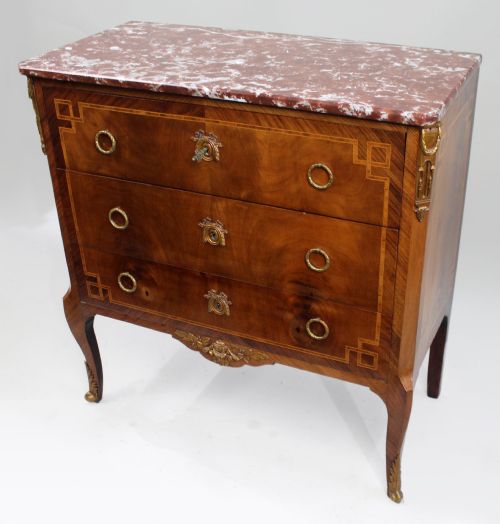
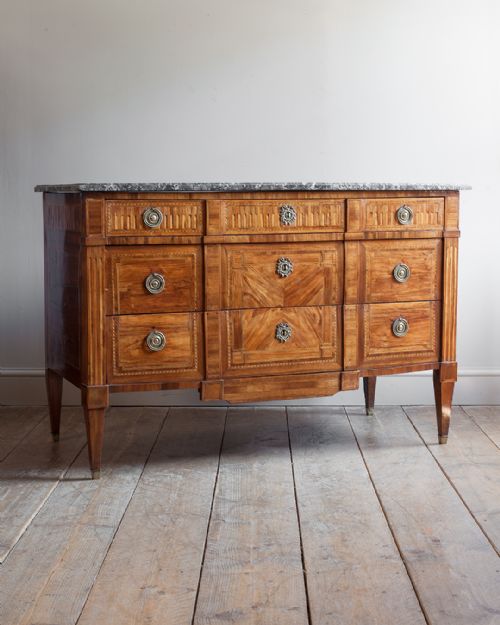
The pieces appearing on this page span from authentic eighteenth-century examples to nineteenth-century revivals produced during the Victorian era and the early twentieth century. Walnut, mahogany and kingwood provide the foundation for commodes with marble tops, while occasional tables and salon suites introduce seating and display surfaces.
How They Were Made
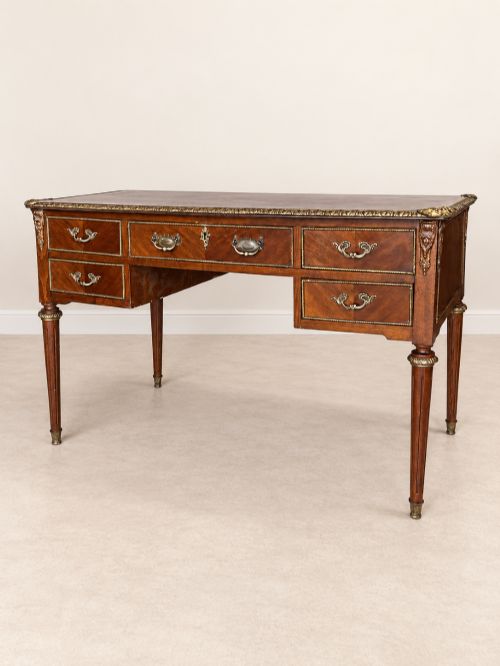
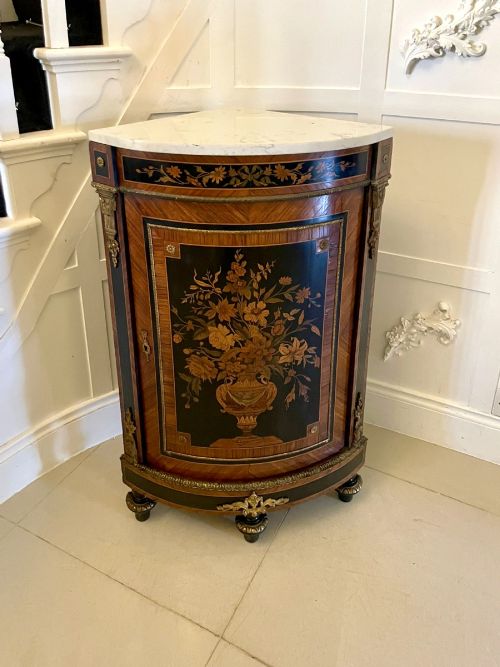
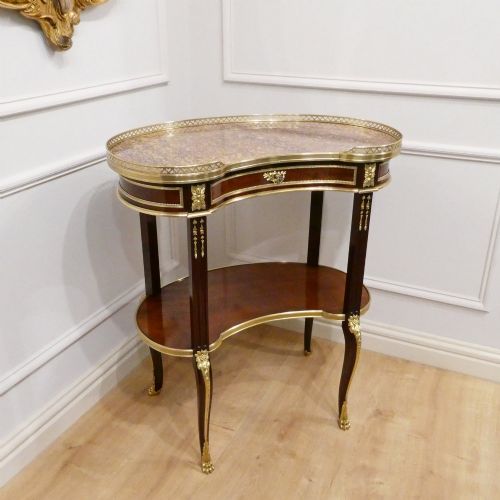
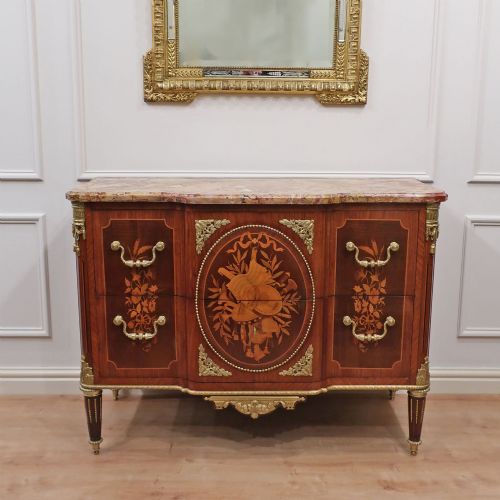
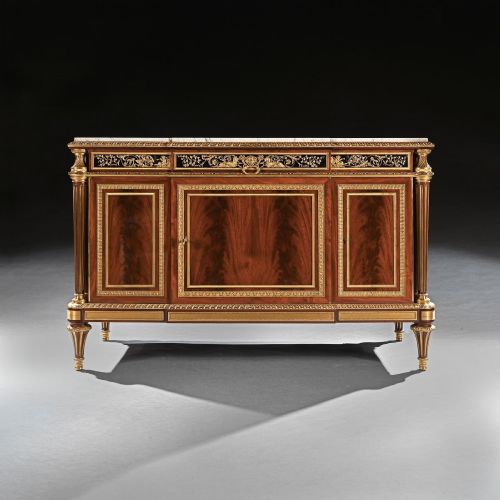
Cabinetmakers constructed carcasses from dense hardwoods such as mahogany, walnut and cherry, frequently applying intricate marquetry and parquetry patterns in contrasting timbers like kingwood and satinwood. Marble tops in white, rouge and grey shades sit neatly upon these wooden frames.
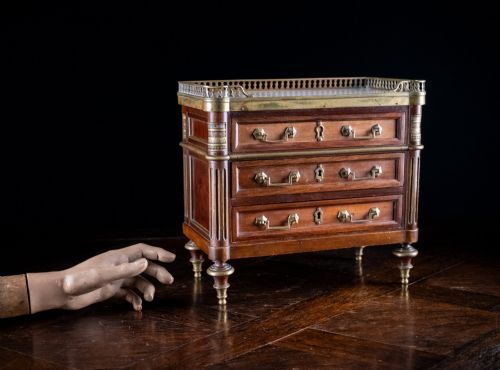
Gilt bronze and ormolu mounts, cast and chased with classical motifs, accent the corners, drawer fronts and legs of commodes and desks. Brass details and glass panels complete pieces designed for display and daily use in formal rooms.
A card table with an envelope fold mechanism allows a compact side table to transform instantly for an evening of cards.
What Varies in Quality
The crispness of the bronze casting and the precision of the hand-chasing determine the refinement of the ormolu mounts. Finer pieces display sharp detail in the acanthus leaves and ribbon twists, whereas lesser examples show softer, blurred edges.
Timber selection and the exactness of the parquetry or marquetry patterns set apart the workshops of skilled makers from standard commercial production. Heavier, solid construction in the drawers and frames indicates superior cabinetmaking.
Maison Millet·H. J. Hatfield And Sons·Henry Dasson·Antoine Lampre·Blake
The French Louis XVI Furniture Glossary
- Commode
- A low chest of drawers, often fitted with a marble top.
- Ormolu
- Gilt bronze applied as decorative mounts to furniture frames.
- Marquetry
- Inlaid wood veneers forming pictorial or geometric patterns on a surface.
- Parquetry
- Geometric wood inlay arranged in repetitive patterns like cubes or herringbone.
- Bonheur du Jour
- A small lady's writing desk featuring a small cabinet or set of drawers on top.
French Louis XVI Furniture: Frequently Asked Questions
How do I distinguish eighteenth century pieces from later revivals?
Eighteenth century pieces show construction methods, timber ageing and wear consistent with the period of origin. Later nineteenth-century revival pieces display similar neoclassical styles but use nineteenth-century hardware and secondary woods.
Examining the drawer linings, dovetailing and interior construction helps reveal the true age of the cabinetwork.
What rooms suit these marble top commodes?
Commodes with marble tops work well as surface storage in living rooms, hallways or bedrooms. Their stone surfaces provide durable spaces for lamps and decorative objects.
Peculiar proportions make them suitable against walls where low height and strong horizontal lines are desired.
How should I care for the gilt bronze mounts?
Gilt bronze mounts require dusting with a soft, dry brush to prevent the accumulation of dirt in the recesses. Water and chemical cleaners strip the gold leaf finish.
Preserving the original surface depends entirely on gentle handling and avoiding abrasive cloths.
What is the difference between parquetry and marquetry?
Parquetry uses wood veneers cut into geometric tiles to form repeating patterns like cubes or squares. Marquetry arranges various coloured veneers into pictorial scenes or flowing floral designs.
Both techniques demonstrate the skill of the woodworker in contrasting different timber grains.