

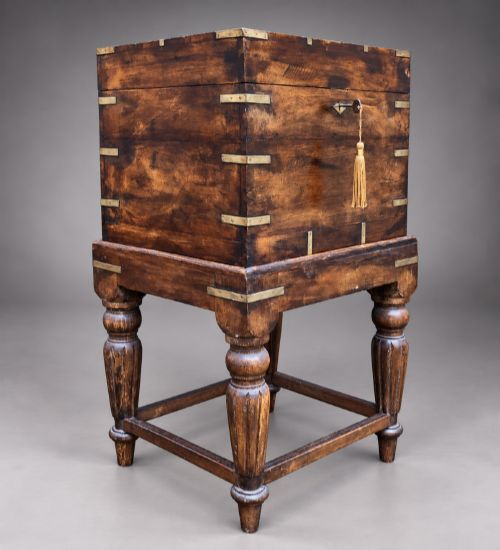
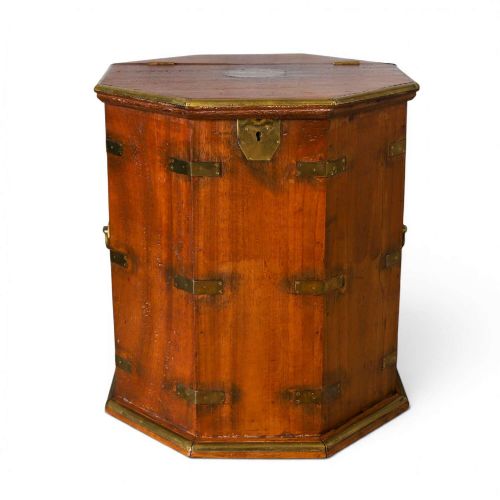

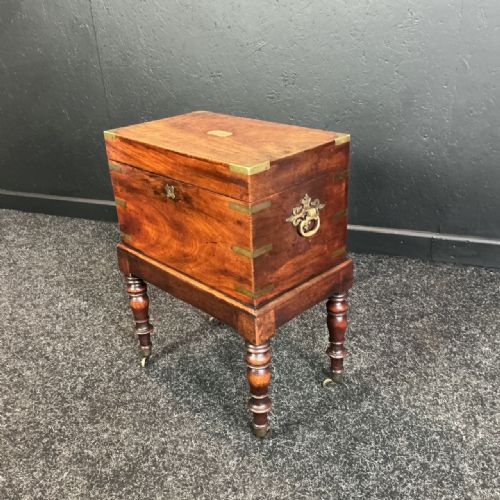

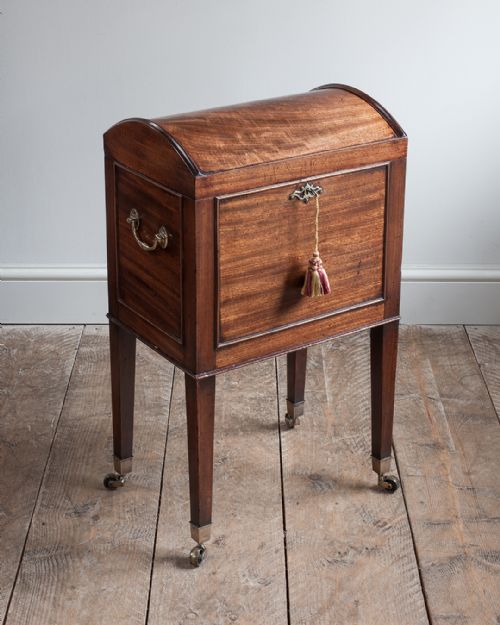


Brass Mounted Wine Chest
A brass mounted wine chest is a robust cabinet designed to hold bottles securely, offering rich timber and stout metalwork for a formal dining room.
Brass Mounted Wine Chest
A brass mounted wine chest encompasses cellarettes, wine coolers, and trunk forms built to contain and protect bottles during storage or transit.
The versions most frequently met on this page span the 18th century, Georgian, and Regency periods, alongside Anglo-Indian colonial examples.
Makers utilised dense timbers such as mahogany, teak, and padouk, frequently accentuating the forms with brass fittings, handles, and occasional satinwood inlay.
How they were made
Cabinet makers constructed these pieces using solid mahogany, teak, or padouk, often selecting flame mahogany veneers to create striking lid and panel surfaces.
Structural integrity was reinforced through stout brass corner mounts, carrying handles, and straps, which protected the edges during movement.
Interior fittings included wooden partitions or lead-lined compartments designed to hold bottles safely alongside ice or water.
Brass Mounted Wine Chest Retail Price Guide 2026
Typical asking prices for brass mounted wine chest among the pieces listed under this phrase on Sellingantiques today, from the lower quarter to the upper quarter. They describe what is for sale here now, not the wider market.
What varies in quality
Quality rests in the selection of timber, moving from plain surfaces to highly figured flame mahogany or intricate satinwood inlay.
The weight and finish of the brass mounts determine the grade of the piece, with substantial cast handles and mountings marking out finer workshops.
The sophistication of the internal divisions and the presence of original stands or sarcophagus proportions further distinguish standard pieces from exceptional ones.
The Brass Mounted Wine Chest Glossary
- Cellarette
- A lockable cabinet or box designed to hold wine bottles, usually kept beneath a sideboard or in a dining room.
- Sarcophagus shaped
- A burial-chest outline with a stepped or domed lid, popular for Regency wine coolers and cellarettes.
- Padouk
- A heavy, durable tropical hardwood with a reddish-brown hue, utilised in Anglo-Indian and colonial furniture.
- Ormolu
- Gilded bronze ornamentation applied to furniture, seen on French-influenced pieces from the 19th century.
- Teapoy
- A small pedestal table or chest originally intended for holding tea caddies, sometimes grouped with chest forms.
Brass Mounted Wine Chest: Frequently Asked Questions
What is a brass mounted wine chest used for?
These chests were built to store wine bottles securely within a dining room or formal setting. The heavy timber and internal partitions kept bottles upright and steady.
They also served to chill wine when packed with ice or water in lead-lined compartments. Today, they function as striking decorative furniture pieces or low storage chests.
How do I date a wine chest?
Dating relies upon timber selection, hardware style, and overall proportions. Georgian and George III examples display restrained classical lines, whilst Regency pieces often adopt sarcophagus outlines.
Later 19th-century and Anglo-Indian variants introduce distinct regional timbers like padouk and teak. Construction methods inside the chest also provide clues to the period of manufacture.
What woods are typical for these chests?
Mahogany is the dominant timber across 18th-century and Georgian pieces, frequently appearing as flame mahogany veneer. Satinwood inlay provides decorative contrast on select items.
Colonial workshops utilised dense exotic woods including padouk and teak. Brass fittings are universal across these timbers to provide structural reinforcement.
Where were they placed in a home?
Historically, wine chests stood beneath sideboards or in dining rooms for easy access during meals. Their sturdy brass carrying handles allowed servants to move them as required.
In modern interiors, they fit easily beside a sofa or serve as standalone accent pieces. Their flat lids also allow them to function as small side tables.