

French Louis Chair
A french louis chair brings architectural curves and upholstered comfort into a room, drawing on centuries of courtly design.
French Louis Chair
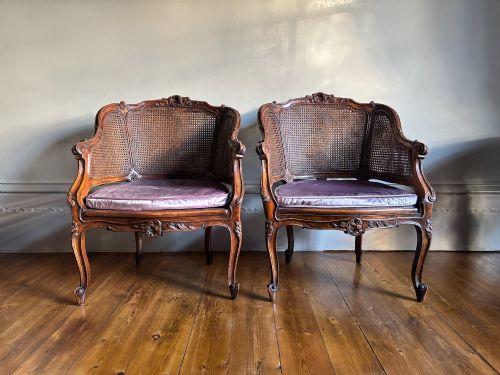
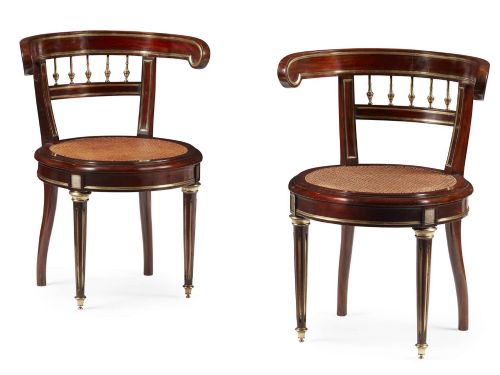
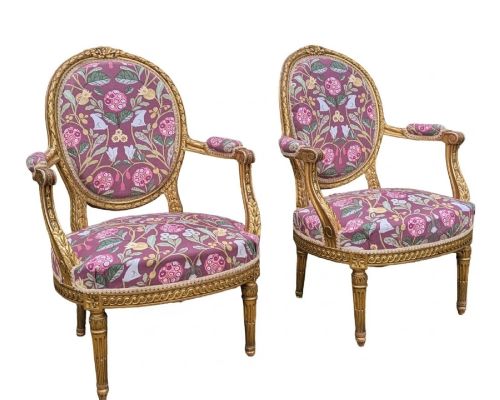
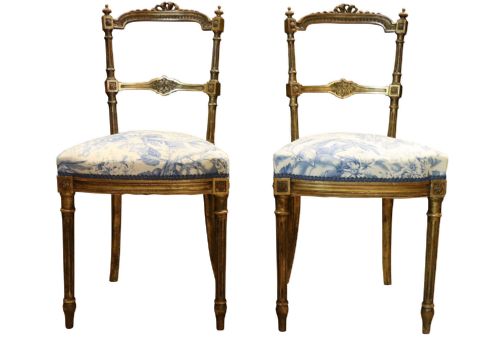
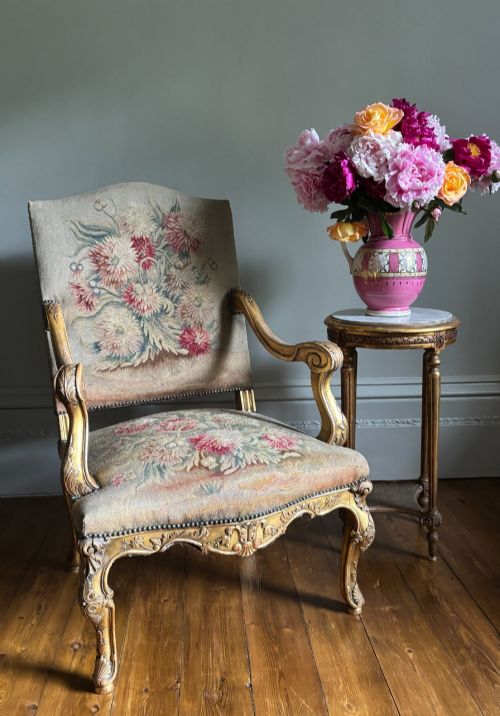
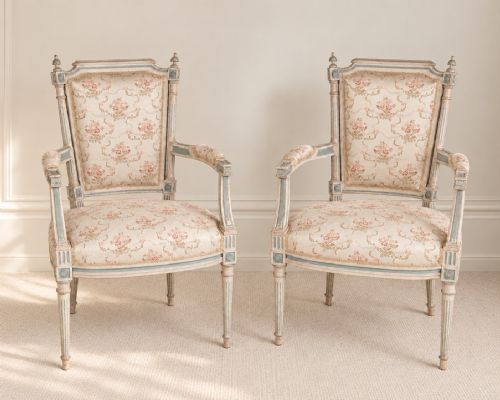
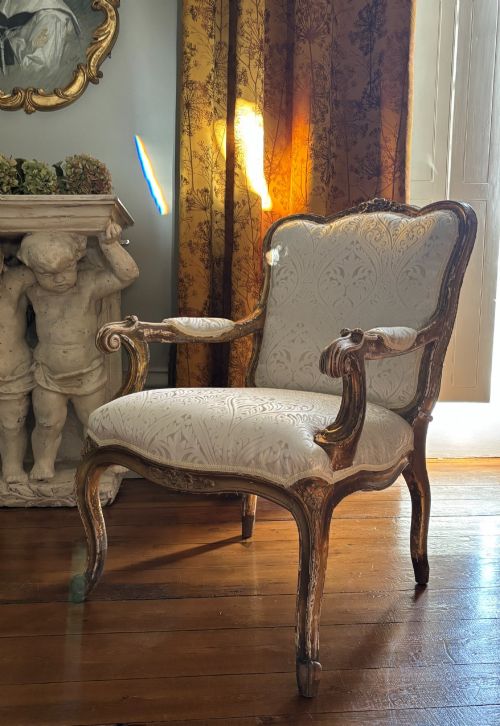
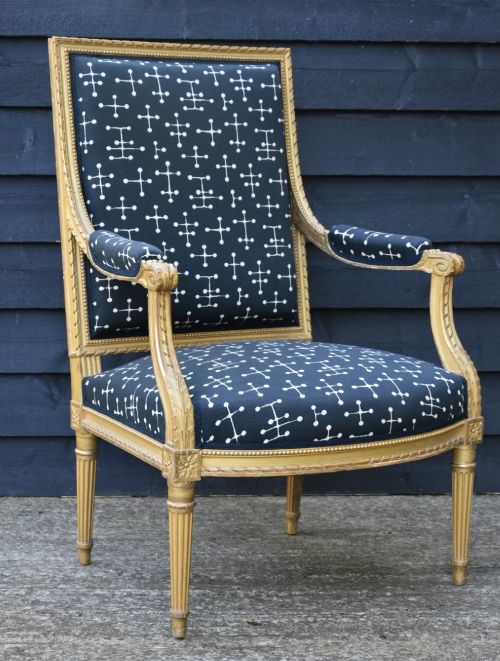
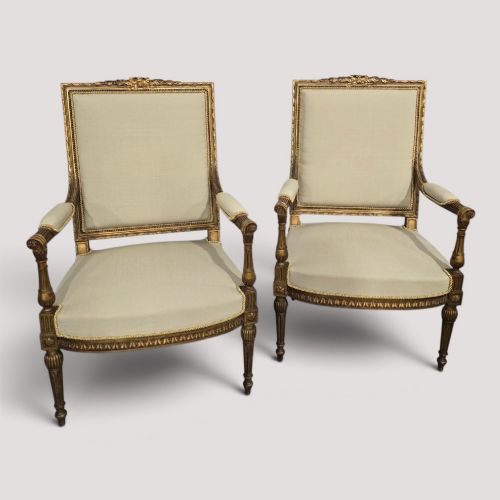
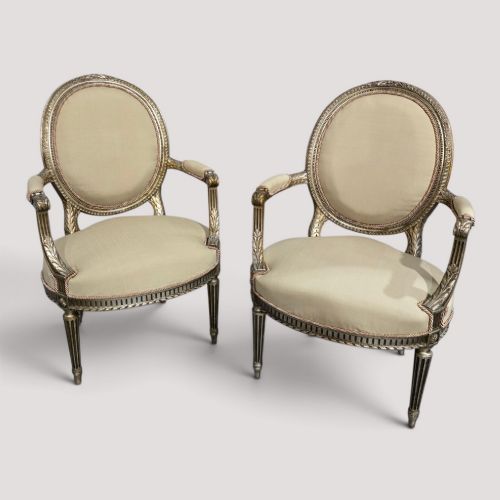
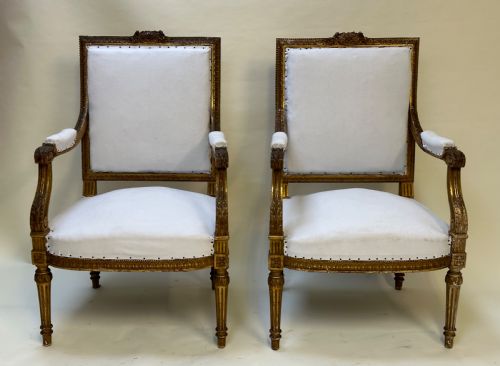
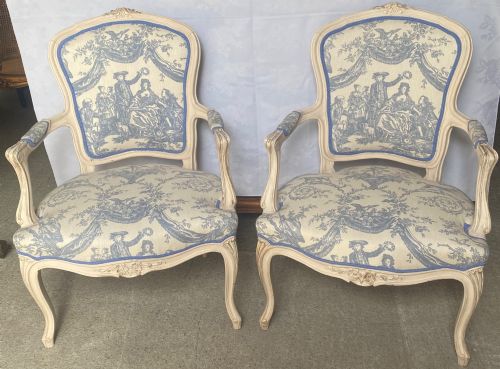
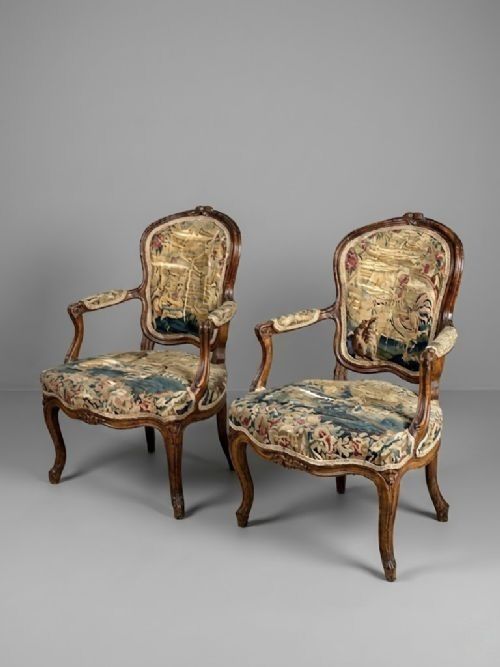
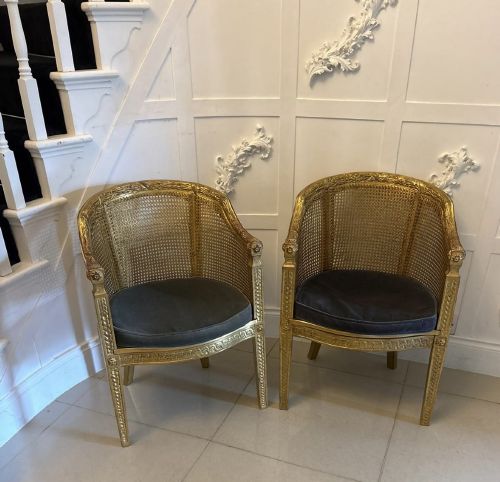
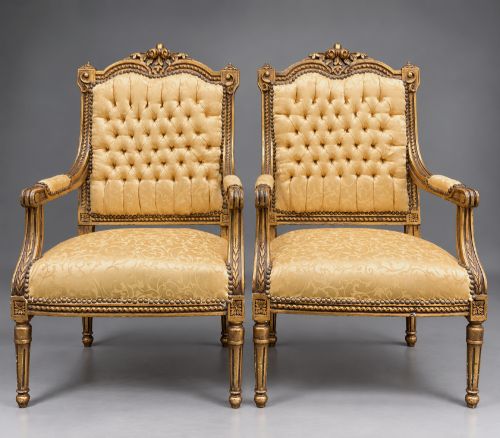
When buyers search for a french louis chair, they encounter seating spanning the eighteenth century through revivals of the nineteenth and early twentieth centuries. The selection on this page ranges from provincial walnut armchairs to giltwood salon chairs bearing Louis XV and Louis XVI characteristics. Forms include open armchairs, bergere tub chairs, side chairs, and salon suites.
The most common pieces met here are nineteenth-century revival models capturing the rococo and neoclassical lines of the French monarchy. Makers of these later pieces interpreted earlier royal tastes using walnut, beech, and giltwood. These seating options served formal reception rooms, bedrooms, and chateaus.
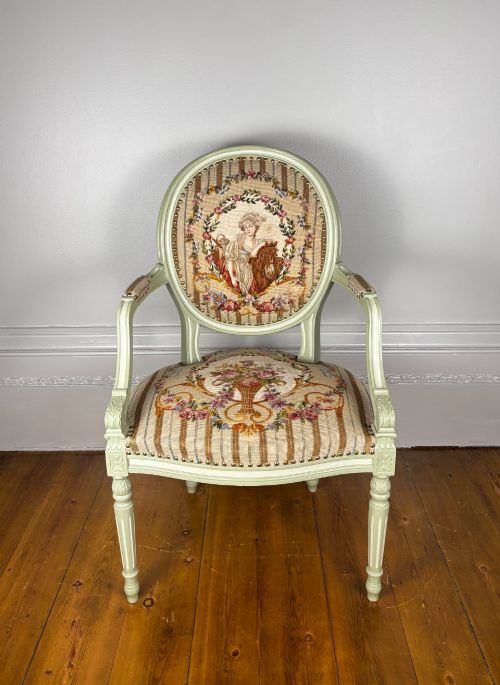
Buyers find both single chairs and matched pairs upholstered in fabric, velvet, tapestry, and silk. Some retain their original paint or parcel gilt surfaces from periods like eighteen-sixty or nineteen-hundred. The vocabulary of the form includes cabriole legs, carved frames, and corbeille seats.
How They Were Made
Carpenters shaped frames from solid hardwoods like walnut, beech, and mahogany, carving floral motifs, scrolls, and fluting directly into the timber. Gilders applied gold leaf or paint over prepared grounds on giltwood and painted pieces. Caning was woven tightly into wooden frames for certain seat backs and bases.
Upholsterers built up padding using traditional stuffing materials before covering the frames in silk, velvet, tapestry, or printed cotton. Brass tacks frequently secured the edges of the upholstery to the wooden rails. Joinery relied on traditional mortise and tenon construction to support the curves of cabriole legs and arched backs.
French Louis Chair Retail Price Guide 2026
Typical asking prices for french louis chair among the pieces listed under this phrase on Sellingantiques today, from the lower quarter to the upper quarter. They describe what is for sale here now, not the wider market.
Some nineteenth-century makers snuck neo-Gothic tracery into Louis-style chairs, proving even royalty can appreciate a medieval plot twist.
What Varies in Quality
The crispness of the wood carving distinguishes ordinary production from finer examples, separating mechanical work from hand-chiselled depth. Frames carved with organic fluidity display a confident hand in the floral details and scrollwork.
Surface preservation dictates the character of the piece, whether through intact original gilding, untouched period paint, or rich patination on exposed walnut. Uniformity across matched pairs and sets of chairs maintains the integrity of the original commission.
The French Louis Chair Glossary
- Cabriole leg
- A furniture leg that curves outward in a convex arc and tapers inward in a concave arc, ending in a pad or scroll foot. This shape derives from animal limbs and defines much eighteenth-century seating.
- Bergere
- An enclosed upholstered armchair with closed sides padded with upholstery or filled with cane. These seats offer deeper comfort than open armchairs.
- Giltwood
- Timber coated with gold leaf or powder over a prepared gesso ground. This finish catches candlelight and daylight in formal rooms.
- Louis XV style
- A design aesthetic characterised by asymmetry, rococo curves, cartouche motifs, and organic forms. It emerged during the mid-eighteenth century and saw revivals in the nineteenth century.
- Louis XVI style
- A neoclassical aesthetic marked by straight lines, symmetry, fluted columns, and geometric motifs. This style reacted against the preceding rococo curves.
- Tapestry
- Woven textile featuring pictorial scenes or repeating botanical patterns used to upholster seats and backs. These heavy fabrics denoted formal status.
French Louis Chair: Frequently Asked Questions
What is a french louis chair?
A french louis chair is a seat designed in the decorative style of the French royal courts under Louis the fifteenth or sixteenth, or later nineteenth-century revivals of those periods. These chairs feature carved wooden frames, exposed joinery, and upholstered seats and backs.
They encompass various forms including open armchairs, closed bergere chairs, and lighter salon chairs made from walnut, beech, or giltwood.
How do I date a french louis chair?
Dating requires examining the wood species, tool marks, upholstery webbing, and framing construction techniques. Eighteenth-century pieces display hand-cut joinery and period textiles, whereas nineteenth-century revival pieces often reveal machine-sawn timber and nineteenth-century padding methods.
Style indicators also help, as rococo curves differ from the straighter neoclassical lines introduced later in the eighteenth century and copied during the eighteen-seventies.
Were these chairs used in dining rooms?
Most pieces listed under this search term served as salon chairs, drawing-room seating, bedroom chairs, or hall chairs rather than dining furniture. Their delicate carved frames and upholstered surfaces suited reception rooms and private chambers where guests gathered.
Dining chairs exist in smaller numbers, but the majority of surviving forms prioritise lounge comfort and decorative presence over dining utility.
How do I care for antique upholstery?
Preserving antique textiles involves keeping chairs away from direct sunlight and maintaining stable room humidity to protect silk, velvet, and tapestry fibres. Vacuuming with a soft brush attachment removes surface dust without stressing fragile weaves.
Original paint and gilt surfaces benefit from dry dusting only, avoiding chemical cleaners that strip historical finishes.