
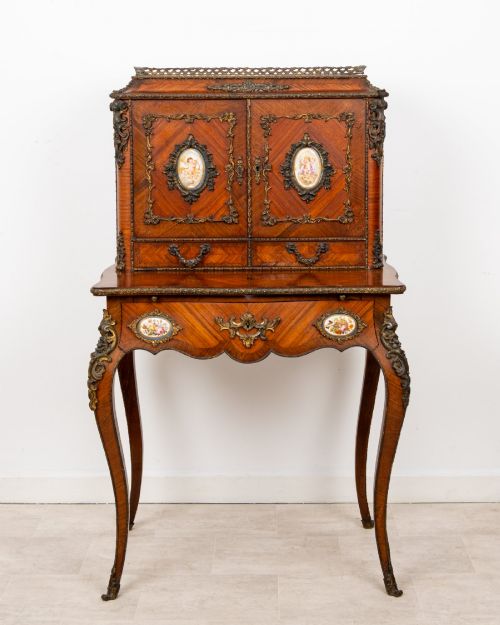


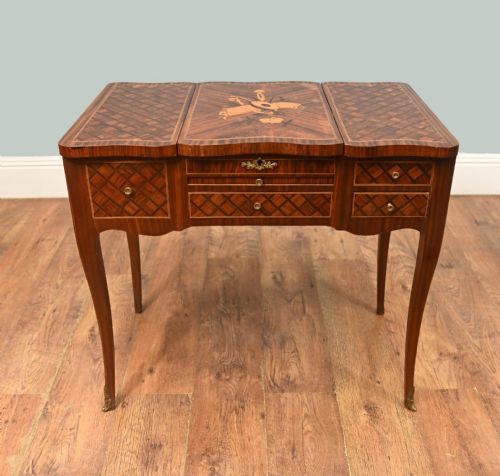


French Kingwood Bonheur Du Jour
A french kingwood bonheur du jour offers a refined writing surface paired with delicate superstructure drawers, bringing nineteenth-century elegance to any interior.
French Kingwood Bonheur Du Jour
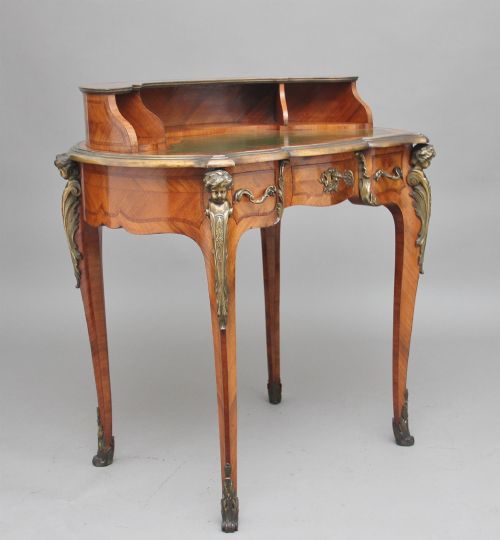
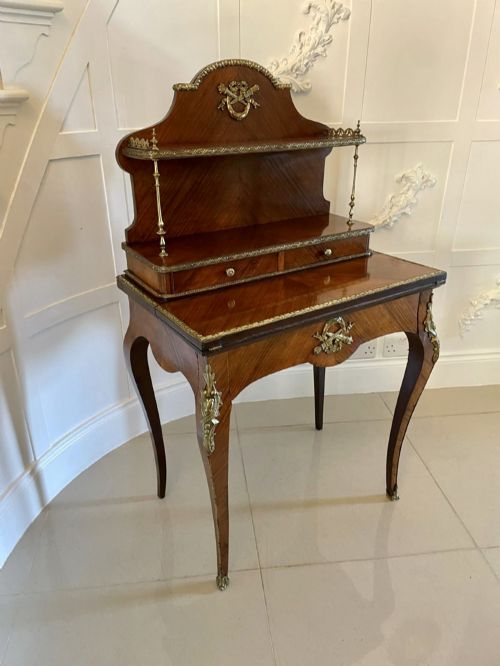
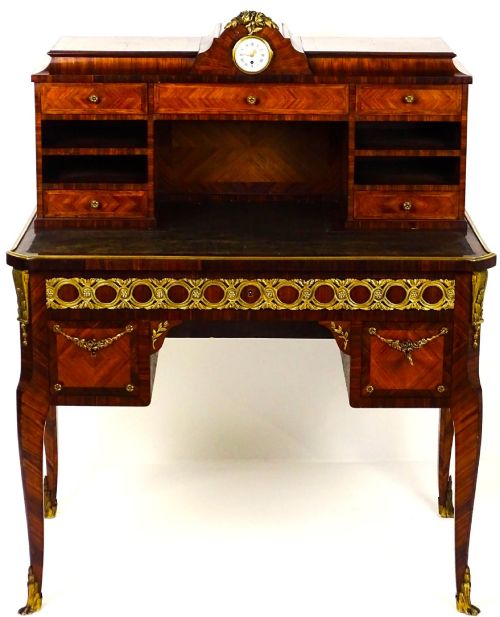
A french kingwood bonheur du jour is a ladies writing desk featuring a raised cabinet section above a main writing surface, commonly originating from the nineteenth century. These pieces combine compact writing spaces with small drawers and shelves, designed for intimate correspondence and keeping papers.
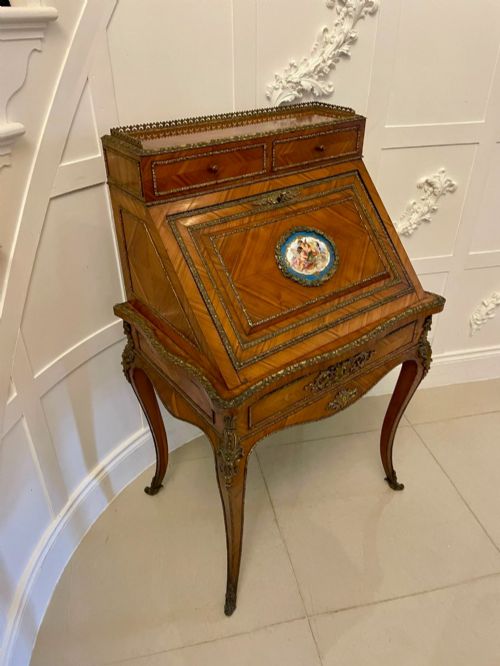
The versions most frequently met on this page date from the Victorian era and span the middle to late nineteenth century, reflecting revivalist tastes. They often incorporate decorative porcelain plaques, brass galleries, and tiered compartments alongside the principal writing flap.
Makers working in this form drew inspiration from earlier French court furniture, producing pieces described through styles such as Louis XV and Louis XVI revival. The resulting desks serve equally as decorative cabinets and functional writing furniture within a room.
Assessing quality in execution
Quality reveals itself in the precision of the marquetry inlay and the crispness of the cast ormolu mounts framing the structure. Finer pieces demonstrate careful matching of the wood grain across the drawers and writing flap.
The integration of hand-painted porcelain plaques and the weight of the gilt bronze fittings distinguish more ambitious examples from simpler workshop production. Cabinetwork interior construction, including dovetailed drawer boxes, indicates the level of care taken by the maker.
Listings feature pieces from the nineteenth century, including specific dates from 1850 to 1900 alongside Victorian examples.
Paul Sormani·Edwards and Roberts·Jean Werner·Robert Strachan and Co
The French Kingwood Bonheur Du Jour Glossary
- Kingwood
- A dense, richly figured timber native to Brazil, prized for its dark violet-brown tones and contrasting lighter streaks. It was extensively utilised in nineteenth-century French cabinetmaking for decorative veneer.
- Ormolu
- Gilded bronze applied as mounts, handles, and feet to furniture. The technique involves coating bronze with a gold amalgam and heating to leave a durable metallic finish.
- Bonheur du jour
- A light nineteenth-century ladies writing desk featuring a small cabinet or set of drawers on the upper surface. The term translates from French as day's delight.
- Marquetry
- The art of applying thin pieces of wood veneer to a carcase structure to create pictorial or geometric patterns. Makers cut different timbers together to ensure tight joints between the contrasting sections.
- Sevres
- A type of porcelain originating from the French royal manufactory, often incorporated as decorative plaques into nineteenth-century cabinets and desks.
French Kingwood Bonheur Du Jour: Frequently Asked Questions
What is a bonheur du jour?
A bonheur du jour is a small ladies writing desk featuring a raised cabinet or tier of pigeonholes and drawers on the upper surface. These compact pieces were designed for private correspondence and the storage of writing materials.
First appearing in eighteenth-century France, the form was revived during the nineteenth century with elaborate mounts and marquetry. They function both as decorative cabinets and usable writing tables.
Where were these desks used?
These desks were typically used in private sitting rooms, boudoirs, or drawing rooms by ladies of the household for writing letters and managing personal correspondence. Their compact proportions allowed them to sit comfortably against a wall or within smaller domestic spaces.
The raised upper section provided a convenient place to display small porcelain items or hold writing paper close at hand. They served as personal furniture rather than formal library desks.
How do I care for kingwood furniture?
Maintain kingwood furniture by keeping it away from direct sunlight and consistent heat sources, which can dry out the veneer and cause splitting. Dust regularly with a soft, dry cloth to protect the polished surface.
Avoid using silicone-based polishes or harsh chemical cleaners on the timber or ormolu mounts. Professional waxing preserves the finish without damaging the delicate marquetry.