




French Iron Plant Stand
These french iron plant stand pieces bring timeless utility and charm to gardens and interiors.
French Iron Plant Stand
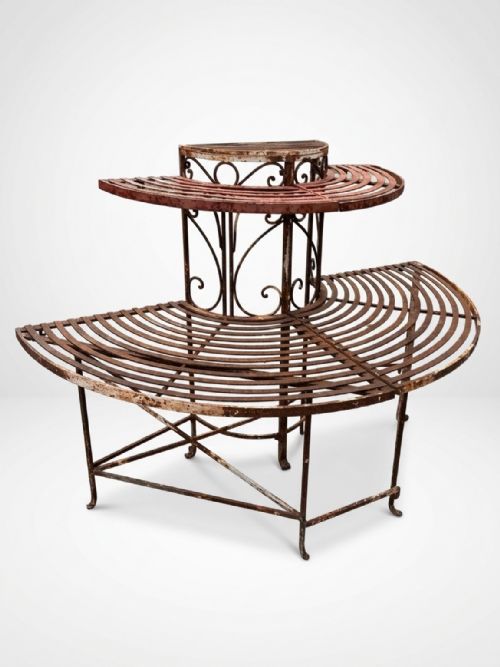
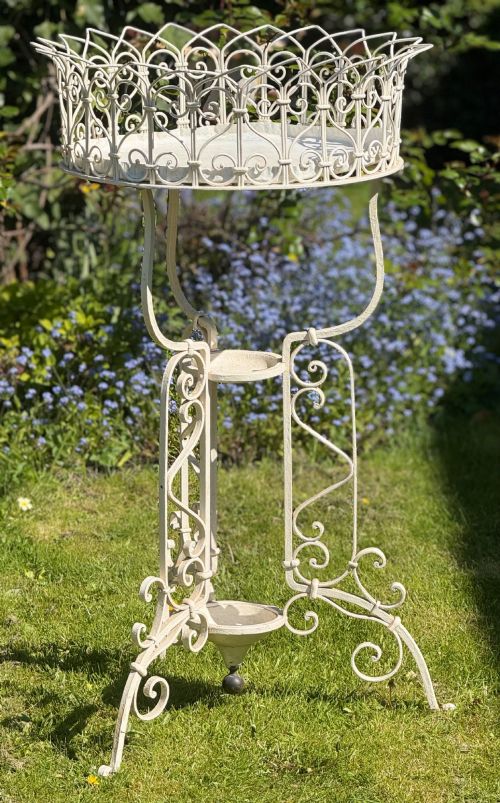
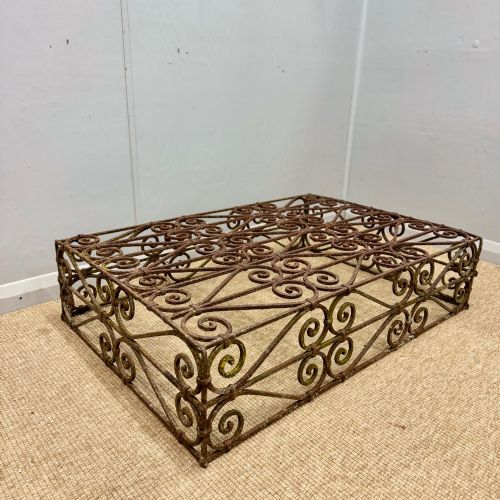
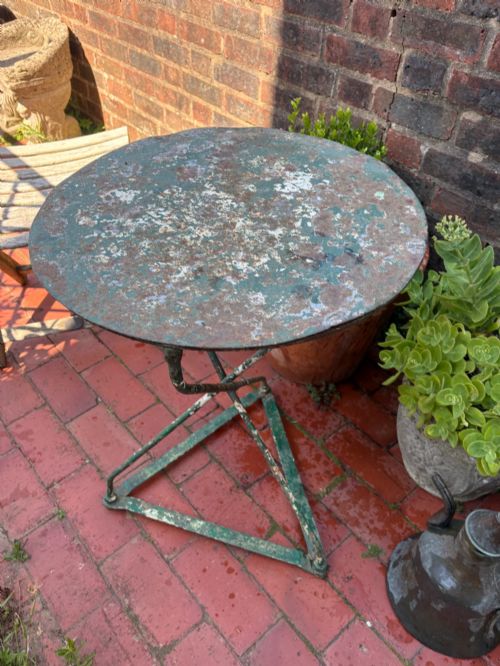
When you search for a french iron plant stand, you are looking at functional metal furniture designed to hold flora both indoors and out. The pieces on this page span the nineteenth century through the early twentieth century, taking forms such as jardinieres, garden tables, and tiered planters.
You are most likely to meet wrought iron and wirework examples reflecting Victorian, Edwardian, and French Country styles. These objects served utilitarian roles in conservatories and patios before finding new life as decorative focal points in modern homes.
How They Were Made
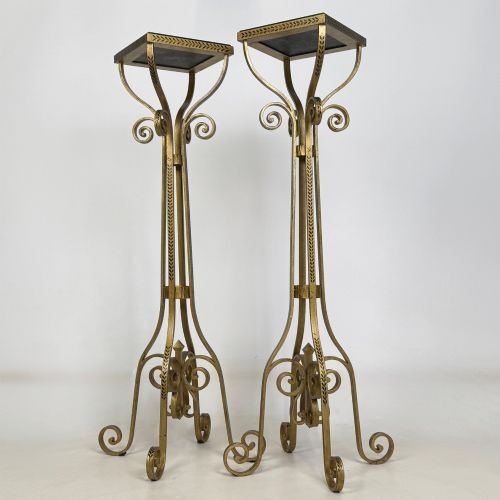
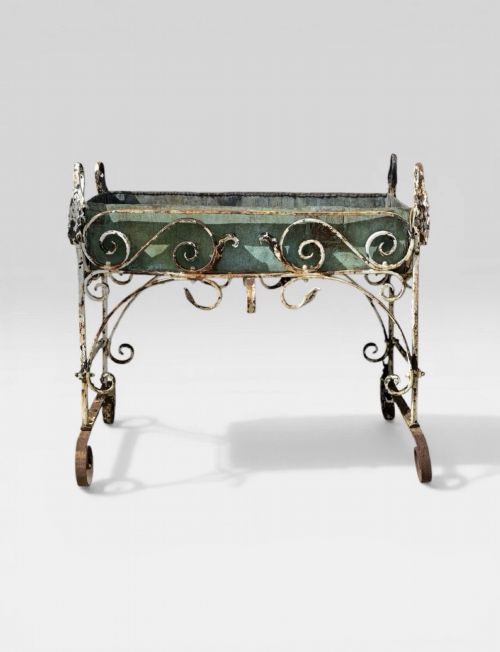
Maker construction relies heavily on wrought iron, cast iron, and wirework, often joined with scrollwork and lattice details. Many examples incorporate materials like marble tops, brass accents, and zinc liners to combine structural durability with decorative surface appeal.
Surfaces frequently display layers of paint or the natural patina of age. Forgers and blacksmiths utilised techniques like cold bending for wire and casting for heavier urns and bases.
Some sturdy French bakers racks have quietly retired from handling baguettes to hold house plants.
What Varies in Quality
Quality rests in the delicacy of the scrollwork and the structural integrity of the metal frame. Finer examples show careful hand-forging where joins are neat and wirework remains taut without sagging.
The choice of supplementary materials elevates certain pieces above standard utility items. The presence of an original marble top, a heavy cast base, or integrated brass detailing distinguishes domestic display furniture from heavier garden workhorses.
The French Iron Plant Stand Glossary
- Wrought iron
- A tough, malleable form of iron that can be heated and hammered into decorative scrolls and structural supports. This material characterises many nineteenth-century garden stands.
- Wirework
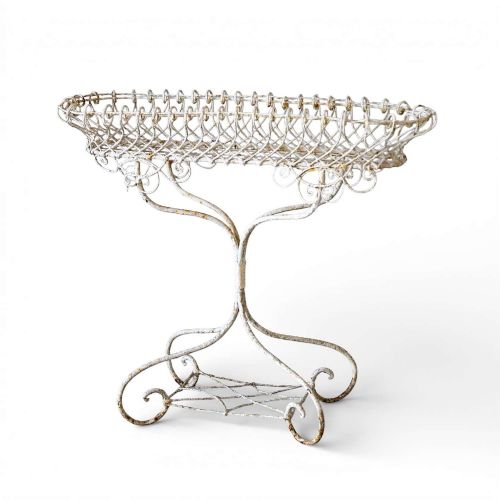
- A technique using thin metal rods twisted and woven into intricate lattice patterns for planters and conservatory furniture. It offers a lighter visual weight than cast iron.
- Jardiniere
- A decorative pot or stand designed specifically to hold plants and flowers. These vessels often feature pierced metal or lattice baskets to allow drainage.
- Guéridon
- A small round table supported by one or more columns, frequently utilised in French interiors. Examples in this category often feature painted cast iron bases.
- Strapp work
- Metalwork formed of flat strips joined together to create open frames and shelving units. It provides robust support for heavy garden containers.
French Iron Plant Stand: Frequently Asked Questions
Where should I place a plant stand?
These metal stands suit conservatories, hallways, and sheltered garden patios where they can support pots and trailing plants without excessive exposure to weather.
Lighter wirework pieces function well indoors as side tables, whilst heavier cast iron items anchor outdoor seating areas.
How do I clean an iron plant stand?
Dust surfaces regularly with a dry cloth and remove plant debris promptly to prevent moisture retention against the metal.
Avoid harsh chemical cleaners that might strip historic painted finishes or natural patinas developed over the centuries.
Are these stands weather resistant?
Most pieces were constructed for outdoor or conservatory use, though historic metal benefits from protection during harsh winter months.
Keeping painted or zinc-lined surfaces dry helps prevent active corrosion from compromising the structural wirework or joints.
How do I date a metal stand?
Dating relies on observing construction methods, such as the transition from hand-forged wrought iron to machine-drawn wire and cast components.
Stylistic cues like Art Nouveau curves or Victorian scrollwork also point toward specific decades around the turn of the twentieth century.