




Decorative Metal Rack
A decorative metal rack brings industrial strength and period character into a modern interior.
Decorative Metal Rack
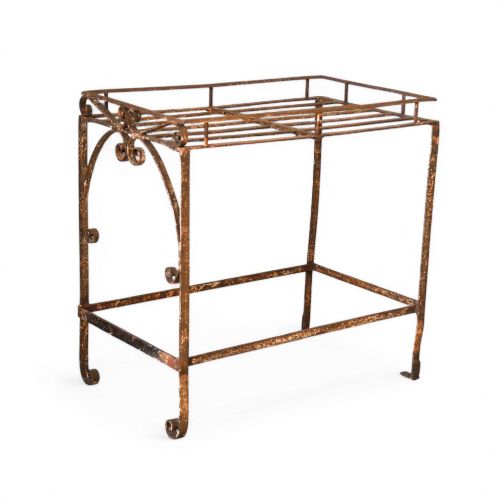
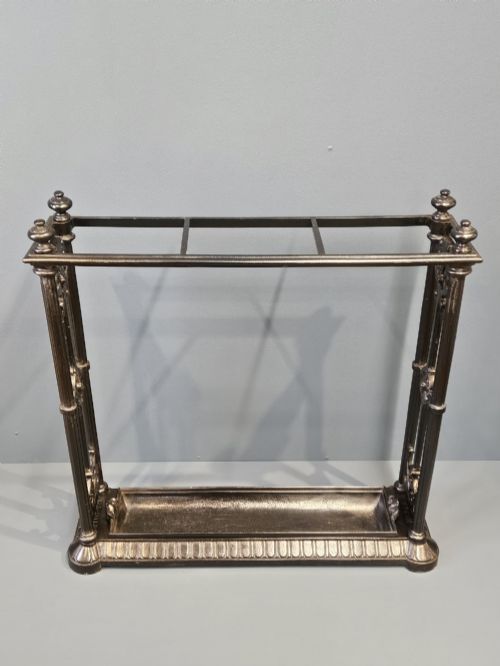
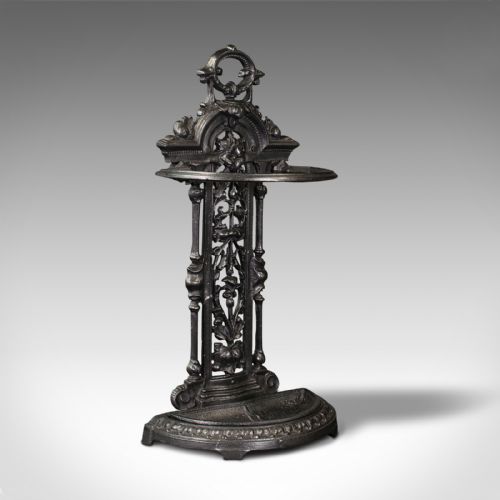
A decorative metal rack serves both utility and display, taking forms such as umbrella stands, bakers racks, wall shelves, and letter holders. These pieces span from the late nineteenth century through to the mid-century modern period, drawing on Victorian, Edwardian, and Art Nouveau influences.
The selections available here predominantly feature robust iron and brass constructions designed for practical household use in hallways, kitchens, and living spaces. Buyers encounter items ranging from estate-made garden ironwork to refined French boulangers bread racks and polished newspaper stands.
How they were made
Makers utilised cast and wrought iron for structural rigidity, particularly in heavy umbrella stands and garden furniture where durability mattered most. Blacksmiths and foundry workers shaped these metals through forging and casting, often incorporating decorative scrollwork or structural wire mesh.
Brass and copper work relied on sheet manipulation and casting, seen in ornate newspaper stands, envelope holders, and luggage racks. Surface treatments such as silver plating, gilding, and painted toleware finishes added decorative refinement to the base metals.
Functional forms range from wine holders and spoon racks to heavy hall stick stands and industrial bread racks.
What varies in quality
The preservation of original surface finishes - whether patinated brass, painted toleware, or silver plate - determines the visual distinction of a piece. Finer examples retain their structural cohesion without intrusive repairs, maintaining the character imparted by their period of origin.
The Decorative Metal Rack Glossary
- Toleware
- Painted or lacquered tinplate objects popular in domestic settings. This technique often involves floral decoration over a dark metal ground.
- Boulangers rack
- A large shelving unit traditionally used in French bakeries for cooling bread. These structures typically combine sturdy metal frames with open wire or slatted shelves.
- Pullman luggage rack
- An overhead storage fixture modelled on those used in railway carriages. They generally feature slatted metal bars and retaining rails for bags.
- Cast iron
- Molten iron poured into a mould to create complex shapes. It provides heavy, rigid forms suited to umbrella stands and hall furniture.
- Wrought iron
- Iron heated and hammered into shape by hand. This material allows for flexible, strong scrollwork found in garden and estate pieces.
Decorative Metal Rack: Frequently Asked Questions
Where should I place a metal rack?
These pieces suit entryways, kitchens, and living rooms depending on their original function as umbrella stands, bakers racks, or wall shelves.
Their open metal construction allows them to fit into narrow hallways or against kitchen walls without overwhelming the room.
How do I clean antique brass?
Dust the surface regularly with a soft, dry cloth to prevent the accumulation of grime in decorative crevices.
Avoid harsh chemical polishes that strip away the aged patina accumulated over decades of use.
Are these racks structurally sound?
Most items are built from heavy cast iron, wrought iron, or brass designed for daily utilitarian service.
Their robust metal frames mean they remain capable of holding umbrellas, bottles, or books just as they did in the nineteenth and early twentieth centuries.
How can I tell the period?
Stylistic markers such as floral toleware, heavy Victorian casting, or linear Art Nouveau brass work point directly to the manufacturing era.
Materials and construction methods, from estate-forged iron to French boulangerie frames, also indicate the timeframe of production.