


French Inlay Tier Table
A french inlay tier table brings layered display surfaces and intricate marquetry together, offering a functional centrepiece for classical rooms.
French Inlay Tier Table
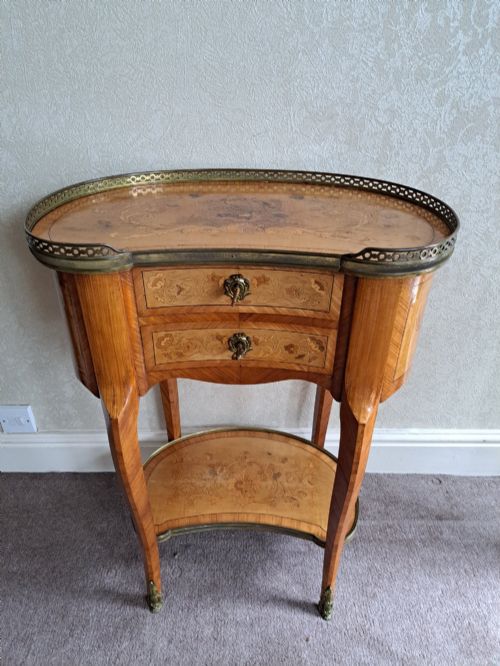
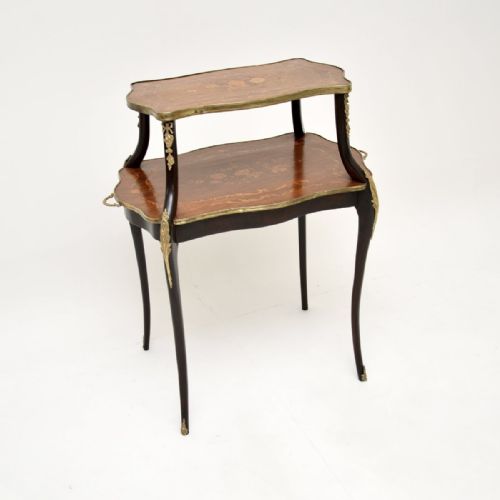
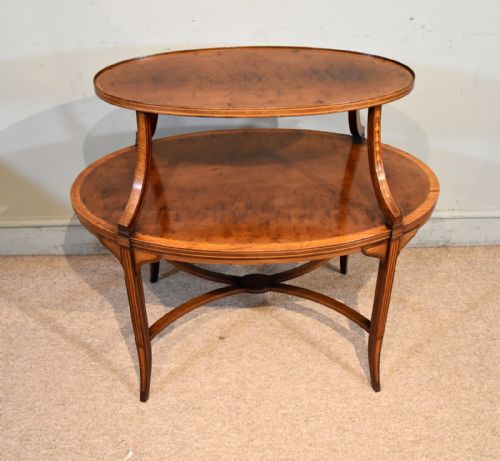
A french inlay tier table comprises multi-level occasional tables, etageres, and display stands designed for salons and drawing rooms. These pieces originate predominantly from the nineteenth and early twentieth centuries, spanning periods from the Victorian era through to Art Deco.
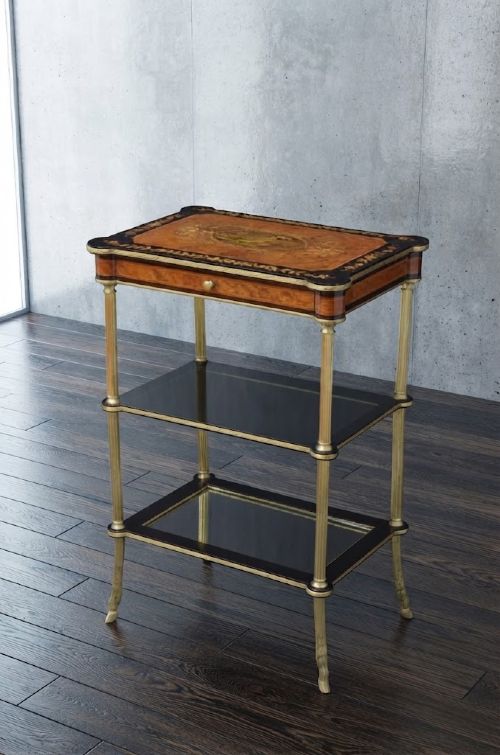
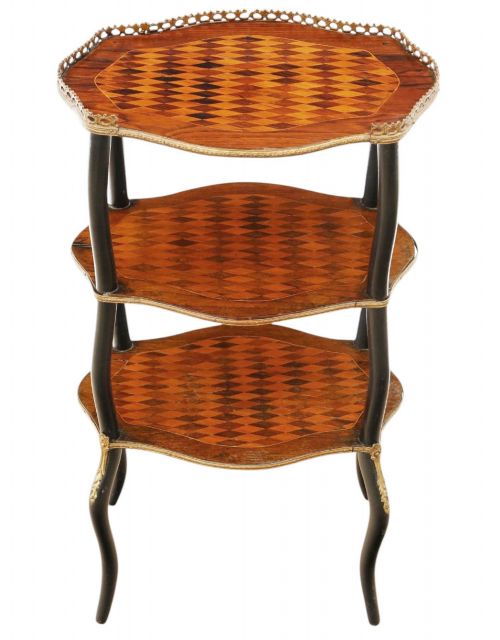
The multi-tiered format provides stacked surfaces constructed to hold decorative objects, lamps, or books. Buyers meet forms ranging from kidney-shaped occasional tables to two-tier and three-tier étagères bearing floral marquetry.
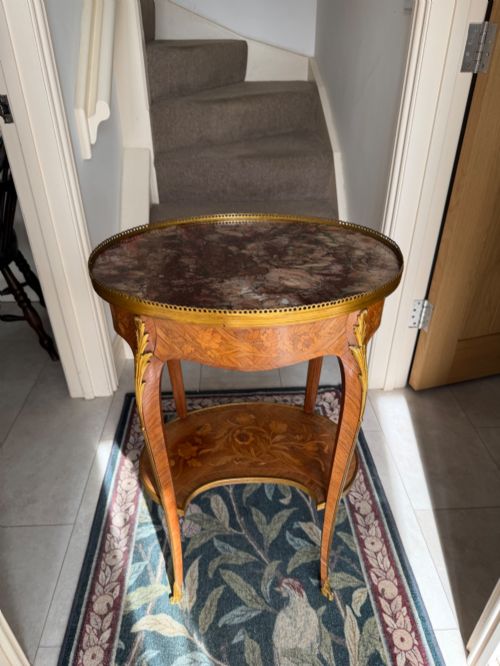
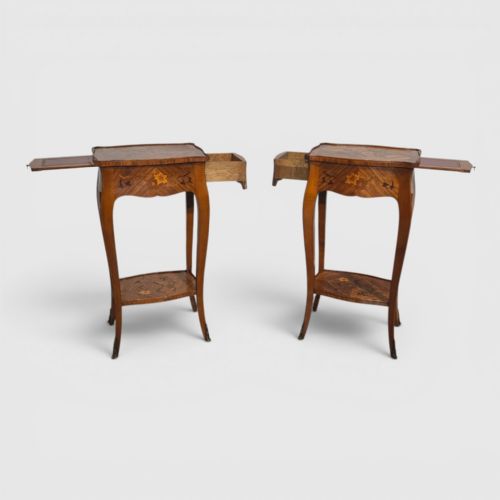
Stylistic influences lean heavily on French Rococo Revival, Louis XV, and Louis XVI designs. Makers executed these works in diverse forms including side tables, lamp stands, and what-nots.
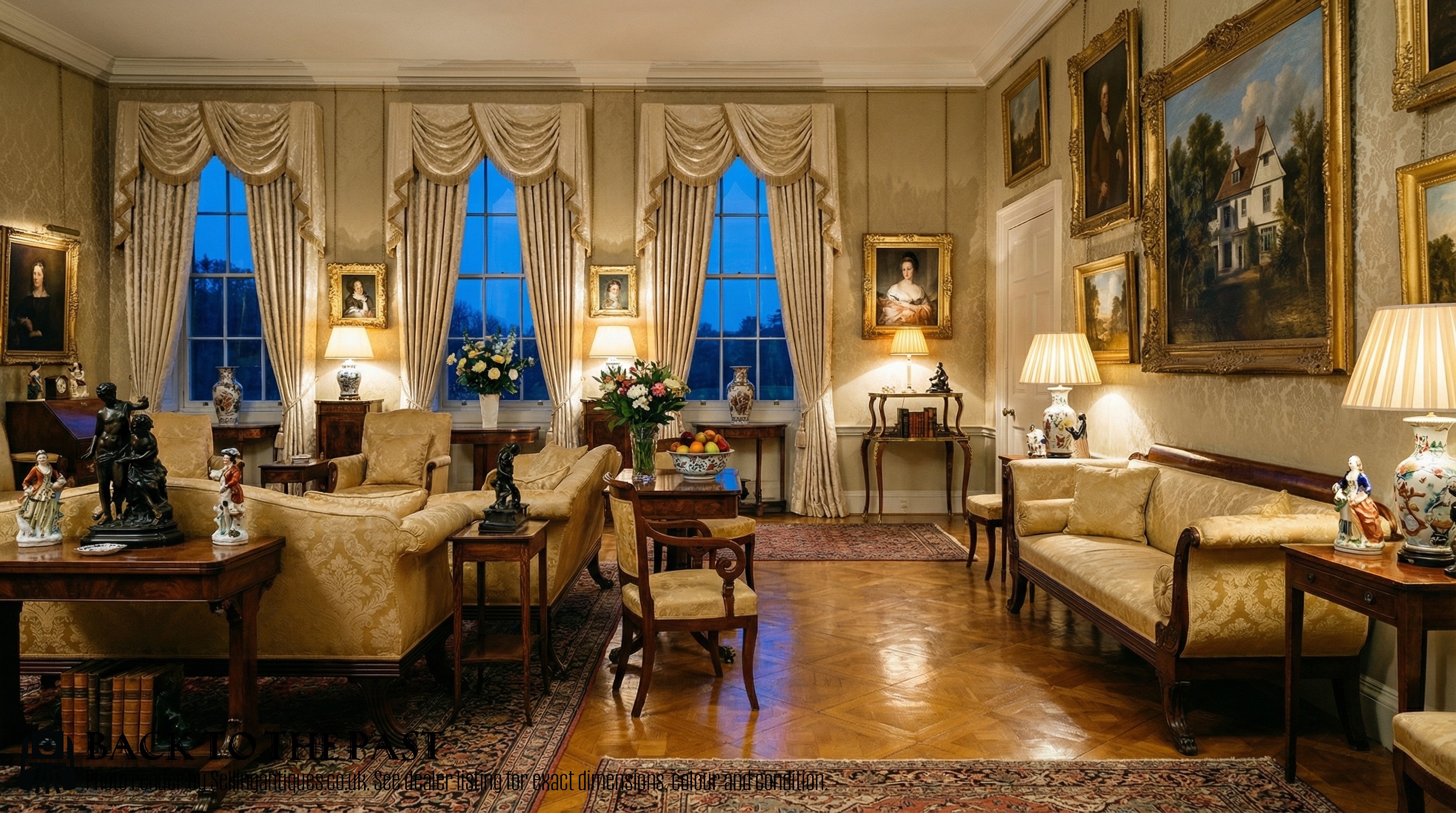
How they were made
Carpenters built these structures using walnut, kingwood, rosewood, mahogany, and satinwood, often applying ebonised finishes for contrast. Surfaces received intricate marquetry and parquetry patterns formed from cut wood veneers.
Metal components played a structural and decorative role, with brass galleries fitted to table edges and ormolu mounts applied to legs and corners. Mirrored tiers appeared alongside timber panels to enhance light reflection within the multi-level stands.
Current listings feature pieces spanning the 19th Century, Victorian period, and early 20th Century up to 1930.
What varies in quality
The precision and complexity of the marquetry determine the distinction of the work. Finer examples display meticulous floral or geometric veneer patterns executed across multiple tiers using contrasting exotic timbers.
Mounting hardware separates standard production from superior pieces. Heavy, well-chased ormolu mounts and cast brass galleries indicate higher workshop standards during the manufacturing process.
Edwards & Roberts·Haentgos Freres Paris·Majorelle
The French Inlay Tier Table Glossary
- Marquetry
- Decorative veneer work arranged in pictorial or floral patterns across a wooden surface. It requires precise cutting of various coloured woods to form complex designs.
- Parquetry
- Geometric wood inlay forming repeating patterns such as cubes or squares. This technique is frequently seen on table tops.
- Etagere
- A piece of furniture consisting of open shelves for displaying small objects. They typically feature multiple tiers supported by slender columns.
- Ormolu
- Gilt bronze mounts applied to furniture for decorative effect. The technique involves treating bronze with a gold amalgam.
- Galleried
- A raised metal or wooden rim surrounding a tabletop. It prevents items from sliding off the edge of upper tiers.
French Inlay Tier Table: Frequently Asked Questions
How are multi-tier tables used?
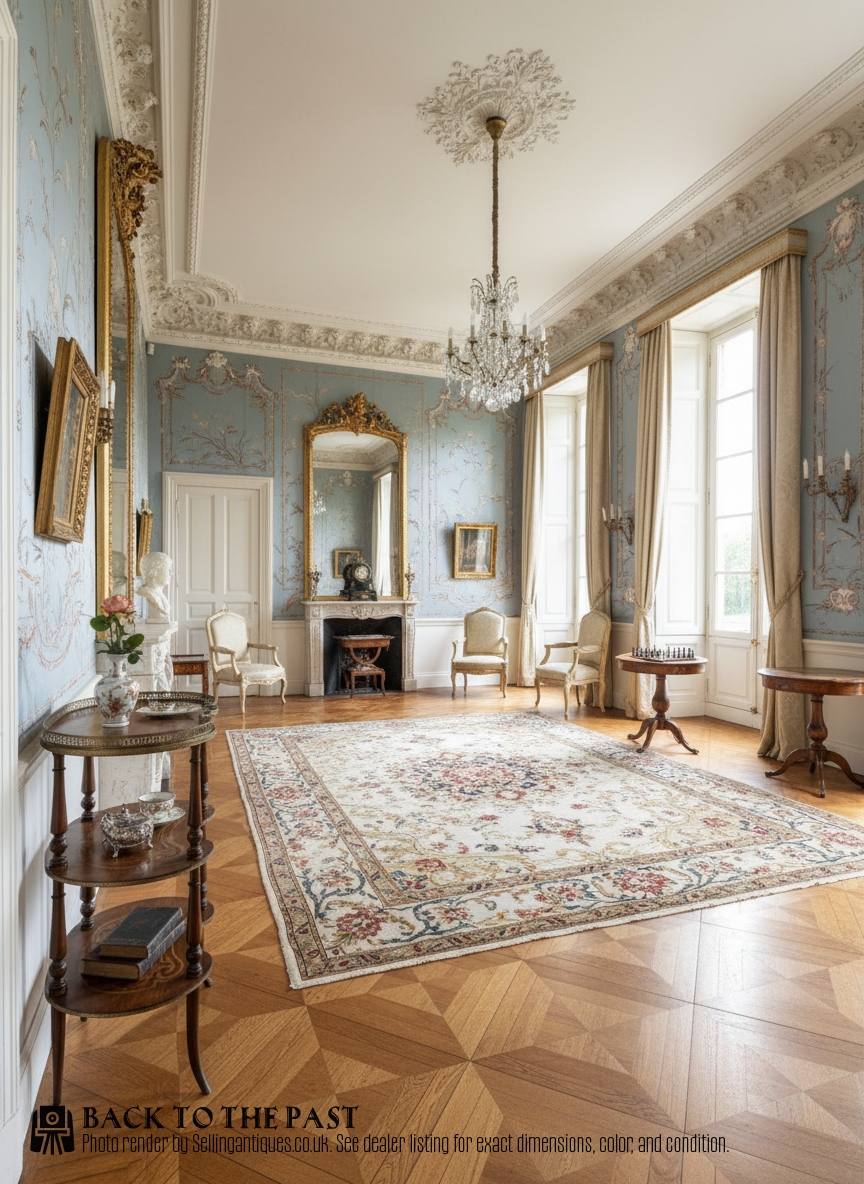
These tables function as versatile surfaces for lamps, decorative objects, and small collections across living spaces. The stacked tiers allow owners to display items at varying heights without occupying excessive floor space.
In period settings, they served as lamp stands or occasional tables for drawing rooms. Their open structure keeps rooms feeling light while providing functional display areas.
How do I identify French revival styles?
French revival pieces incorporate curved cabriole legs, asymmetrical floral motifs, and classical proportions inspired by earlier royal courts. Makers during the nineteenth century revived these aesthetics using contemporary veneering techniques.
Look for specific indicators such as Louis XV cartouche shapes or Louis XVI straight tapered legs. Ormolu mounts and floral marquetry further signal these stylistic revivals.
What woods were commonly used?
Workshop artisans employed a palette of exotic and native hardwoods including kingwood, rosewood, walnut, and mahogany. Satinwood provided bright contrast for detailed marquetry panels.
Ebonised wood also appears, offering a stark dark background for inlaid floral designs and mirrored tiers. These timbers were selected for both their grain patterns and their ability to hold fine veneers.
How do I care for inlaid surfaces?
Inlaid timber surfaces require protection from direct sunlight and excessive moisture to prevent veneer lifting. Regular dusting with a soft cloth maintains the finish without chemical buildup.
Applying occasional wax preserves the polished surface of the wood and ormolu mounts. Avoid placing these tables near active heat sources which can dry out the historic timbers.