


French Inlaid Secretary
A french inlaid secretary is a sophisticated writing cabinet built for private correspondence, bringing walnut, kingwood and intricate parquetry into domestic rooms.
French Inlaid Secretary
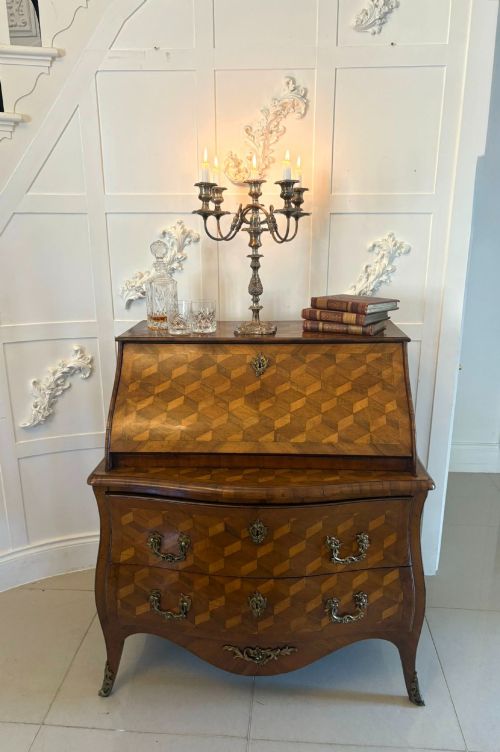
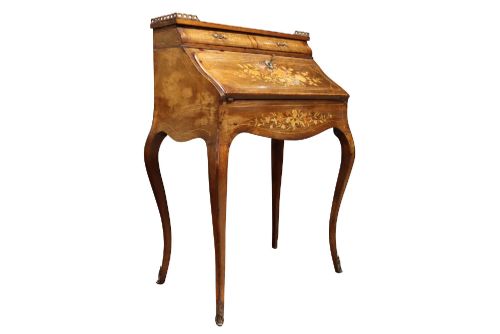
A french inlaid secretary is a refined writing piece designed for correspondence and private records, appearing in forms such as the fall-front secrétire à abattant and the delicate bonheur-du-jour. These pieces serve as both functional desks and decorative cabinets, often outfitted with internal compartments for letters and stationery.
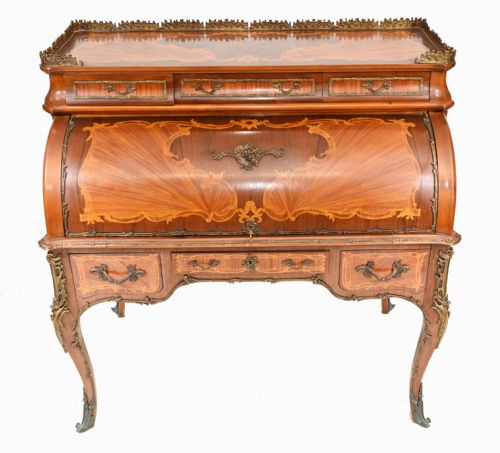
The versions most frequently met on this page date from the nineteenth century, including Victorian interpretations and revival styles spanning Louis XV and Louis XVI designs. Makers utilised exotic timbers and applied elaborate marquetry to create surfaces intended to command attention in a parlour or study.
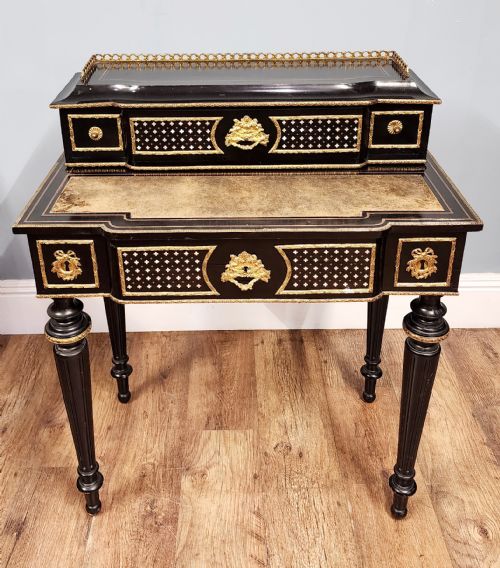
Forms range from large bombe-shaped bureaux to compact ladies writing desks fitted with glass cabinets or painted plaques. Each variation reflects the evolving tastes of French and Victorian cabinet makers who balanced practicality with ornate display.
Judging Quality and Execution
Quality rests upon the precision of the veneer work and the complexity of the underlying timber selection, such as closely matched burr walnut or detailed floral marquetry. Superior examples exhibit seamless integration of parquetry across moving joints and drawer fronts without gaps or lifting edges.
The standard of the cast ormolu mounts and the weight of the structural timbers distinguish finer commissions from simpler workshop output. Interior organisation, including secret drawers and fitted letter slots executed in solid secondary woods, further separates high-grade pieces.
Many ladies writing desks conceal hidden internal compartments behind sliding panels, intended for securing private letters and small treasures.
Edwards & Roberts
The French Inlaid Secretary Glossary
- Secrétaire à abattant
- A tall writing cabinet featuring a vertical drop-front panel that conceals a fitted interior of pigeonholes and small drawers. This form allows the writing surface to fold down when needed and close flat to conceal correspondence.
- Bonheur-du-jour
- A light ladies writing desk topped with a small cabinet or set of shelves for books and letters. The form gained popularity during the nineteenth century for use in private sitting rooms.
- Marquetry
- A decorative technique where thin veneers of different coloured woods are assembled into pictorial or abstract patterns. Craftsmen cut these pieces together to ensure tight joints before gluing them to the carcase.
- Parquetry
- Geometric mosaic woodwork formed by small pieces of veneer arranged in repeating patterns such as cubes or chequers. It provides a structured contrast to the flowing floral designs of marquetry.
- Ormolu
- Gilded bronze mounts applied to the corners, feet and edges of furniture for decoration and protection. The finish provides a bright metallic contrast against dark rosewood and walnut surfaces.
French Inlaid Secretary: Frequently Asked Questions
What is a bonheur-du-jour?
A bonheur-du-jour is a light writing desk featuring a small tiered cabinet or shelving unit mounted upon the upper surface.
These pieces were designed for ladies to write letters and keep small personal items in domestic sitting rooms during the nineteenth century.
How do I distinguish marquetry from parquetry?
Marquetry employs varied veneers to create pictorial scenes, scrolls or floral motifs across the timber surface.
Parquetry uses geometric shapes like squares, triangles or cubes to form repeating mathematical patterns across the wood.
Where were these desks placed?
These secretary desks were typically positioned in reception rooms, private parlours or studies where domestic administration took place.
Their decorative backs and finished sides allowed them to sit away from walls rather than remaining strictly confined to corners.
How do I care for inlaid wood?
Keep inlaid furniture away from direct sunlight and steady temperature fluctuations to prevent the delicate veneers from lifting or cracking.
Apply occasional wax polish suitable for antique woods to maintain the lustre of the walnut, kingwood and rosewood surfaces.