
French Inlaid Bedside Cabinets
French inlaid bedside cabinets bring refined Continental proportion and intricate marquetry detail to an interior, functioning as practical night storage with distinct aesthetic presence.
French Inlaid Bedside Cabinets
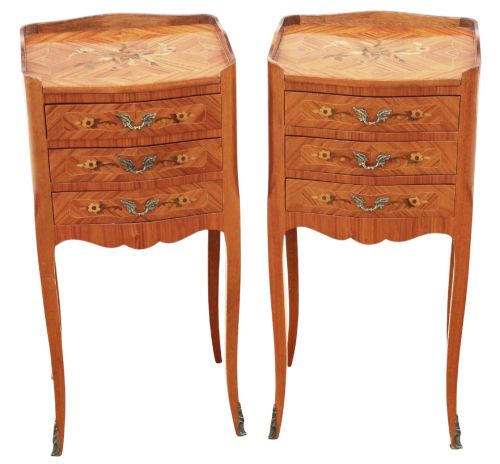
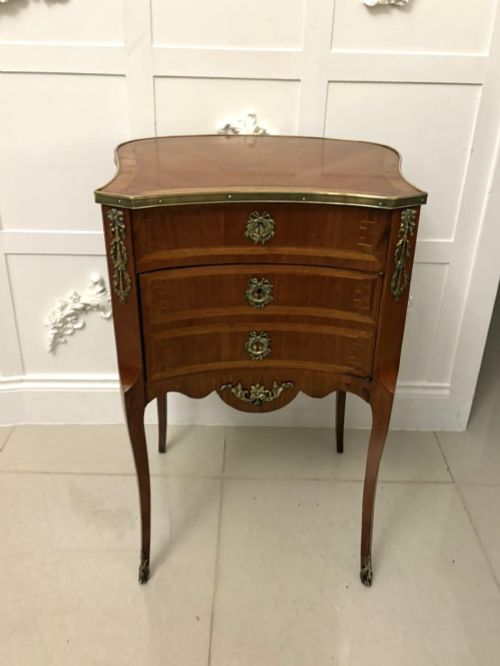
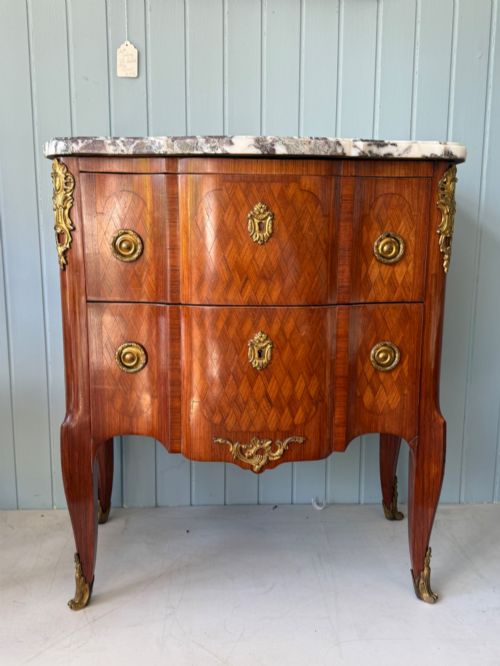
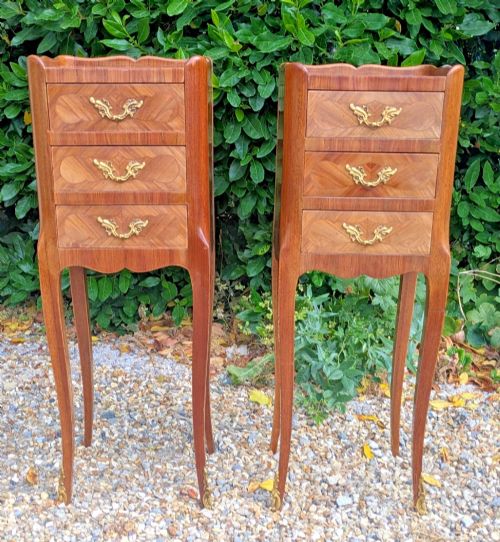
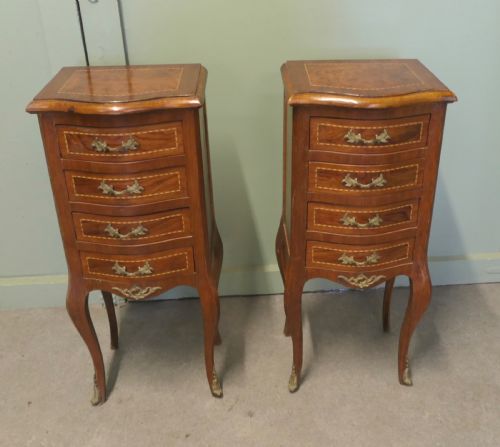
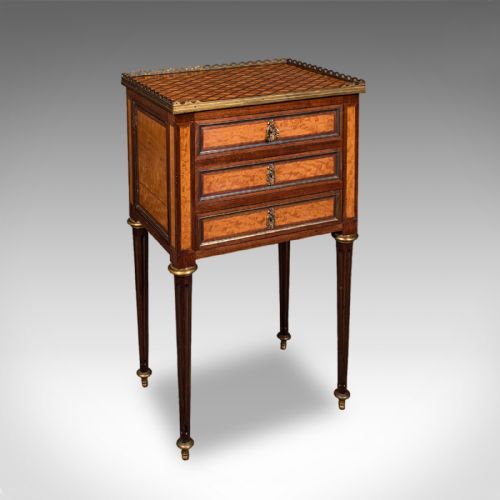
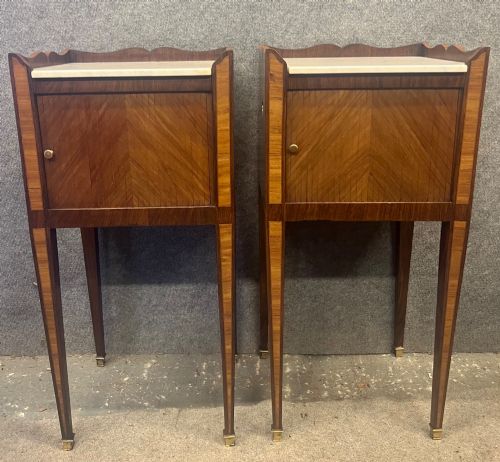
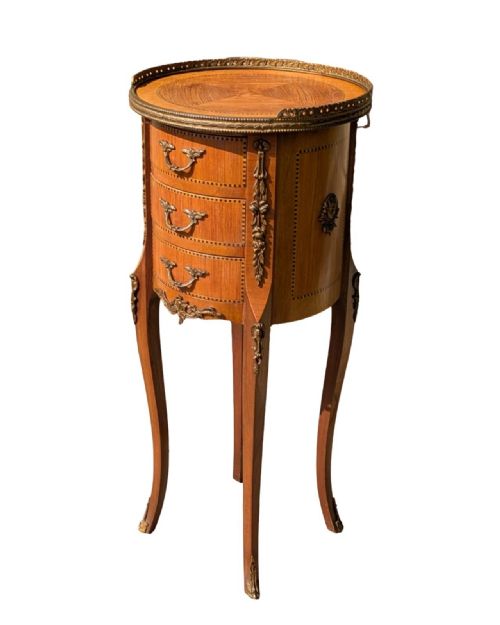
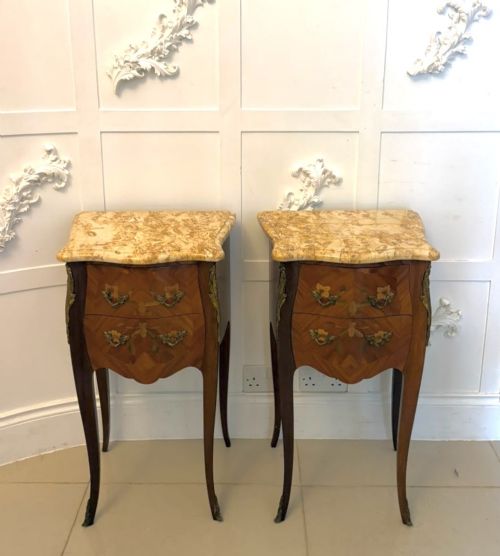
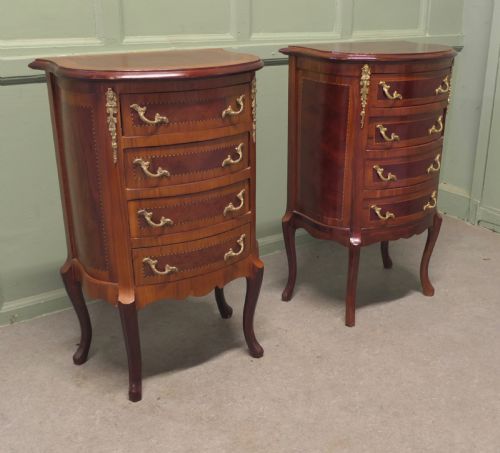
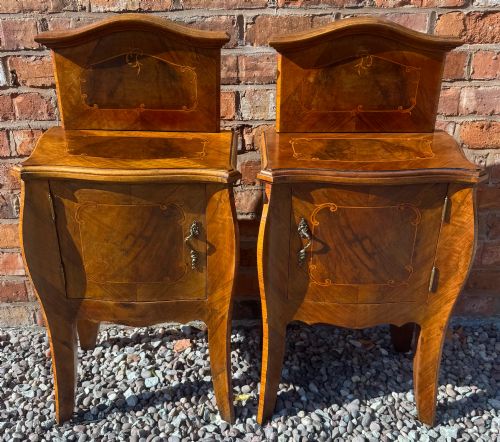
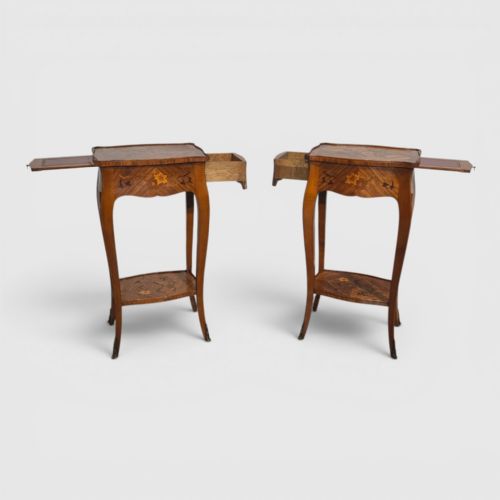
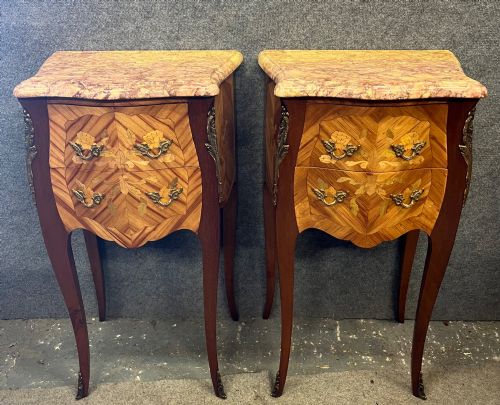
French inlaid bedside cabinets are compact bedside storage pieces, commonly encountered as matched pairs dating from the late nineteenth century through to the 1930s. These items take various forms, including traditional side cabinets, marble-topped commodes, and lamp tables designed to sit neatly beside a bed.
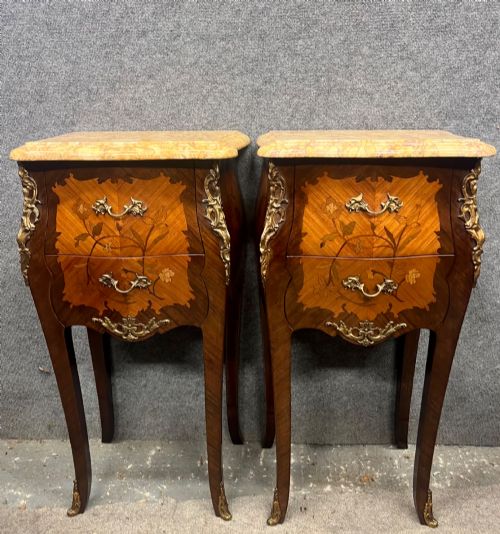
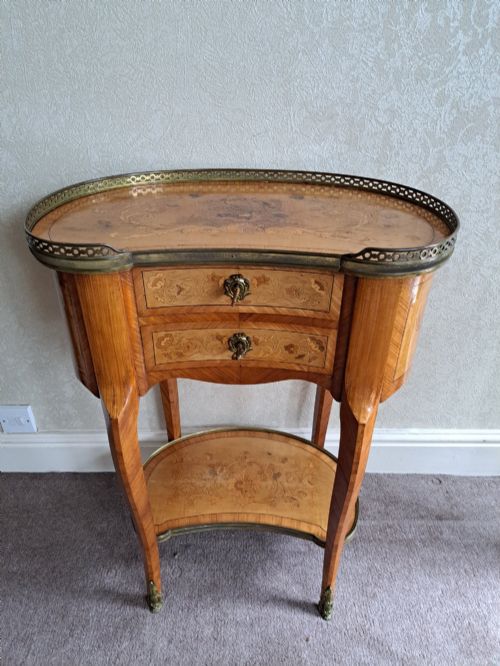
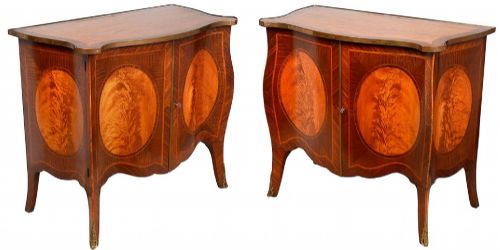
The aesthetic draws heavily on historical design vocabulary, with Louis XV and Louis XVI revival styles prevailing across the inventory. Makers incorporated curving serpentine fronts, bombe shapes, and kidney profiles alongside straight-legged neo-classical frameworks.
Originating largely from French workshops and cabinet makers, these pieces reflect the enduring popularity of Continental joinery traditions exported and adapted for international bedrooms. Buyers select them to introduce warmth, texture, and historical context into domestic spaces.
How They Were Made
The construction relies on solid timber carcases overlaid with fine wood veneers, principally kingwood, walnut, satinwood, and rosewood. Artisans utilised intricate marquetry and parquetry techniques to assemble pictorial or geometric patterns across the drawer fronts and table tops.
Cast or chased ormolu mounts, brass details, and occasional silvered bronze accents frame the woodwork, protecting vulnerable corners and adding decorative contrast. Many cabinets feature inset slabs of shaped marble, providing a durable and cool working surface above the timber body.
Periods represented span from Victorian and nineteenth-century examples through to 1930s revival pieces.
What Varies in Quality
Quality reveals itself in the precision of the veneer work and the complexity of the timber selection, where tightly figured kingwood and contrasting marquetry patterns demand advanced joinery skill. The weight and crispness of the cast ormolu mounts also separate standard commercial productions from superior examples.
Structural integrity depends on the seasoning of the foundational carcase woods and the seamless integration of marble tops into the wooden frame. Examples retaining original brass hardware, uncompromised veneers, and balanced proportions command greater appreciation from collectors.
Sormani
The French Inlaid Bedside Cabinets Glossary
- Marquetry
- Decorative veneer work arranged in pictorial designs utilising various coloured woods. This technique requires considerable skill to cut and fit individual pieces into a cohesive surface.
- Ormolu
- Gilded bronze mounts applied to furniture for decorative enrichment. The finish provides a metallic contrast against polished timber surfaces.
- Parquetry
- Geometric wood veneer patterns such as cubes or chequers. It creates a structured visual texture across table tops and cabinet doors.
- Commode
- A low chest of drawers or cabinet originating in France. These pieces often feature marble tops and sophisticated curved fronts.
- Bombe
- A swelling, outward-curving contour found on cabinet sides and drawer fronts. This characteristic profile requires specialised shaping of the underlying timber.
French Inlaid Bedside Cabinets: Frequently Asked Questions
How do I clean the marble top?
Wipe the surface gently with a soft, damp cloth and mild neutral soap to remove dust and daily marks. Avoid acidic cleaners or lemon-based products that can etch the polished stone.
Dry the marble thoroughly with a clean microfibre cloth to maintain its natural sheen and prevent water spotting.
Are these cabinets sturdy enough for daily use?
Solid timber construction and traditional joinery make these cabinets durable for everyday placement beside a bed. The inset marble tops also provide a tough, resilient surface for lamps and bedside items.
Care should be taken to protect the veneered surfaces from excessive moisture and direct heat sources to preserve the finish.
How do I distinguish revival styles from original pieces?
Examine the interior secondary woods, drawer dovetails, and backboards for signs of period-appropriate hand-working tools and natural ageing. Revival pieces from the late nineteenth and early twentieth centuries often employ machine-cut elements alongside traditional joinery.
Consulting the specific construction methods and wood types helps clarify whether a piece belongs to the nineteenth-century baseline or the later 1920s and 1930s revivals.
Can I use a bedside cabinet as a lamp table?
Compact proportions and decorative marquetry tops make these cabinets well-suited for deployment as living room lamp tables or occasional surfaces. Their finished backs and detailed sides allow them to sit freestanding in a room.
Ensure the surface area accommodates your lighting choice safely while leaving space for decorative objects.