


French Harbour Oil Painting
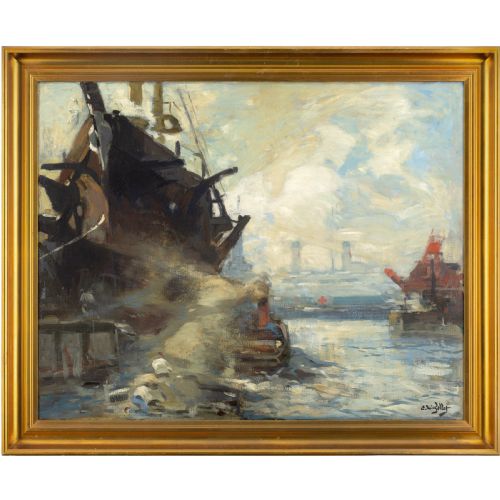
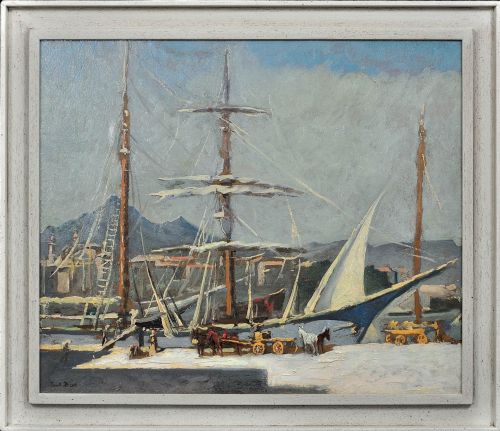
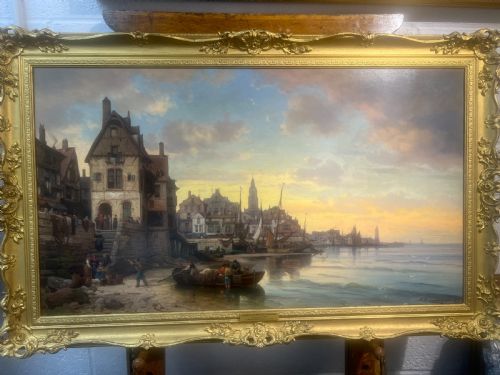
A french harbour oil painting captures coastal life through pigment and canvas, offering buyers a tactile connection to maritime history.
Materials and Technique
Artists built these compositions using oil paint applied to prepared canvas, wooden panels, or board supports. The medium allows for rich colour layering, impasto texture, and nuanced handling of coastal light and atmosphere.
Support structures typically involve woven canvas stretched across timber frames or rigid wood panels. Framing often consists of wood or giltwood mouldings designed to protect the perimeter of the painted surface.
Judging Quality
Quality rests upon the artist's command of light, brushwork, and atmospheric perspective in rendering coastal movement and marine architecture. Works by established named painters demonstrate superior draughtsmanship and compositional coherence compared to anonymous studies.
The physical preservation of the paint surface and support dictates long-term integrity. Original framing that retains its period finish adds historical context to the piece.
French Harbour Oil Painting Retail Price Guide 2026
Typical asking prices for french harbour oil painting among the pieces listed under this phrase on Sellingantiques today, from the lower quarter to the upper quarter. They describe what is for sale here now, not the wider market.
An artist named Charles painted harbour scenes while dodging wartime aerial bombing.
Eugène-Louis Gillot·Paul Bret·Charles Euphraisie Kuasseg·Paul-Jean Anderbouhr·Jean-Baptiste Olive·Raymond Picque·Fred Pailhes·Edward Henry Holder·Owen Bowen·Henri Ottman·Augustus William Enness
The French Harbour Oil Painting Glossary
- Canvas
- A heavy woven fabric used as a support surface for oil painting. It is typically stretched tightly across a wooden frame before application of ground and pigment.
- Giltwood
- Wood carved and coated with a thin layer of gold leaf or metallic gold paint. It provides an ornate and reflective border for traditional frames.
- Post-Impressionism
- An art movement extending beyond impressionist limits to emphasise symbolic content, formal order, or heavier structural brushwork. It appears frequently in twentieth century French maritime art.
- Impasto
- Paint applied in thick layers that stand out from the surface. This technique creates a tangible texture visible in many harbour and sea scenes.
- Panel
- A rigid flat piece of wood used as an alternative support to canvas. Painters often applied oils directly to prepared wooden boards.
French Harbour Oil Painting: Frequently Asked Questions
How do I date a harbour painting?
Dating relies on recorded artist lifespans, costume details of figures on the quayside, and stylistic markers such as post-impressionist brushwork or mid-century abstraction.
Material analysis of the canvas, wooden panel, and framing style provides further confirmation of the period of creation.
Where were these coastal scenes painted?
Artists worked along the diverse maritime fringes of France, recording northern fishing ports in Normandy and Brittany alongside southern harbours on the Mediterranean and the French Riviera.
Specific locations often appear inscribed on the reverse of the canvas or within the painting's recorded title.
How should I display an oil painting?
Hang the artwork away from direct sunlight and fluctuating heat sources to protect the oil pigments and wooden support structure. Ensure the wall fixings match the weight of the framed canvas or panel securely.
Keep relative humidity stable in the room to prevent warping of wooden frames and canvas tension changes.
What is the difference between canvas and board?
Canvas offers a flexible textile support that responds to atmospheric changes by flexing slightly across its wooden stretcher frame. Board provides a completely rigid wooden surface that resists movement.
Both supports received similar oil paint applications, though board is frequently found on smaller plein air studies.