


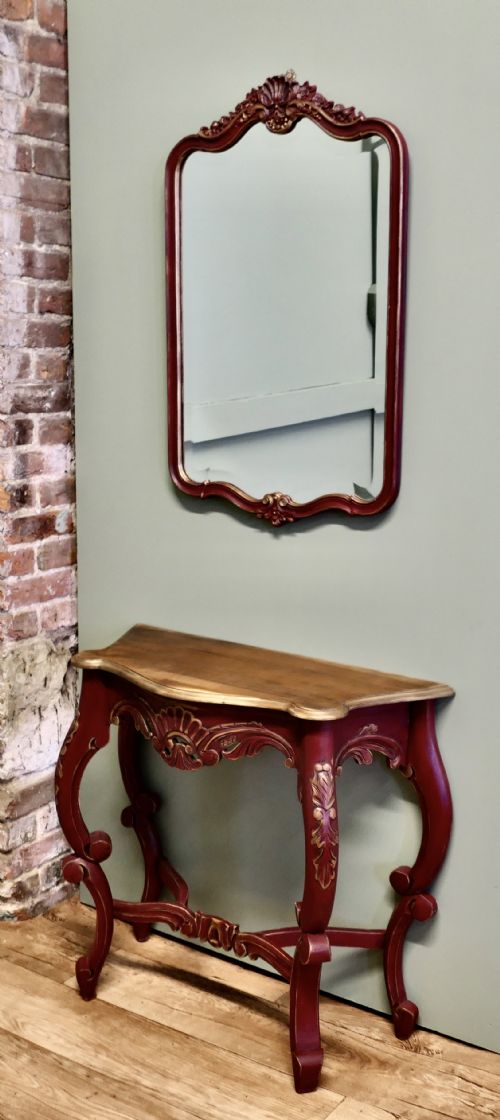


French Hall Furniture
French hall furniture brings together marble top console tables, giltwood mirrors, and cast iron umbrella stands designed to greet guests.
French Hall Furniture
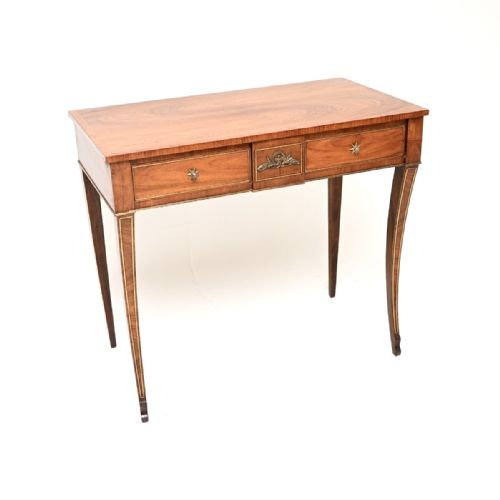
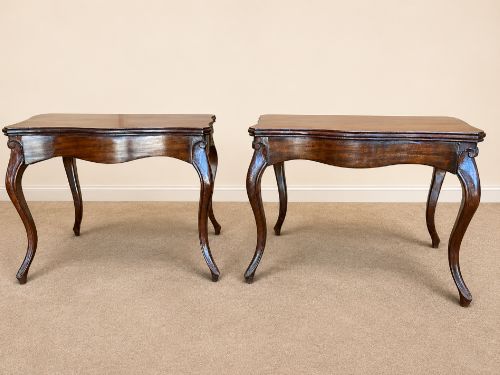
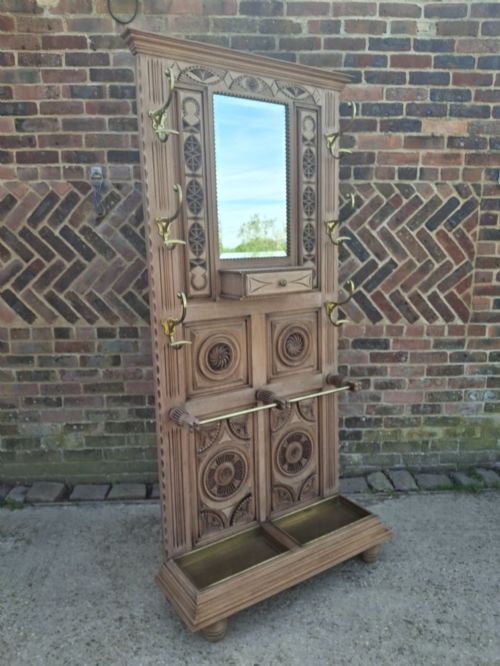
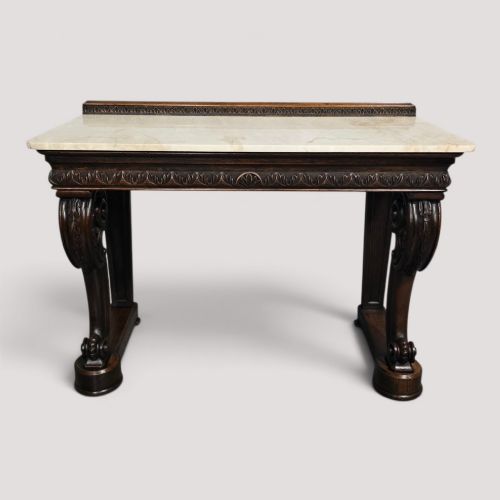
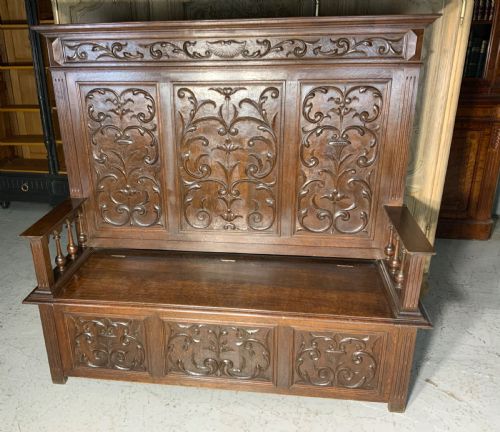
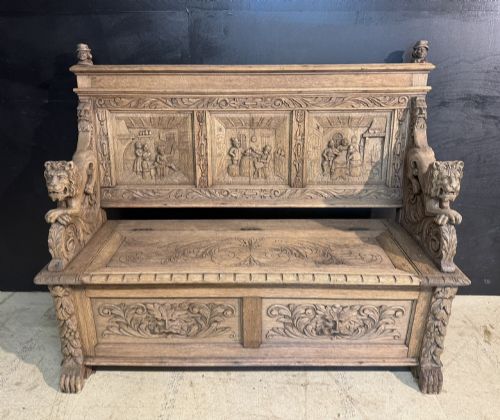
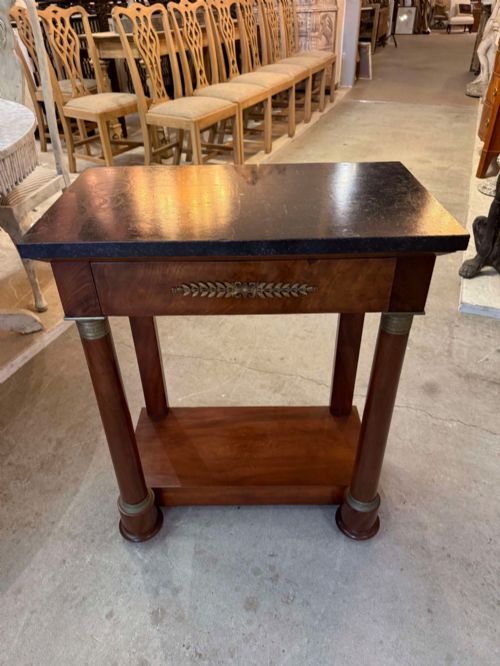
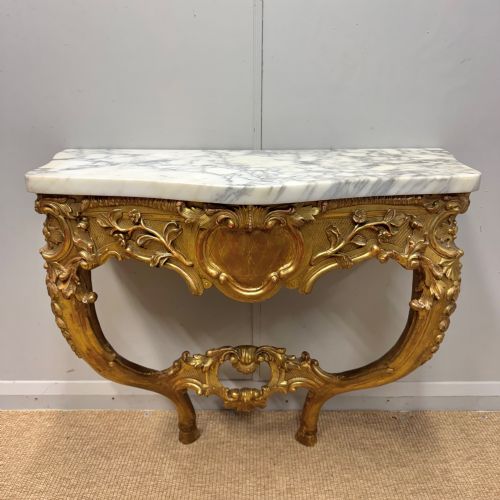
French hall furniture encompasses console tables, benches, umbrella stands, and window seats originating primarily from the nineteenth century and the early twentieth century. Pieces range from grand Louis XV revival giltwood consoles with marble tops to rustic cherrywood benches and painted country house workbenches.
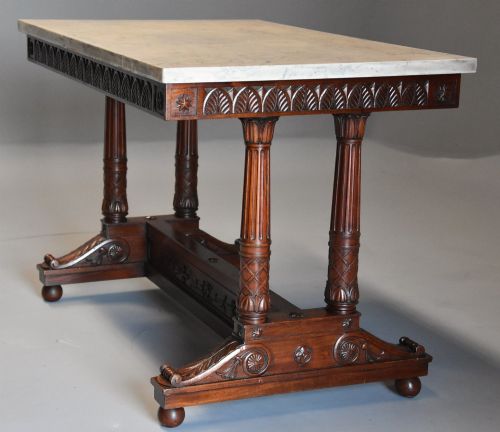
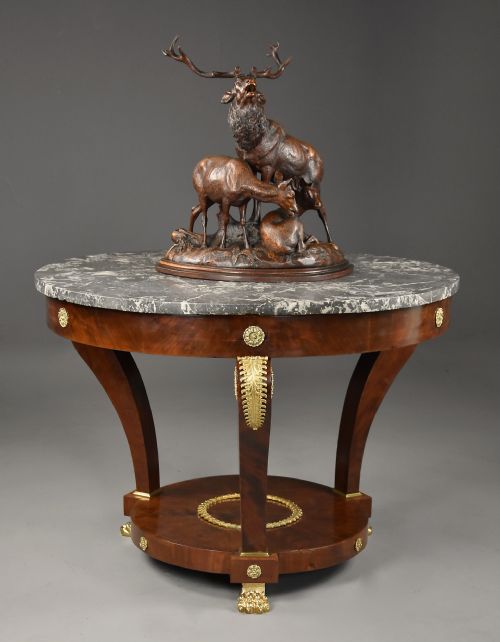
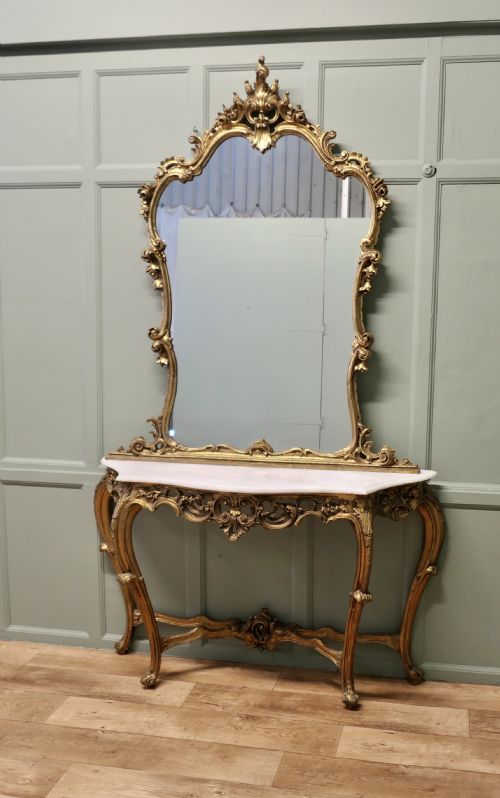
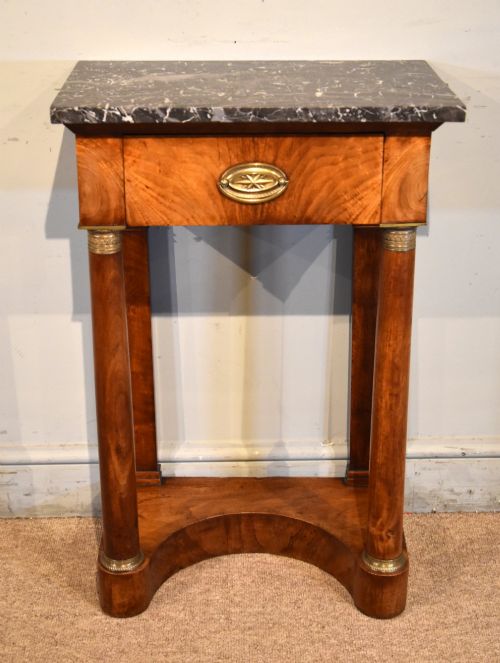
The most common items met on this page are marble topped console tables, often paired with matching mirrors, alongside practical cast iron coat and umbrella stands. Makers utilised regional timbers such as oak, walnut, cherrywood, and mahogany across styles spanning French Provincial, Empire, and Rococo Revival.
Materials and Construction
Carpenters and cabinetmakers utilised dense hardwoods including mahogany, walnut, satinwood, and cherrywood, alongside fruitwoods and exotic veneers like kingwood and birdseye maple. Structural integrity relied on traditional joinery, while decorative surfaces often incorporated hand carving, parcel gilding, and painted finishes.
Many console tables and wash stands feature heavy serpentine or fossil marble tops fitted directly to wooden bases. Metal elements appear in ormolu mounts, brass details, wrought iron frames, and cast iron umbrella stands featuring white enamel finishes.
French Hall Furniture Retail Price Guide 2026
Typical asking prices for french hall furniture among the pieces listed under this phrase on Sellingantiques today, from the lower quarter to the upper quarter. They describe what is for sale here now, not the wider market.
Early twentieth-century cast iron umbrella stands occasionally incorporated white enamel finishes to catch dripping water from raincoats.
Evaluating the Pieces
The distinction between standard utility items and finer pieces lies in the precision of the hand carving, the quality of the ormolu mounts, and the selection of timber veneers such as flame mahogany or figured walnut. Original matching elements, particularly when a console table retains its accompanying giltwood mirror, elevate the integrity of the ensemble.
Subtleties in finish also separate examples, from simple painted rustic surfaces to elaborate parcel gilt details, heavy cast iron structural integrity, and integrated marble tops with specific fossil inclusions.
Corneau Frères Charleville·Edward’s And Robert’s
The French Hall Furniture Glossary
- Console table
- A table designed to stand against a wall, frequently secured to it and topped with marble.
- Giltwood
- Timber treated with gold leaf or a gold-coloured finish to create a brilliant decorative surface.
- Ormolu
- Gilded bronze used for decorative mounts and furniture embellishments during the eighteenth and nineteenth centuries.
- Banquette
- A long upholstered bench or small sofa designed for seating multiple people.
- Demi lune
- A half-moon shape characteristic of certain console and side tables made to fit flush against a wall.
French Hall Furniture: Frequently Asked Questions
What is french hall furniture?
French hall furniture comprises decorative and functional pieces intended for entryways, corridors, and reception rooms, including console tables, benches, and umbrella stands.
These items date predominantly from the nineteenth and early twentieth centuries, spanning revival styles like Louis XV and Louis XVI alongside rustic provincial designs.
How were console tables used?
Console tables stood against entrance walls, often serving as a surface for lamps, cards, or decorative objects upon entering a residence.
They frequently accompanied matching wall mirrors to create a coordinated focal point in a hallway or salon.
How do I identify periods?
Period identification relies on observing decorative motifs, timber selections, and construction methods characteristic of reigns or design movements such as the Empire or Belle Époque eras.
Revival pieces from the later nineteenth century often recreate eighteenth-century Louis styles using contemporary nineteenth-century workshop techniques.
How do I care for marble tops?
Marble top tables require gentle cleaning with mild, non-acidic soap and water to preserve the polished stone surface without scratching the material.
Avoiding harsh chemical cleaners ensures the natural fossil patterns and smooth finish remain intact over decades of domestic use.